Contraception: Choosing the Right Method for Effective Protection
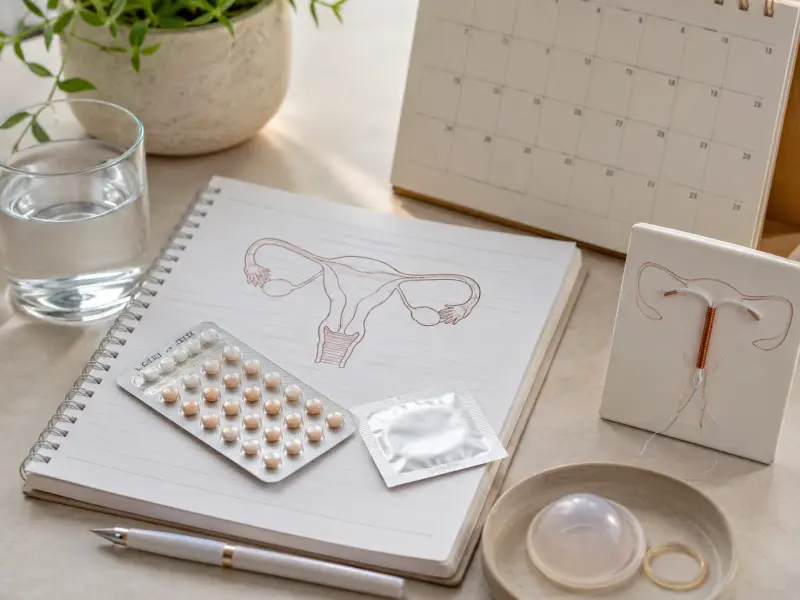
Contraception Methods: Types, Effectiveness, and How to Choose the Right Option
Contraception methods help prevent unintended pregnancy and support family planning in a way that fits a person’s health, lifestyle, and reproductive goals. There is no single best contraceptive method for everyone. The right choice depends on factors such as age, breastfeeding, medical history, smoking, menstrual patterns, need for protection from sexually transmitted infections, and future pregnancy plans.
This guide explains the main types of contraception, the difference between hormonal and non-hormonal options, how effective different methods can be, when to speak with a healthcare professional, and why using condoms alongside another method may be important in some situations.
Key Takeaways
- Long-acting reversible contraception, such as IUDs and implants, is usually among the most effective options in typical use.
- External and internal condoms help reduce the risk of sexually transmitted infections, while most other contraception methods do not provide STI protection.
- Hormonal contraception can be suitable for many people, but it is not appropriate for everyone, especially in some cases of blood clots, migraine with aura, uncontrolled high blood pressure, or smoking after age 35.
- The copper IUD is a long-acting non-hormonal method and may also be used as emergency contraception within a specific time window after unprotected sex.
- The best method should be chosen individually with a doctor, pharmacist, or qualified healthcare professional, especially if you have chronic conditions or take regular medications.
What Are Contraception Methods?
Contraception methods are ways to reduce the chance of pregnancy. Different methods work in different ways. Some prevent ovulation, some block sperm from reaching an egg, some change cervical mucus, and some affect the uterine environment to make pregnancy less likely.
When comparing options, it is important to understand the difference between perfect use and typical use. Perfect use means the method is used correctly every time without mistakes. Typical use reflects real life, where pills may be missed, condoms may be used incorrectly, or appointments may be delayed. This is why real-world effectiveness can be lower than perfect-use effectiveness.
Because contraception is connected to sexual health and preventive screening, you may also find Vitaminati’s article on why Pap smears and sexual health screenings matter useful when thinking about long-term reproductive health.
What Are the Main Types of Contraception?
1. Barrier Methods
Barrier methods work by physically preventing sperm from reaching the egg. They are used only when needed, and many do not contain hormones. Their effectiveness depends heavily on correct use every time.
External Condoms
- External condoms are worn on the penis before sex to prevent semen from entering the vagina.
- They help reduce the risk of pregnancy and sexually transmitted infections when used correctly.
- Their effectiveness is higher with correct use, but it can drop if the condom tears, slips, is put on late, or is used with the wrong lubricant.
- They remain important even when another contraceptive method is used if STI protection is needed.
Internal Condoms
- Internal condoms are placed inside the vagina before sex to create a barrier that blocks sperm.
- They may also help reduce the risk of some sexually transmitted infections.
- They require learning the correct insertion and removal technique for best effectiveness.
Diaphragm and Cervical Cap
- These are placed inside the vagina to cover the cervix and block sperm from entering the uterus.
- They are often used with spermicide to improve effectiveness.
- They do not reliably protect against sexually transmitted infections.
- They may not suit everyone and may require fitting or guidance from a healthcare professional.
Spermicides
- Spermicides come as gels, foams, films, or suppositories and work by inactivating sperm.
- They are less effective when used alone, so they are often combined with another barrier method.
- They may cause vaginal irritation in some people, especially with frequent use.
Some barrier-related products may irritate the urinary or vaginal area in certain people. If you experience repeated urinary symptoms, Vitaminati’s guide to urinary tract infections, symptoms, causes, and prevention may help you understand when medical advice is needed.
2. Short-Acting Hormonal Methods
Short-acting hormonal contraception uses hormones to prevent ovulation, thicken cervical mucus, or change the uterine lining. These methods include pills, patches, vaginal rings, and injections. They can be effective, but correct timing and consistent use matter.
Birth Control Pills
- Birth control pills may contain both estrogen and progestin or progestin only.
- They usually need to be taken daily, and effectiveness may decrease if pills are missed, vomiting occurs, or certain medications interact with them.
- Some people use them to help regulate periods, reduce heavy bleeding, or ease menstrual symptoms.
- They do not protect against sexually transmitted infections.
Hormonal Patch
- The contraceptive patch is placed on the skin and releases hormones into the body.
- It is usually changed weekly, depending on the prescribed schedule.
- It may be useful for people who do not want to remember a daily pill.
- It may not be suitable for people who should avoid estrogen-containing contraception.
Vaginal Ring
- The vaginal ring is a flexible ring placed inside the vagina, where it releases hormones steadily.
- It is usually used for several weeks and then removed according to the prescribed schedule.
- It may suit people who prefer a monthly method instead of a daily pill.
- It does not protect against sexually transmitted infections.
Contraceptive Injection
- The contraceptive injection is usually given every three months.
- It does not require daily action, but appointments must be kept on time.
- It may cause menstrual changes, such as irregular bleeding or absent periods in some people.
- Return to fertility may be delayed for several months after stopping in some cases.
3. Long-Acting Reversible Contraception
Long-acting reversible contraception, often called LARC, works for months or years and does not require daily or weekly attention. These methods are among the most effective in typical use because they reduce the chance of user error.
Contraceptive Implant
- The implant is a small rod placed under the skin of the upper arm by a trained professional.
- It releases a progestin hormone to prevent pregnancy for several years, depending on the product.
- It is highly effective and can be removed if pregnancy is desired or if the person wants to change methods.
- It may cause irregular bleeding, especially during the first months.
Hormonal IUD
- A hormonal IUD is a small device placed inside the uterus by a trained professional.
- It releases progestin locally and may reduce heavy periods or menstrual pain in some people.
- It can remain effective for several years, depending on the type.
- It does not protect against sexually transmitted infections and may cause irregular bleeding at first.
Copper IUD
- The copper IUD is a non-hormonal device placed inside the uterus.
- It affects sperm movement and fertilization, making pregnancy less likely.
- It is highly effective and can last for many years, depending on the type.
- It may increase menstrual bleeding or cramps in some people, especially during the first months.
- It may be a good option for people who prefer to avoid hormones.
4. Emergency Contraception
Emergency contraception is used after unprotected sex or when a method fails, such as a broken condom, missed pills, or a delayed injection. It is not intended as a regular contraception method.
- Emergency contraceptive pills: These usually work by delaying or preventing ovulation and are most effective when used as soon as possible.
- Copper IUD: This can be one of the most effective forms of emergency contraception if inserted within the recommended time window by a trained professional.
If contraception failed or no method was used, speak with a doctor, pharmacist, or sexual health clinic as soon as possible to choose the best emergency option based on timing and medical history.
5. Fertility Awareness Methods
Fertility awareness methods involve identifying fertile days in the menstrual cycle and avoiding unprotected sex during that time. These methods may include tracking cycle dates, body temperature, or cervical mucus. They require training, consistency, and accurate daily tracking.
- They may suit people who prefer to avoid hormones or devices.
- They require good understanding of the menstrual cycle and daily monitoring.
- They may be less reliable when cycles are irregular, after childbirth, during breastfeeding, or near menopause.
- They do not protect against sexually transmitted infections.
6. Breastfeeding as Temporary Contraception
Exclusive breastfeeding can reduce the chance of pregnancy during the first months after birth only under specific conditions: the baby is under 6 months old, breastfeeding is exclusive or nearly exclusive, and menstrual periods have not returned.
Once any of these conditions change, the chance of pregnancy increases. This method does not protect against sexually transmitted infections, so postpartum contraception should be discussed with a doctor, midwife, or qualified healthcare professional.
7. Permanent Contraception
Permanent contraception may be suitable for people or couples who are certain they do not want pregnancy in the future. These methods should be treated as long-term decisions because reversal can be difficult, costly, or not guaranteed.
Female Sterilization
- Female sterilization blocks or seals the fallopian tubes to prevent the egg and sperm from meeting.
- It is highly effective but should be considered permanent.
- It does not protect against sexually transmitted infections.
Vasectomy
- Vasectomy blocks sperm from entering the semen.
- It is highly effective after follow-up semen testing confirms success.
- It does not protect against sexually transmitted infections.
How Do You Choose the Right Contraception Method?
Choosing a contraceptive method is not only about effectiveness. A method may be very effective but not suitable because of health conditions, side effects, cost, access, comfort, or plans for future pregnancy.
Questions to Ask Before Choosing
- Do I want a short-term method or a long-acting method?
- Am I planning pregnancy within the next few months or year?
- Can I remember a daily pill, weekly patch, or regular appointment?
- Do I need protection from sexually transmitted infections?
- Do I have migraine with aura, a history of blood clots, high blood pressure, liver disease, or unexplained bleeding?
- Am I breastfeeding or recently postpartum?
- Do I take medications that may affect hormonal contraception?
Who Should Speak With a Doctor Before Using Contraception?
Professional guidance is useful for everyone, but it becomes especially important when there are factors that may affect safety or effectiveness.
- A personal or strong family history of blood clots.
- Migraine with aura.
- Smoking after age 35, especially with estrogen-containing methods.
- Uncontrolled high blood pressure.
- Liver disease or some hormone-sensitive cancers.
- Unexplained vaginal bleeding.
- Recent childbirth or breastfeeding.
- Use of medications that may interact with hormonal contraception, such as certain anti-seizure medicines.
If stopping contraception is connected to future pregnancy planning, it may also help to understand fertility support more broadly. Vitaminati’s article on MYOFOL and ovarian health support provides additional context, while remembering that supplements do not replace medical evaluation for delayed pregnancy, irregular cycles, or suspected hormonal conditions.
Can Contraception Affect Future Fertility?
Most reversible contraception methods do not cause permanent infertility. After stopping pills or removing an IUD or implant, fertility often returns gradually. Some people may experience a temporary delay in cycle regularity or ovulation, especially after contraceptive injections, but this does not necessarily mean a permanent problem.
If pregnancy does not occur after a reasonable time of trying, or if periods are irregular, very painful, or associated with abnormal bleeding, it is best to speak with a gynecologist or reproductive health professional.
Common Mistakes When Using Contraception
- Putting on a condom after sex has already started: Condoms should be used before genital contact that may transfer semen or infection.
- Missing pills without a clear plan: If pills are missed, follow the leaflet instructions or ask a pharmacist or doctor.
- Assuming IUDs or pills protect against STIs: These methods prevent pregnancy but do not protect against sexually transmitted infections.
- Ignoring unusual bleeding: Mild spotting may happen at first with some methods, but heavy bleeding, severe pain, or unusual discharge should be checked.
- Choosing a method only because it worked for someone else: A method that suits a friend or relative may not suit your health profile or preferences.
FAQs About Contraception Methods
What is the best contraception method?
There is no single best method for everyone. IUDs and implants are among the most effective options, but the right choice depends on health, comfort, duration, STI protection needs, side effects, and future pregnancy plans.
Are birth control pills safe?
Birth control pills are safe for many people when the right type is chosen. However, they may not be suitable for people with certain clotting risks, migraine with aura, uncontrolled high blood pressure, liver disease, or some other conditions.
Does an IUD cause infertility?
An IUD does not cause infertility for most people. Fertility usually returns after removal, but IUD insertion and removal should be done by a trained professional. Severe pain, heavy bleeding, or signs of infection should be checked.
Is a condom enough to prevent pregnancy?
Condoms can be effective when used correctly every time, but they are less effective in typical use than IUDs or implants. Their major advantage is that they also help reduce the risk of sexually transmitted infections.
Do I still need condoms if I use an IUD or birth control pills?
You may still need condoms if there is a risk of sexually transmitted infections, a new partner, or more than one partner. IUDs and pills help prevent pregnancy but do not protect against STIs.
When do I need emergency contraception?
Emergency contraception may be needed after unprotected sex, condom breakage, missed pills, or a late injection. It should be used as soon as possible because effectiveness is generally better when taken earlier.
Does hormonal contraception cause weight gain?
Responses vary. Some people notice appetite changes, fluid retention, or weight changes, but weight gain is not guaranteed with every method. If a change is bothersome, discuss alternatives with a healthcare professional.
Can contraception be used while breastfeeding?
Yes, several contraception options can be used during breastfeeding, but timing and method choice matter. A doctor, midwife, or pharmacist can help choose a suitable option after childbirth.
Conclusion
Contraception methods provide many options for preventing unintended pregnancy and planning family size. The right method depends on more than effectiveness. Safety, comfort, medical history, STI protection needs, side effects, and future pregnancy plans all matter.
If you are unsure which option fits you, start with a simple discussion with a healthcare professional: Do you want short-term or long-acting contraception? Do you have medical restrictions? Do you need STI protection? These questions can help you choose a practical and safe method.
Medical disclaimer: This article is for general educational purposes only and does not replace medical advice. If you are pregnant, breastfeeding, have a chronic condition, take regular medications, or have unexplained bleeding, consult a qualified healthcare professional before choosing a contraception method.