Echinacea for Colds: What the Evidence Really Shows
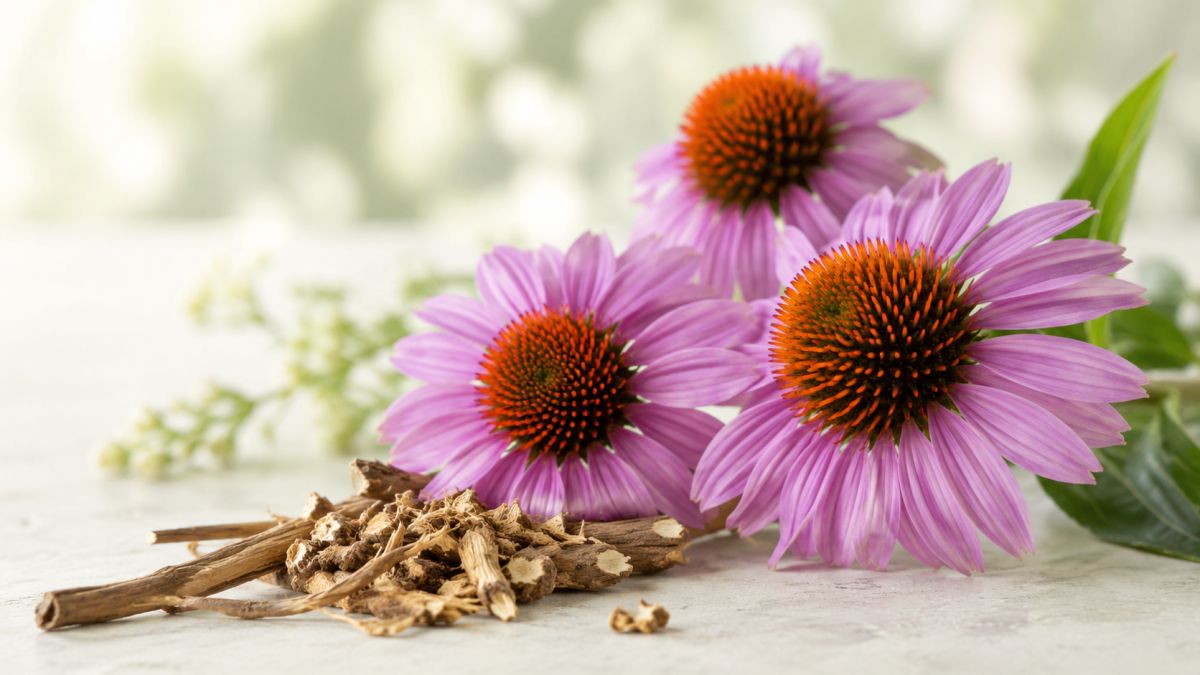
Echinacea is one of the most recognizable herbal supplements on pharmacy shelves, usually reached for the moment a scratchy throat shows up. But does the purple coneflower actually shorten a cold, or is its reputation bigger than the evidence behind it? Here's what the research actually shows.
What is echinacea?
Echinacea is a genus of flowering plants native to North America, with Echinacea purpurea, Echinacea angustifolia, and Echinacea pallida the three species most commonly used in supplements. Indigenous peoples of the Great Plains used echinacea root for centuries to treat wounds, infections, and pain. Today it's sold as capsules, tablets, tinctures, teas, and lozenges, made from the root, leaf, or flower, and it's most often marketed for cold and immune support.
Does echinacea help treat a cold once you have one?
This is where the evidence is weakest:
- A widely cited 2014 Cochrane review pooling 24 double-blind randomized trials with over 4,600 participants concluded that echinacea products haven't been clearly shown to provide a meaningful benefit for treating a cold that's already started.
- A 2019 systematic review and meta-analysis reached a similar conclusion, describing the evidence for treatment as limited, even while flagging weaknesses in how many of the underlying trials were designed and reported.
If you're already dealing with symptoms, it may help to understand exactly what you're up against. Our guide on whether influenza is the same as a cold breaks down the differences, and our overview of flu symptoms, causes, and prevention covers when it's actually the flu rather than a common cold.
Does echinacea help prevent colds?
Prevention is where echinacea's case looks somewhat stronger, though still far from settled:
- The same 2019 review found more promising, if inconsistent, evidence for reducing the number of colds when echinacea is taken regularly rather than started after symptoms appear.
- A large randomized trial of adults taking a standardized Echinacea purpurea extract over four months found fewer cold episodes, fewer total sick days, and reduced use of pain relievers compared with placebo, with the biggest benefit seen in people prone to recurrent infections.
Echinacea isn't the only option worth knowing about here — our article on elderberry as nature's shield for the immune system looks at another popular herbal choice for cold-and-flu season, and covers similar ground on what the evidence can and can't support.
Does it work differently for children?
Pediatric research is genuinely split:
- A 2018 systematic review of herbal medicine trials in children found no clear preventive benefit across four echinacea trials, with results contradicting one another.
- In contrast, a 2021 randomized, blinded trial in children ages 4 to 12 using a standardized echinacea extract found fewer respiratory infections and less need for antibiotics over the study period compared with a vitamin C control.
Because the pediatric evidence is inconsistent and dosing differs from adult products, it's worth checking with a pediatrician before giving echinacea to a child.
A well-functioning immune system depends on more than any single herb — our guide to the role of vitamins in immunity covers the nutritional basics that support the body's defenses at any age, and our article on early signs of zinc deficiency is worth a look since zinc plays its own well-documented role in immune function.
Does a higher dose work better once you're already sick?
One more recent randomized trial in adults tested whether increasing the echinacea dose during an active respiratory infection made a difference. Higher-dose lozenge and spray formulations led to faster clearance of virus from the body compared with standard lower-dose tablets and drops, though the trend toward faster clinical recovery hadn't reached statistical significance by day 10 of the study. It's an interesting early signal about dosing and timing, not yet a settled recommendation.
Is echinacea safe? Side effects and precautions
Here's what the safety data shows:
- For most healthy adults, short-term echinacea use appears to be reasonably well tolerated.
- Reported side effects include stomach upset, nausea, dizziness, and skin rash.
- Because echinacea belongs to the same plant family as ragweed, daisies, marigolds, and chrysanthemums, people with allergies to these plants — or with asthma — may be more prone to allergic reactions, including rare but serious ones.
- Because echinacea is thought to stimulate immune activity, it's generally not recommended for people with autoimmune conditions such as lupus or rheumatoid arthritis, or for those taking immunosuppressant medications, without first checking with a doctor.
- Long-term daily use hasn't been well studied, so many product labels suggest limiting continuous use to a matter of weeks.
- Safety data during pregnancy and breastfeeding is limited, so it's best discussed with a healthcare provider first.
Frequently asked questions about echinacea
Does echinacea actually help with colds?
The evidence is mixed — a 2014 Cochrane review found no clear benefit for treating an active cold, though some trials suggest a modest preventive effect.
Is echinacea better for preventing or treating colds?
Research leans toward prevention, with more promising (though still inconsistent) evidence there than for treating symptoms once they start.
Does echinacea work for children?
Results are mixed between studies; check with a pediatrician before giving it to a child.
Who should avoid echinacea?
People allergic to ragweed or related plants, and those with autoimmune conditions or on immunosuppressants, should be cautious.
Is echinacea safe to take every day?
Short-term use appears safe for most healthy adults; long-term daily use hasn't been well studied.
What are the side effects of echinacea?
Stomach upset, nausea, dizziness, skin rash, and occasionally allergic reactions.
The bottom line
Echinacea's evidence base is a mixed bag: it hasn't been clearly shown to treat a cold once it starts, but there's more encouraging — if still inconsistent — support for taking it regularly to prevent colds, particularly for people prone to catching them often. It appears reasonably safe for short-term use in most healthy adults, but anyone with plant allergies, autoimmune conditions, or questions about giving it to a child should check with a healthcare provider first.
Scientific references
- NCCIH – Echinacea: Usefulness and Safety
- David & Cunningham – Echinacea for the Prevention and Treatment of Upper Respiratory Tract Infections: A Systematic Review and Meta-Analysis, Complementary Therapies in Medicine, 2019
- Ogal et al. – Echinacea Reduces Antibiotic Usage in Children Through Respiratory Tract Infection Prevention: A Randomized, Blinded, Controlled Clinical Trial, European Journal of Medical Research, 2021
- Anheyer et al. – Herbal Medicine in Children With Respiratory Tract Infection: Systematic Review and Meta-Analysis, Academic Pediatrics, 2018
- Sumer et al. – Novel Echinacea Formulations for the Treatment of Acute Respiratory Tract Infections in Adults: A Randomized Blinded Controlled Trial, Frontiers in Medicine, 2023