MEBO Ointment: Ingredients, Benefits for Burns and Wounds, and Scientific Review
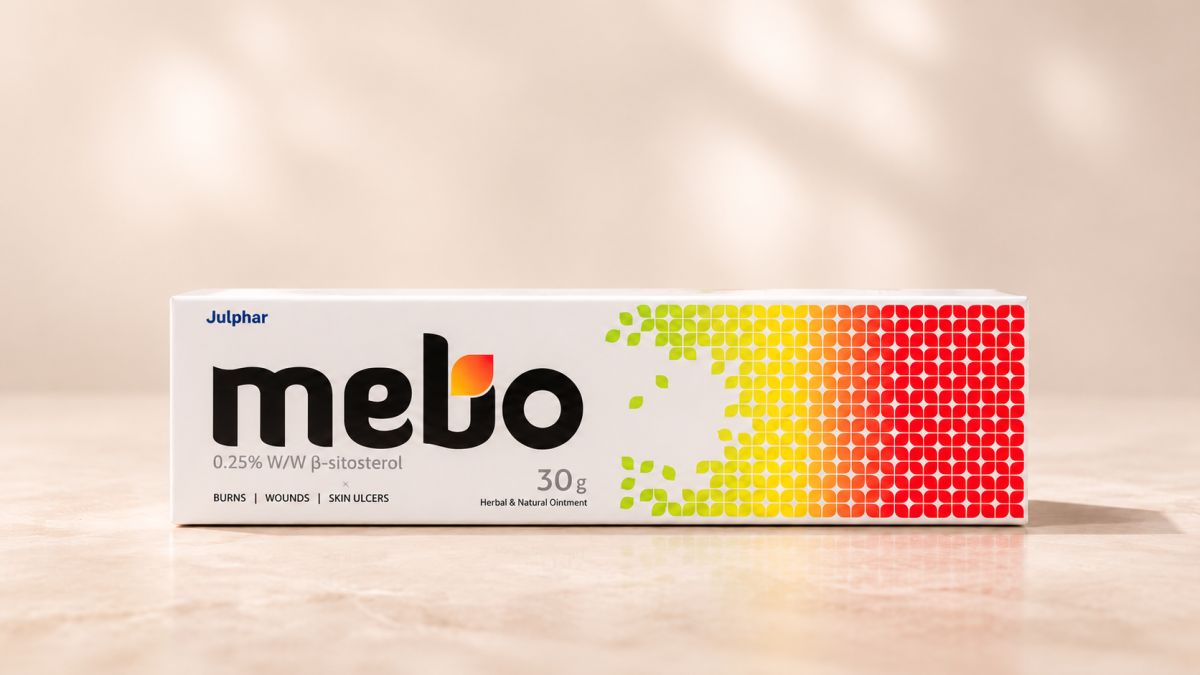
MEBO® ointment is a topical product used for the care of burns, wounds, and minor skin injuries. It is known for its oil-based formula, which helps maintain moisture over damaged skin and provides an environment that may support natural wound healing. But how does MEBO work, when should it be used, and is it effective for all types of burns and wounds?
This Vitaminati guide explains MEBO's ingredients, common uses, correct application, safety precautions, and what scientific studies say about its effectiveness.
What Is MEBO Ointment and What Does It Contain?
MEBO stands for Moist Exposed Burn Ointment. It is a topical preparation designed for burn and wound care.
The commonly available MEBO 0.25% formulation contains three main ingredients:
- Beta-sitosterol 0.25%: A naturally occurring plant sterol that serves as the main declared active ingredient.
- Sesame oil: Helps the ointment spread over the skin and maintain moisture.
- Beeswax: Gives the ointment its consistency and contributes to the protective layer over the affected area.
The formulation helps prevent excessive drying of injured skin. However, the exact ingredients should always be checked on the product packaging.
What Is MEBO Ointment Used For?
MEBO is used in the topical management of burns and wounds. Its main applications include:
- Minor burns: Helps maintain a moist environment over appropriately assessed superficial burns.
- Minor cuts and abrasions: May be used for selected superficial skin injuries.
- Skin wounds: Can be part of an appropriate wound-care plan when recommended by a healthcare professional.
- Post-procedure wounds: May be prescribed after certain skin procedures, according to the treating clinician's instructions.
Deep burns, infected wounds, diabetic ulcers, and significant surgical wounds require professional assessment. MEBO should not be relied on as the only treatment for these conditions.
How Does MEBO Help Wound Healing?
When the skin is injured, the body begins repairing damaged tissue and forming new skin cells. Maintaining an appropriate level of moisture can support this process.
MEBO creates an oil-based layer over the injured area, helping reduce excessive moisture loss and protect the wound surface from drying out.
This may support the movement of new skin cells across the wound, a process called re-epithelialization.
A 2020 systematic review examined six randomized clinical trials investigating MEBO for partial-thickness burns. Some studies reported favorable healing outcomes compared with certain treatments, while others found similar or less favorable results.
The researchers concluded that the evidence was limited by study quality and inconsistent findings. Therefore, MEBO may be a useful option for selected wounds, but it has not been proven superior to all other wound-care treatments.
How to Use MEBO Ointment Correctly
For a new thermal burn, the first step is to cool the affected area under cool running water for approximately 20 minutes. Do not apply MEBO or other creams before cooling the burn.
Once appropriate first aid has been completed and the injury has been assessed as suitable for topical care, MEBO may be applied according to the product instructions.
- Wash your hands before application.
- Gently clean the affected area as appropriate for the wound.
- Apply a thin layer of MEBO over the affected skin.
- Use a suitable dressing if recommended by a healthcare professional.
- Monitor the wound for changes in pain, redness, swelling, or discharge.
Some instructions for MEBO 0.25% recommend applying an approximately 1 mm layer three to four times daily when the area is uncovered, or less frequently under a dressing.
However, the correct application frequency may differ according to the wound and product leaflet. Always follow the instructions provided with the specific formulation or by your healthcare professional.
Does MEBO Help Prevent Scars?
Proper wound care can support healing and may help reduce complications that contribute to scarring.
However, there is insufficient reliable evidence that MEBO consistently prevents scars or removes existing scars.
Scar formation depends on factors such as wound depth, healing time, infection, and individual skin characteristics.
Once the wound has completely closed, sun protection and appropriate scar-care products may help manage its appearance.
Adequate nutrition also supports normal skin repair. For example, vitamin C plays an essential role in collagen formation, while other vitamins contribute to normal skin health.
Is MEBO Ointment Safe?
MEBO is generally used externally on the skin, but some individuals may experience irritation, redness, itching, or allergic reactions.
People with a known sesame allergy should avoid sesame-containing MEBO formulations unless medically cleared.
Pregnant or breastfeeding women should consult a healthcare professional before using it, particularly on large or significantly damaged skin areas.
Medical assessment is important for deep or extensive burns, burns involving the face, hands, feet, or genitals, electrical or chemical burns, and wounds showing signs of infection such as spreading redness, pus, fever, or increasing pain.
Frequently Asked Questions About MEBO Ointment
1. Can MEBO be applied immediately after a burn?
No. First cool a new thermal burn under cool running water for approximately 20 minutes. After cooling, MEBO may be considered if appropriate for the injury.
2. How many times a day should MEBO be applied?
Some MEBO 0.25% instructions recommend three to four applications daily for uncovered wounds. Follow the local product leaflet or professional instructions.
3. Can MEBO be used on open wounds?
It may be used for selected wounds, but deep, infected, contaminated, or poorly healing wounds require medical assessment.
4. Does MEBO remove burn scars?
MEBO is used in wound care, but there is insufficient scientific evidence that it reliably removes existing scars or prevents all scarring.
5. Can MEBO be used on the face?
Facial burns require medical assessment. MEBO should not be applied near the eyes or used after facial procedures without professional guidance.
6. Is MEBO good for acne or dark spots?
MEBO is not an established treatment for acne, pigmentation, or skin brightening.
7. Does MEBO contain cortisone or antibiotics?
The MEBO 0.25% beta-sitosterol formulation is not a corticosteroid or conventional antibiotic preparation.
8. How long does a burn take to heal with MEBO?
Healing depends mainly on burn depth and severity. Superficial burns may improve within days, while deeper burns can take weeks. MEBO does not guarantee a specific healing time.
Conclusion
MEBO ointment is a topical preparation containing beta-sitosterol in an oil-based formula that helps maintain moisture over damaged skin.
It may be considered as part of appropriate care for selected burns and wounds. Although some clinical studies have reported encouraging results, current evidence does not establish that MEBO is consistently more effective than other treatments.
For safe recovery, correct first aid, appropriate wound care, and professional assessment when necessary remain essential.
Scientific References
- Mabvuure NT et al. The Use of Moist Exposed Burn Ointment (MEBO) for the Treatment of Burn Wounds: A Systematic Review. Journal of Plastic Surgery and Hand Surgery. 2020.
- NHS. Burns and Scalds: First Aid and Treatment.
- MEBO Ointment: Registered Product Information. Used to confirm the declared formulation and registered indication.
Medical disclaimer: This article is for educational purposes and does not replace professional medical advice. Serious burns, infected wounds, and wounds that fail to heal require medical attention.