MOOV Rapid Relief Ointment: Ingredients, Uses, How to Apply, and Safety
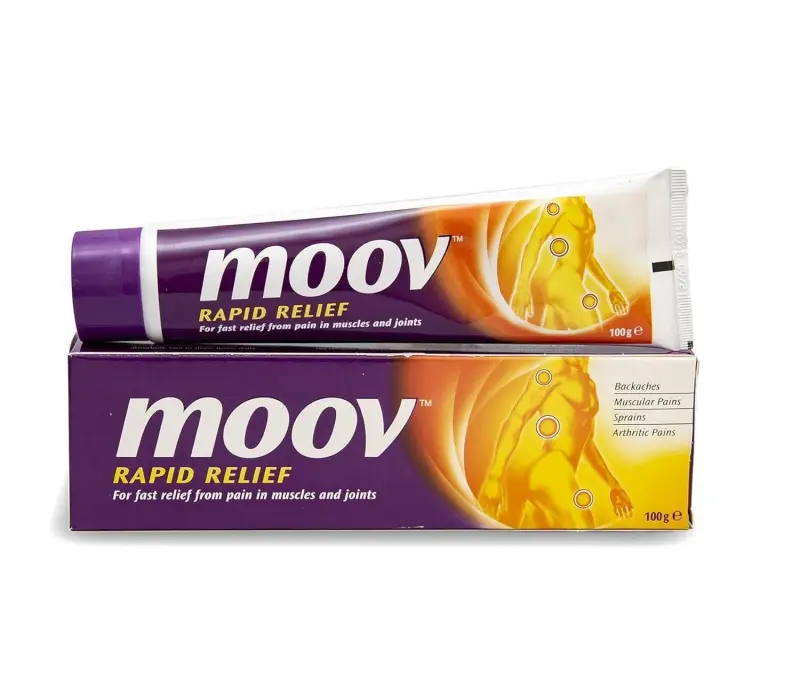
MOOV Rapid Relief Ointment is a topical pain reliever used for muscle and joint pain, backache, and discomfort associated with strains and sprains. It contains ingredients such as menthol and wintergreen oil that affect how pain is felt in the area where the ointment is applied.
But should you massage MOOV after applying it? How quickly does it work? And does it treat inflammation or simply relieve pain? Here are clear answers to the most common questions.
What are the ingredients in MOOV ointment?
MOOV Rapid Relief Ointment contains four main ingredients:
- Wintergreen Oil (15% w/w): Contains methyl salicylate, a substance used in topical pain relievers for muscle and joint discomfort.
- Menthol (5% w/w): Produces a cooling sensation by activating sensory receptors in the skin, which can change how pain is perceived.
- Turpentine Oil (3% w/w): An ingredient used in topical preparations that produce a warming sensation.
- Eucalyptus Oil (2% w/w): A botanical ingredient included in the ointment's formulation.
What dosage forms of MOOV are available?
MOOV products are available in different topical formulations, depending on the market:
- MOOV Ointment: Applied directly to the painful area and gently massaged into the skin.
- MOOV Pain Relief Spray: A topical spray that can be applied without spreading an ointment by hand.
- MOOV STRONG: A separate product range that includes diclofenac gel and spray in some markets.
These products do not necessarily contain the same active ingredients. Always check the specific product before using it.
What are the indications for MOOV ointment, and who can use it?
MOOV ointment is indicated for the relief of pain associated with:
- Muscle and joint pain.
- Backache and lower back pain (lumbago).
- Muscle strains and sprains.
- Pain associated with muscle inflammation (myositis).
- Pain associated with fibrous tissue inflammation (fibrositis).
It is intended for topical use in people aged 16 years and older who do not have contraindications.
MOOV provides symptomatic pain relief. It does not replace medical assessment or treatment of the underlying condition when needed.
How do you use MOOV ointment?
Follow these steps:
- Apply a thin layer of MOOV ointment to the affected area on intact skin.
- Massage gently until the ointment is fully absorbed.
- Repeat two to three times daily.
- Wash your hands after application and avoid contact with the eyes and mouth.
Do not apply excessive amounts or use the ointment on wounds or irritated skin. Avoid heating pads and tight bandages over the treated area.
Frequently Asked Questions About MOOV Ointment
Should you massage MOOV ointment after applying it?
Yes. MOOV ointment can be gently massaged into the skin to distribute the product. Deep or forceful massage is unnecessary.
However, avoid massaging a new muscle strain or sprain during the first 48–72 hours, particularly if swelling is present. Early massage may increase swelling and worsen discomfort.
How long does MOOV ointment take to work?
You may notice a cooling or warming sensation after applying MOOV because of its effects on sensory receptors in the skin.
However, there is no established, product-specific time for the onset of pain relief. The response may vary depending on the type and severity of pain.
Feeling warmth or cooling does not necessarily mean that meaningful pain relief has occurred.
Is MOOV ointment a pain reliever or a treatment?
MOOV is a topical pain reliever. It may reduce discomfort, but it does not necessarily treat the underlying cause.
For example, an ointment may relieve pain associated with a muscle strain without repairing damaged muscle fibers or injured ligaments. Some conditions may require relative rest, rehabilitation, or medical treatment.
Does MOOV ointment treat muscle strains?
MOOV may help relieve pain associated with muscle strains, but it is not a muscle relaxant, and there is insufficient evidence that it accelerates tissue healing.
For a recent injury, protect the affected area and avoid movements that increase pain.
Repeated muscle cramps without an obvious injury may have other causes, including dehydration, electrolyte disturbances, or certain medications. Magnesium supports normal muscle contraction and relaxation, but muscle cramps do not always indicate magnesium deficiency.
Is MOOV ointment anti-inflammatory?
MOOV is used to relieve pain associated with certain inflammatory conditions, but it should not be considered an evidence-equivalent substitute for topical anti-inflammatory medicines such as diclofenac.
Wintergreen oil contains methyl salicylate. However, clinical evidence supporting salicylate-containing topical rubefacients for musculoskeletal pain is limited and uncertain.
Pain relief does not necessarily mean that the underlying inflammation has resolved.
Why does MOOV ointment cause a burning sensation?
MOOV may produce cooling, warmth, or tingling because of the effects of its ingredients on sensory nerves in the skin.
A severe or painful burning sensation is not a sign of better effectiveness.
Stop using the ointment and seek medical advice if you experience intense burning, painful redness, swelling, or blisters.
What are the side effects of MOOV ointment?
Possible side effects include:
- Skin redness or irritation.
- Itching or an allergic skin reaction.
- Uncomfortable burning or stinging.
Rare cases of serious skin burns have been reported with certain topical pain relievers containing menthol.
To reduce these risks, avoid excessive application, damaged skin, heating pads, and tight dressings over the treated area.
Can pregnant women use MOOV ointment?
MOOV ointment should not be used during the last three months of pregnancy because it contains methyl salicylate.
During the first six months of pregnancy, consult your doctor before using MOOV to determine whether it is appropriate for you.
MOOV ointment should also be avoided during breastfeeding.
Who should not use MOOV ointment?
Do not use this MOOV ointment if you:
- Are younger than 16 years.
- Are breastfeeding.
- Have an active peptic ulcer or a history of peptic ulceration.
- Are allergic to methyl salicylate, menthol, turpentine oil, eucalyptus oil, or another ingredient.
Also speak with your doctor or pharmacist if you take warfarin or have a known allergy to aspirin or salicylates.
MOOV is for external use only and must be kept out of children's reach.
What is the strongest ointment for muscle pain?
There is no single strongest topical pain reliever for every type of muscle pain. The appropriate choice depends on the cause and severity of the pain.
Clinical reviews provide stronger evidence for certain topical nonsteroidal anti-inflammatory drugs (NSAIDs), including specific formulations of diclofenac, ketoprofen, and ibuprofen, for acute muscle and soft-tissue injuries.
The evidence supporting topical salicylate rubefacients is less convincing. This does not mean that every NSAID formulation has been directly compared with MOOV.
Ask a pharmacist to help select a product suitable for your symptoms and medical history.
When should you see a doctor?
Seek medical assessment if you have severe pain, significant swelling, difficulty moving or walking after an injury, or symptoms that are getting worse.
You should also seek advice if your symptoms do not improve within five days, or if you develop a severe skin reaction after using the ointment.
Conclusion
MOOV Rapid Relief Ointment is a topical pain reliever containing wintergreen oil, menthol, turpentine oil, and eucalyptus oil. It is used for muscle pain, joint pain, and backache.
Apply a thin layer two to three times daily and massage gently, except when massage should be avoided after a recent injury.
Remember that relieving pain is not the same as treating its underlying cause. Persistent or worsening symptoms should be evaluated by a healthcare professional.
Scientific References
- Mayo Clinic – Menthol and Methyl Salicylate
- NHS – Sprains and Strains
- Cochrane – Topical Rubefacients for Musculoskeletal Pain
- Cochrane – Topical NSAIDs for Acute Musculoskeletal Pain
- Health Canada – Topical Pain Relievers and Serious Skin Burns
This article provides general health information and is not a substitute for professional medical advice. MOOV formulations and instructions may differ between products and markets.