Mucuna Pruriens: Its Natural Role in Supporting Dopamine
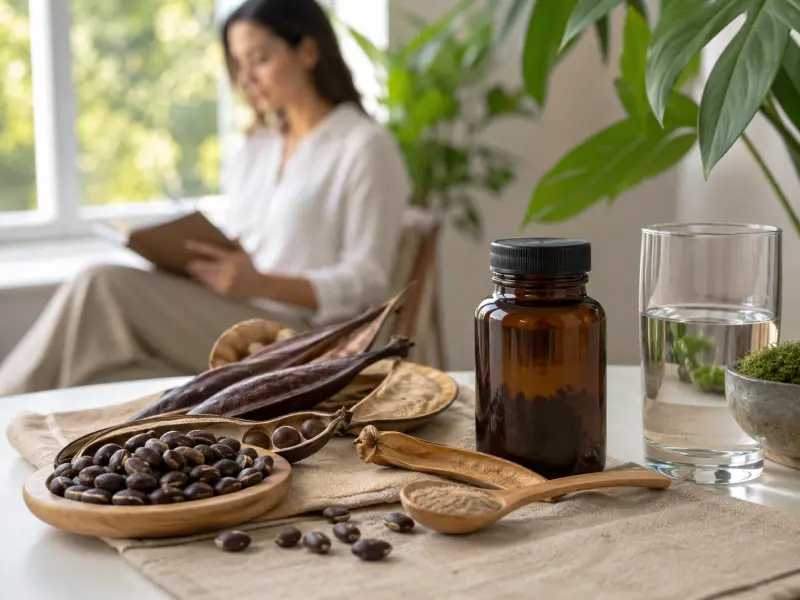
Mucuna Pruriens Benefits: Velvet Bean and Dopamine Support
Mucuna pruriens, also known as velvet bean, is a tropical plant that has gained attention because its seeds naturally contain levodopa, or L-dopa. L-dopa is a compound involved in the body’s dopamine production pathway.
For this reason, Mucuna pruriens is often discussed in relation to brain health, mood, movement, and Parkinson’s disease. However, it should be approached carefully because its L-dopa content makes it a biologically active supplement, not just a simple herb.
In this article, we explain the potential benefits of Mucuna pruriens, how it relates to dopamine, what research says about Parkinson’s disease, and the most important safety warnings before use.
What Is Mucuna Pruriens?
Mucuna pruriens is a climbing tropical plant found in parts of Asia, Africa, and Latin America. Its seeds are known as velvet beans because the pods are covered with fine hairs that may cause itching when touched.
The plant has been used traditionally in some folk and Ayurvedic practices. Modern scientific interest is mainly related to its natural content of L-dopa.
| Name | Explanation |
|---|---|
| Common name | Mucuna pruriens or velvet bean |
| Scientific name | Mucuna pruriens |
| Main active compound | L-dopa or levodopa |
| Main area of interest | Dopamine, Parkinson’s disease, mood, and brain health |
How Is Mucuna Pruriens Related to Dopamine?
Dopamine is an important neurotransmitter involved in movement, motivation, mood, attention, and learning. Low dopamine activity in specific brain regions is closely linked to Parkinson’s disease, while dopamine pathways are also involved in mood and motivation.
Mucuna pruriens contains L-dopa, a compound the body can convert into dopamine. This means Mucuna may influence dopamine pathways, but that does not mean it is suitable for everyone or safe for unsupervised use.
| Term | What It Means |
|---|---|
| L-dopa | A precursor compound that the body can convert into dopamine. |
| Dopamine | A neurotransmitter involved in movement, motivation, attention, and mood. |
| Pharmaceutical levodopa | A medication commonly used to treat symptoms of Parkinson’s disease under medical supervision. |
| Mucuna supplements | Plant-based products that may vary in L-dopa concentration, quality, and dose. |
If you are interested in general brain and focus support, you can read Vitaminati’s article on memory changes and cognitive health.
Potential Benefits of Mucuna Pruriens
Most proposed benefits of Mucuna pruriens are related to its L-dopa content and its possible influence on dopamine pathways. However, the strength of evidence varies by benefit, and many uses require larger and longer human studies.
| Potential Benefit | Possible Reason | Caution Level |
|---|---|---|
| Dopamine pathway support | Presence of L-dopa as a dopamine precursor. | High, because of possible interactions with dopamine-related medication. |
| Research interest in Parkinson’s disease | Parkinson’s disease is linked to dopamine deficiency in the brain. | Very high; do not use without a neurologist’s guidance. |
| Mood and motivation support | Dopamine participates in motivation and reward pathways. | Moderate to high, especially with anxiety or psychiatric conditions. |
| Focus support | Dopamine is involved in attention, but evidence is limited. | Do not use as a treatment for ADHD or focus disorders. |
Mucuna Pruriens and Parkinson’s Disease
Parkinson’s disease occurs when specific dopamine-producing cells in the brain decline, leading to motor symptoms such as tremor, slowness, stiffness, and movement difficulty.
Because Mucuna contains L-dopa, it has been studied in small trials as a possible option that may affect motor symptoms in Parkinson’s disease. Some studies have suggested a faster onset or motor improvement in certain settings, but this does not mean it is a direct or guaranteed replacement for Parkinson’s medication.
The reason is that Mucuna supplements may vary in L-dopa content, while Parkinson’s disease requires careful dose adjustment and medical monitoring to avoid side effects such as involuntary movements, blood pressure changes, or psychiatric symptoms.
| What We Know | What Remains Unclear |
|---|---|
| Mucuna naturally contains L-dopa. | Long-term efficacy and safety are not well established. |
| Some small trials have studied Mucuna in Parkinson’s disease. | The best dose, formulation, and quality standards are not clear for everyone. |
| It may affect motor symptoms because of L-dopa. | It is not known whether it is suitable for all patients or safe with different medications. |
Important: If you have Parkinson’s disease or take levodopa, carbidopa/levodopa, or any medication that affects dopamine, do not use Mucuna pruriens without consulting your neurologist.
Does Mucuna Pruriens Help Mood and Focus?
Dopamine is involved in motivation, reward, and attention. For this reason, Mucuna pruriens is sometimes marketed as a supplement for mood or focus. This idea needs careful balance.
Some people may notice changes in energy or motivation, but evidence is not strong enough to use Mucuna as a treatment for poor focus, depression, ADHD, or mental fatigue.
Poor focus can result from poor sleep, stress, low iron, vitamin B12 deficiency, vitamin D deficiency, thyroid disorders, anxiety, depression, or ADHD. It should not be reduced to “low dopamine” alone.
For more on focus and cognitive support, you can read Vitaminati’s article on Brainomax and brain health support, as well as ADHD in adults.
Is Mucuna Pruriens an Antioxidant or Nerve Support Herb?
Mucuna pruriens contains several plant compounds, and it has been studied in laboratory and animal research for possible antioxidant and neuroprotective effects.
However, laboratory or animal findings do not necessarily mean the same effect occurs in humans with the same strength. These benefits should be described as “potential” or “under investigation,” not as confirmed therapeutic effects.
| Type of Evidence | How to Understand It |
|---|---|
| Laboratory studies | Suggest possible mechanisms, but do not prove direct clinical benefit. |
| Animal studies | Useful for research, but findings do not always apply to humans. |
| Small human studies | Provide early signals, but need confirmation in larger studies. |
| Long-term trials | Needed to understand safety and effectiveness with continued use. |
Mucuna Pruriens Side Effects and Safety Concerns
Because of its L-dopa content, Mucuna pruriens may cause side effects that partly resemble effects related to increased dopamine activity, especially at high doses or when used with medications that affect dopamine.
| Possible Side Effect | What May Happen |
|---|---|
| Digestive discomfort | Nausea, stomach pain, vomiting, or diarrhea in some people. |
| Dizziness or headache | May occur due to nervous system effects or blood pressure changes. |
| Insomnia or irritability | May occur in some people because of dopamine-related effects or timing of use. |
| Mood changes | May be concerning in people with anxiety, mania, psychosis, or hallucination history. |
| Involuntary movements | May be more relevant in people with Parkinson’s disease or when combined with L-dopa medication. |
Who Should Avoid Mucuna Pruriens?
Mucuna pruriens is not suitable for everyone. It should be avoided or used only under medical supervision in certain situations.
- People with Parkinson’s disease taking levodopa or dopamine-related medications.
- People with bipolar disorder, mania, psychosis, or a history of hallucinations.
- Pregnant or breastfeeding women due to limited safety data.
- People taking psychiatric medication or medicines that affect dopamine.
- People with high or low blood pressure or heart disease.
- People with liver or kidney disease, or those taking multiple chronic medications.
- People preparing for surgery, unless approved by a physician.
Mucuna Pruriens Drug Interactions
The most important safety concern with Mucuna pruriens is the possibility of drug interactions, especially because it may contain active amounts of L-dopa.
| Medication Type | Reason for Caution |
|---|---|
| Parkinson’s medications such as levodopa | May increase dopamine effects or side effects if combined without supervision. |
| Certain psychiatric medications | May interact with dopamine pathways or worsen mood changes. |
| Blood pressure medications | May contribute to blood pressure changes or dizziness in some people. |
| MAO inhibitors or neurotransmitter-related medications | May increase neurological or blood pressure-related interaction risks. |
If you take any chronic medication, especially neurological, psychiatric, or blood pressure medication, do not start Mucuna without asking your doctor or pharmacist.
The Quality Problem With Mucuna Supplements
Not all Mucuna supplements are the same. The amount of L-dopa may vary from product to product, and the real dose may not always be clear. This is very important because L-dopa is an active compound that affects the nervous system.
If a healthcare professional recommends using it, it is better to choose a reliable product that clearly states the L-dopa percentage and ideally has third-party testing.
| What to Look For | Why It Matters |
|---|---|
| Clearly stated L-dopa percentage | Helps estimate product strength and avoid random dosing. |
| Third-party quality testing | May reduce the risk of contamination or inaccurate concentration. |
| Clear dosage instructions | Helps reduce misuse. |
| No exaggerated treatment claims | A supplement should not be marketed as a replacement for Parkinson’s medication or treatment for psychiatric conditions. |
Should You Use Mucuna Pruriens?
The answer depends on the reason for use and your health status. If the goal is general support for focus or mood, safer first steps include improving sleep, correcting nutrient deficiencies, physical activity, and stress management.
If the goal is related to Parkinson’s disease, motor symptoms, or medication support, the decision should not be made without a neurologist, because dosing and interactions can be sensitive.
For general nutritional brain support, you can read Vitaminati’s articles on omega-3 benefits and magnesium for energy and mental health.
Conclusion
The benefits of Mucuna pruriens are mainly linked to its L-dopa content, a compound involved in dopamine production. This is why it has gained attention in research related to Parkinson’s disease, mood, and focus.
However, that same strength makes it a supplement that requires caution. It is not an ordinary herb, and it is not a guaranteed or safe replacement for Parkinson’s medication. Long-term evidence on safety and effectiveness remains limited.
If you are considering using it, especially if you take medication or have a neurological or psychiatric condition, consult a doctor or pharmacist before starting.
FAQs
1. What is Mucuna pruriens?
Mucuna pruriens, also known as velvet bean, is a tropical plant whose seeds grow inside pods covered with fine hairs. The seeds naturally contain L-dopa, a compound involved in the body’s dopamine production pathway.
2. What are the main benefits of Mucuna pruriens?
The potential benefits of Mucuna pruriens are mainly linked to its L-dopa content. It may support dopamine pathways, has been studied for motor symptoms in Parkinson’s disease, and may indirectly affect mood and focus, but human evidence remains limited.
3. Does Mucuna pruriens increase dopamine?
Mucuna pruriens contains L-dopa, which the body can convert into dopamine. Therefore, it may affect dopamine pathways, but the effect depends on dose, extract quality, health status, and medications used.
4. Is Mucuna pruriens helpful for Parkinson’s disease?
Mucuna pruriens has been studied in small trials in people with Parkinson’s disease because of its L-dopa content. Some findings suggest possible effects on motor symptoms, but long-term safety and efficacy are not established. It should not be used instead of Parkinson’s medication without medical supervision.
5. Is Mucuna pruriens a natural alternative to levodopa?
Mucuna pruriens should not be considered a direct natural replacement for pharmaceutical levodopa. The L-dopa content in supplements can vary widely, and interactions or side effects may occur, especially in people with Parkinson’s disease.
6. Does Mucuna pruriens help with focus?
Mucuna pruriens may influence dopamine pathways involved in motivation and attention, but evidence is not sufficient to use it as a treatment for focus problems or ADHD. Causes of poor focus such as sleep, nutrition, anxiety, and medical conditions should be assessed.
7. What are the side effects of Mucuna pruriens?
Mucuna pruriens may cause nausea, stomach upset, dizziness, insomnia, mood changes, or effects related to increased dopamine activity. Risks may be higher with high doses or when combined with medications that affect dopamine.
8. Who should avoid Mucuna pruriens?
Mucuna pruriens should be avoided or used only under medical supervision by people with Parkinson’s disease taking levodopa or dopamine-related medications, pregnant or breastfeeding women, people with psychosis or mania, people with heart or blood pressure conditions, and those taking chronic medications.
9. Can Mucuna pruriens be taken with Parkinson’s medication?
Mucuna pruriens should not be combined with Parkinson’s medication or any medication containing levodopa without medical supervision, because it may increase side effects or disrupt dopamine levels.
10. Is the quality of Mucuna pruriens supplements consistent?
No. The amount of L-dopa may vary significantly between products. It is important to choose reliable, tested products and avoid high doses or unsupervised use, especially in sensitive medical conditions.
Related Articles on Vitaminati
- Memory Changes and Cognitive Health
- Brainomax: Brain Health and Cognitive Performance Support
- Benefits of Brainomax for Focus and Mental Performance
- ADHD in Adults: The Hidden Struggle Behind Distraction
- Omega-3 Benefits: Heart Health and Eye Support
- Magnesium: An Essential Mineral for Energy and Mental Health
- Sleep Hygiene and Natural Sleep
Health Disclaimer
This article is for general educational purposes only and does not replace medical or pharmaceutical advice. Do not use Mucuna pruriens to treat Parkinson’s disease, depression, ADHD, or any neurological or psychiatric condition without professional supervision. If you take levodopa, Parkinson’s medication, psychiatric medication, blood pressure medication, or have a chronic medical condition, consult your doctor before using this supplement.
Scientific References
- NCCIH: Parkinson’s Disease and Complementary Health Approaches
- Mucuna pruriens in Parkinson’s Disease: A Double-Blind Clinical and Pharmacological Study
- PubMed: Mucuna pruriens and Dopaminergic Research
- Analysis of Levodopa Content in Commercial Mucuna pruriens Products
- Levodopa Content of Mucuna pruriens Supplements in the NIH Dietary Supplement Label Database
- NHS: Parkinson’s Disease
- Mayo Clinic: Parkinson’s Disease - Symptoms and Causes