Natural Sources of Vitamin D: Best Foods and How to Boost Your Levels Without Supplements
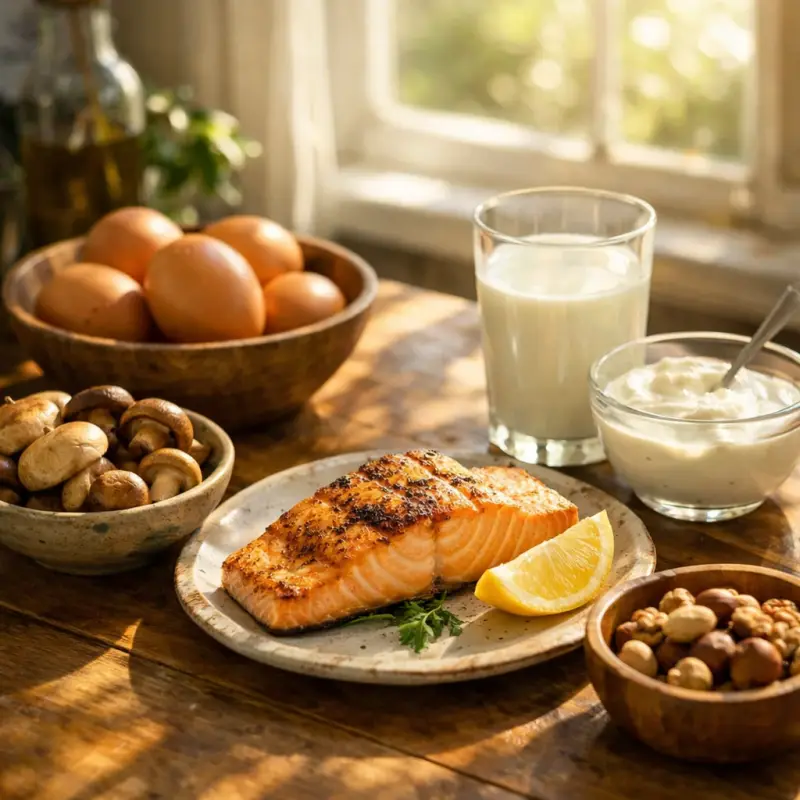
Vitamin D is an essential nutrient the body needs to maintain strong bones, support the immune system, improve muscle function, and regulate mood. Despite its importance, Vitamin D deficiency remains one of the most common nutritional deficiencies worldwide, particularly in individuals with limited sun exposure or unbalanced diets [1].
Although many people turn to supplements, it is possible to increase Vitamin D levels naturally through food when the right sources are selected and consistently included in the daily diet. This article explores the best natural sources of Vitamin D, vegetarian options, preparation methods, and when supplementation may be necessary.
Why Natural Sources of Vitamin D Are Important
Vitamin D is unique because it can be produced in the skin through sunlight exposure. However, in many situations—especially during winter or in regions with limited sunlight—diet becomes a key contributor.
- Bone health: Helps absorb calcium and phosphorus
- Immune support: Enhances immune response
- Muscle function: Reduces weakness and fall risk
- Mood regulation: Linked to mental well-being
Health authorities emphasize combining dietary intake with sunlight exposure to maintain optimal levels [2].
Top Natural Sources of Vitamin D: Best 10 Foods
- Fatty fish: Salmon, mackerel, sardines (360–600 IU per 100g)
- Cod liver oil: 450–1000 IU per teaspoon
- Egg yolks: ~40 IU per egg
- Seafood: Shrimp, oysters
- Fortified foods: Milk, cereals, juices
- Beef liver: ~50 IU per 100g
- UV-exposed mushrooms: Key plant-based source
- Cheese: Small amounts
- Fortified plant milk: Soy, almond, oat
- Fortified yogurt: Easy daily option
Regular consumption of these foods helps meet daily Vitamin D requirements [1].
Vitamin D Sources for Vegetarians
Vegetarians and vegans often rely on fortified or plant-based sources:
- UV-exposed mushrooms
- Fortified plant milk
- Fortified cereals
- Plant-based yogurt
Checking labels is essential because Vitamin D content varies across products.
How to Preserve Vitamin D in Food
- Grill or bake instead of frying
- Avoid excessive heat
- Use moderate cooking methods
Vitamin D is relatively stable but can still degrade with improper cooking.
Factors That Affect Vitamin D Absorption
- Low-fat diets
- Highly processed foods
- Poor gut health
- Excess caffeine
Vitamin D is fat-soluble, so consuming it with healthy fats improves absorption [1].
Daily Vitamin D Requirements
- Adults: 600–800 IU daily
- Older adults: Higher needs
Example:
- Salmon: ~400–600 IU
- Egg: ~40 IU
- Fortified milk: ~100 IU
When Food Alone Is Not Enough
- Limited sun exposure
- Darker skin
- Older age
- Pregnancy
- Malabsorption conditions
When Supplements Are Needed
- Confirmed deficiency
- Low dietary intake
- Limited sunlight
Upper safe limit: 4000 IU daily [3].
Sample Daily Plan
- Breakfast: Egg + fortified milk
- Snack: Yogurt + nuts
- Lunch: Grilled salmon
- Snack: Mushrooms
- Dinner: Light protein + vegetables
FAQs
1. Can you get Vitamin D from food only?
Yes, but it depends on diet and sun exposure.
2. Best vegetarian sources?
UV mushrooms and fortified foods.
3. Does cooking reduce Vitamin D?
Excessive cooking may reduce it slightly.
4. Daily requirement?
600–800 IU.
5. Are supplements necessary?
Only in specific cases.
Conclusion
Natural sources of Vitamin D are essential for maintaining overall health. While food alone may not always be sufficient, combining a balanced diet with sunlight exposure provides the most effective and sustainable approach.