Pain Is Real, But the Body Can Sometimes Learn a Different Response
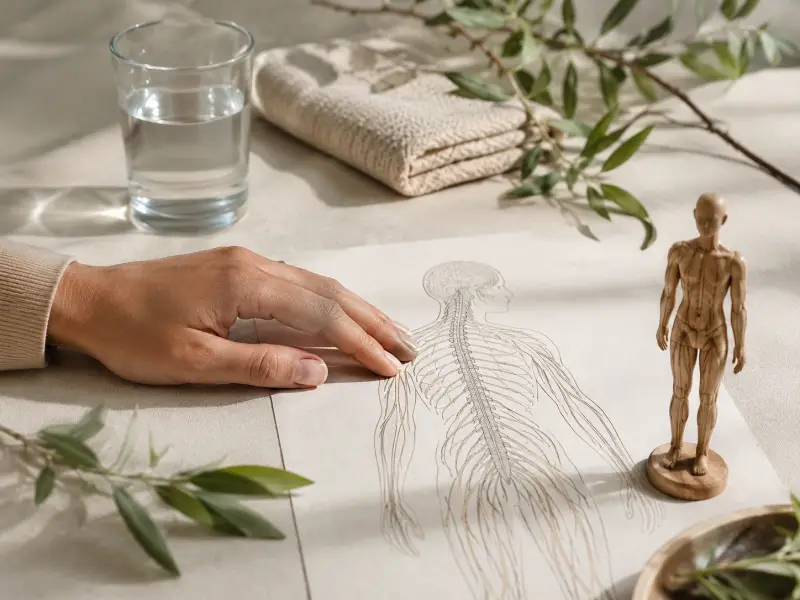
When a patient says, “I am in pain,” the first duty is to believe him.
Pain is not imaginary because it is influenced by attention, fear, memory, stress, or expectation. Pain is real. The International Association for the Study of Pain defines pain as an unpleasant sensory and emotional experience associated with, or resembling that associated with, actual or potential tissue damage. That definition is important because it does not reduce pain to tissue damage alone. It recognizes pain as both bodily and experiential.
This is close to the starting point of my thesis: the human being cannot be divided neatly into body on one side and psyche on the other. What we call body, mind, consciousness, emotion, and memory are different perspectives on one living system. In the thesis, I describe hypnosystemic pastoral care as an approach that can address physical, psychological, interpersonal, and spiritual stress together, rather than treating them as disconnected realities.
This does not mean that pain should be dismissed as “mental.” It means the opposite: pain deserves a broader, more respectful clinical understanding.
The question is not: “Is the pain physical or psychological?”
The better question is: How is the whole person experiencing, protecting, amplifying, reducing, fearing, remembering, and responding to this pain?
And this is where therapeutic stories may help.
A story does not replace diagnosis. It does not replace rheumatology, orthopedics, physiotherapy, medication, imaging when indicated, or urgent medical care. But in some patients, a therapeutic image can help the nervous system shift from alarm to regulation, from rigidity to movement, from fear to participation.
The story: “Can you make my pain go away?”
In one of the hospital encounters described in the thesis, I met an elderly man who had arrived early that morning with a severe rheumatic flare-up. He was in a lot of pain. He sat tensely on the edge of the bed. I asked, carefully, whether he was there so the doctors could make the pain go away a little.
He responded with a direct question: “Can you do that? Can you make my pain go away?”
This was not the usual request one expects in pastoral care. It sounded almost like a request for a miracle. I did not want to promise what I could not promise. But I also did not want to deny the possibility that his body might respond. So I answered in a different way:
“Let’s see what your body can do for you.”
That sentence matters.
It does not claim that the therapist is the healer. It does not command the body. It does not deny medicine. It invites the patient into a collaborative experiment with his own bodily experience.
I asked whether I could borrow his arm. Then I invited him to imagine that he was a tree and that his arm was a branch. He said the tree was an elm. I suggested that the branch had been covered with snow for many hours, and that a branch covered with snow does not feel much. From there, we explored where in the arm there was already some numbness or insensitivity. He identified the wrist. I asked what color that numb feeling would be if it were a light. He said yellow.
Then the yellow light was invited to spread: through the arm, across the chest, to the other side, up to the head, down the back, and especially to the places that needed it most. He named the knees. Then the neck.
After continuing the process, I noticed that he was dangling his legs like a little boy on a swing. His body looked more lively. When I asked how he felt, he answered with astonishment:
“That can’t be! How is that possible? I’m not in any pain anymore.”
The response I gave was not an explanation of mechanism. It was a confirmation of experience:
“You can tell that it’s possible because it’s happening.”
Then I asked him to welcome his body warmly, and if any remnants of the previous condition returned, to sit down, dangle his legs, and repeat what we had done with the body that day. This story appears in the thesis under the section “Here to stay – working with a patient.”
What this story shows — scientifically and carefully
This story should not be used to claim that rheumatic disease can be cured by imagination. That would be medically irresponsible.
A rheumatic flare-up may involve inflammation, immune activity, joint involvement, and other biological processes requiring medical assessment and treatment. For broader context on immune-related conditions, Vitaminati readers can also review this article on autoimmune conditions such as rheumatoid arthritis.
The story does not prove that the underlying rheumatic condition disappeared. It describes a change in the patient’s pain experience during a specific therapeutic encounter.
That distinction is essential.
The scientifically careful interpretation is this:
Pain experience can sometimes change rapidly, even when the underlying medical condition has not necessarily changed at the same speed.
This is not strange when we understand pain as a sensory and emotional experience. Pain intensity is influenced by many factors, including tissue signals, attention, fear, expectation, muscle tension, fatigue, sleep, stress, previous experiences, and the perceived meaning of the pain. The IASP definition itself supports the principle that pain includes both sensory and emotional dimensions.
Clinical hypnosis research also supports a cautious version of this idea. The U.S. National Center for Complementary and Integrative Health states that a growing body of evidence suggests hypnosis may help manage some painful conditions, while also noting that evidence for some uses remains inconclusive.
So the story is not “magic.”
It is not proof of universal healing.
It is not a substitute for medical treatment.
It is an example of how attention, imagery, suggestion, bodily sensation, expectation, and therapeutic safety may interact with pain perception.
Why the tree image may have helped
The image of the tree was not random. It created distance from the pain without denying the body.
The patient was not told, “Your pain is gone.”
He was invited to imagine a body part differently.
The arm became a branch.
The branch was covered in snow.
Snow suggested numbness, cooling, quietness, and reduced sensation. Real cold exposure is a different matter, and it is discussed in ice therapy: pain or pleasure?
The numbness already present in the wrist was not invented; it was found and then expanded imaginatively.
The yellow light gave the patient a sensory image that could move through the body.
This is important clinically: the work began with something the patient could already perceive. It did not force a foreign suggestion onto him. It amplified a small bodily resource that was already available.
In hypnosystemic work, this matters. The body is not treated as an enemy. The symptom is not attacked. The patient is invited to discover a bodily capacity and allow it to spread.
Pain and tension: a loop that sometimes can be interrupted
Another pain story in the thesis concerns a clinic employee with lumbago. She had been experiencing acute low back pain since the previous day and was considering whether to receive an injection or wait for the tension to resolve.
I asked whether I could show her techniques from “my other world.” She agreed. The work involved arm catalepsy, imagined rigidity, hypnotic anesthesia, and then release of rigidity while maintaining analgesia. The thesis describes the process as a way of interrupting the circular pattern: pain causes tension, and tension causes pain. After the intervention, the employee shook out her body, became flexible, and was pain-free; she later reported that the effect lasted in the following days and weeks.
Again, this should be read carefully.
The story does not mean every case of low back pain should be treated with hypnosis. It does not mean medical evaluation is unnecessary. It does not mean all back pain is caused by tension.
But it does illustrate a clinically recognized phenomenon: pain and protective muscle tension can reinforce one another. In many patients, the body protects against pain by tightening. The tightening itself may then increase discomfort, reduce movement, and intensify fear.
Modern low back pain guidelines often include non-drug and movement-based approaches. NICE recommends considering manual therapy only as part of a treatment package that includes exercise, with or without psychological therapy, and also considers cognitive-behavioral psychological approaches as part of a broader package for low back pain or sciatica.
The American College of Physicians guideline for nonradicular low back pain recommends non-drug therapies such as superficial heat, massage, acupuncture, or spinal manipulation for acute or subacute low back pain, and if medication is used, NSAIDs or skeletal muscle relaxants may be selected based on patient factors.
These guidelines do not say “use stories.” But they do support an important principle: pain care is not only pharmacological. Movement, psychological approaches, reassurance, manual techniques, and self-management can all have a place when clinically appropriate.
The therapeutic message: “Your body can do something”
Patients in pain often feel betrayed by the body.
The back has locked.
The joints burn.
The neck tightens.
The knees ache.
The body becomes unpredictable.
The patient begins to fear movement, sleep poorly, and scan the body for the next wave of pain.
In that state, the therapeutic message must be careful. False reassurance is harmful. But helplessness is also harmful.
The sentence “Let’s see what your body can do for you” offers a middle path.
It does not say, “Nothing is wrong.”
It does not say, “You can cure yourself.”
It does not say, “Medicine is unnecessary.”
It says: there may be a resource in the body that we can invite, observe, and strengthen.
This is often the beginning of change.
The nervous system, stress, and pain perception
Pain is not only about the painful area itself. The nervous system, sleep, stress, attention, and emotional safety can all influence how strongly pain is perceived and how the body responds to it.
This does not mean that pain is “only stress.” It means that the nervous system is part of the pain experience. For readers interested in this wider body-mind connection, Vitaminati’s article on the nervous system, stress, and magnesium may provide useful background.
That connection should still be understood carefully. Nutrients and supplements may support normal biological functions when needed, but they do not replace medical diagnosis, pain management, physical therapy, or prescribed treatment.
What patients should not misunderstand
A Vitaminati reader must not leave this article thinking that severe pain should be managed only with relaxation, stories, or self-hypnosis.
Pain can be a warning sign. Medical evaluation is important when pain is severe, sudden, unexplained, persistent, associated with fever, weight loss, trauma, weakness, numbness, bladder or bowel changes, cancer history, infection risk, inflammatory symptoms, or neurological signs. Back pain with red flags requires professional assessment.
For rheumatic disease, patients should follow the care plan of their physician or rheumatologist. A flare-up may require medical treatment. Nutritional support, stress reduction, sleep, movement, and mind–body practices may support well-being, but they do not replace disease-modifying treatment when such treatment is needed.
In some patients, checking for nutritional deficiencies may be appropriate when symptoms, risk factors, or medical history suggest it. For example, Vitaminati readers can learn more about vitamin D deficiency symptoms, while remembering that testing and treatment decisions should be guided by a healthcare professional.
This is the scientific boundary.
Stories may help the patient’s experience of pain.
They do not prove that the underlying pathology has disappeared.
What Vitaminati readers can take from this
For a health platform, the message should be both hopeful and responsible:
- Pain is real.
- Pain should be medically assessed when needed.
- Pain is not only a tissue signal; it is also a whole-person experience.
- Fear, tension, attention, stress, and expectation can influence pain intensity.
- Some mind–body methods, including hypnosis, may help some pain conditions, but results vary and evidence quality differs by condition.
- Safe movement, medical guidance, sleep, emotional support, and physical therapy may all be part of a responsible plan.
For supplement readers specifically, we must be cautious. No supplement should be presented as a cure for rheumatic pain, lumbago, or chronic pain. If deficiencies are present, they should be tested and corrected appropriately. But pain care should not be reduced to pills, whether pharmaceutical or nutritional. It should respect the body as a living system.
Final reflection
The elderly man did not need a lecture on pain theory.
He needed an experience of possibility.
The clinic employee did not need someone to deny her lumbago.
She needed a way to interrupt a painful loop.
In both stories, the therapeutic word did not attack the symptom. It invited the body into a different organization.
That is the heart of this work.
Not every patient becomes pain-free.
Not every symptom responds.
Not every story is the right story.
But when a story is offered with consent, precision, humility, and medical caution, it can sometimes help the patient discover that the body is not only the place where suffering happens.
It may also be the place where relief begins.
Medical note
This article is educational and does not replace professional care. Seek medical evaluation for severe, persistent, unexplained, worsening, traumatic, neurological, inflammatory, or systemic pain symptoms. Patients with rheumatic disease should follow professional medical guidance and should not stop prescribed treatment without consulting their clinician.
Sources used in this blog
- Stefan Hammel thesis — “Here to stay – working with a patient”: used for the story of the elderly patient with severe rheumatic pain, the tree/branch/snow/yellow-light imagery, and the phrase “Let’s see what your body can do for you.”
- Stefan Hammel thesis — “Lumbago – working with a clinic employee”: used for the lumbago story, arm catalepsy, hypnotic anesthesia, and the “pain causes tension and tension causes pain” loop.
- Stefan Hammel thesis — Introduction/body–mind framing: used for the concept that body, psyche, consciousness, and social/spiritual experience should be approached as one living system from different perspectives.
- International Association for the Study of Pain — Pain definition: used for the definition of pain as both sensory and emotional experience.
- NCCIH / NIH — Hypnosis overview: used for the cautious statement that evidence suggests hypnosis may help manage some painful conditions, while evidence is not conclusive for all uses.
- NICE low back pain and sciatica guideline: used for the role of exercise, manual therapy as part of a package, and CBT-style psychological approaches in low back pain care.
- American College of Physicians low back pain guideline statement: used for non-drug options such as superficial heat, massage, acupuncture, or spinal manipulation for acute/subacute nonradicular low back pain.