Selenium: The Comprehensive Guide to Benefits, Types, Dosages, and Best Usage Methods
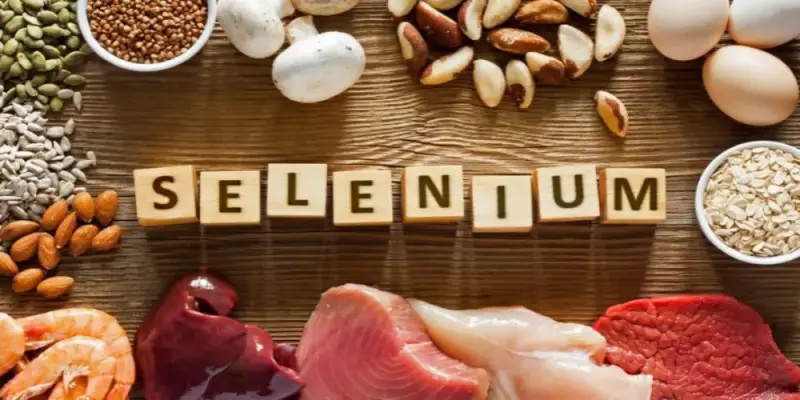
Selenium is an essential mineral that the body needs in very small amounts, but it plays vital roles in supporting immunity, thyroid health, and protecting cells from damage.
What is Selenium and Why Does the Body Need It?
Selenium is a trace mineral classified among rare elements, and it acts as a powerful antioxidant that protects cells from free radicals. It is also involved in the formation of important enzymes known as selenoproteins.
Key Benefits of Selenium
- Boosting the immune system
- Supporting thyroid function
- Protecting the heart from inflammation
- Improving brain function
- Strong antioxidant
- Improving hair and skin health
Signs of Selenium Deficiency
- Weakened immunity
- Fatigue and exhaustion
- Hair loss
- Muscle weakness
- Thyroid problems
- Poor concentration
Best Sources of Selenium
Very Rich Sources:
- Brazil nuts
Animal Sources:
- Red meats
- Chicken
- Fish (tuna and salmon)
- Eggs
Plant Sources:
- Whole grains
- Seeds
- Mushrooms
When Do You Need Selenium Supplements?
- Proven deficiency
- Thyroid problems
- Weakened immunity
- Malnutrition
- Some chronic diseases
Recommended Daily Dose
- Adults: 55 micrograms
- Pregnant women: 60 micrograms
- Lactating women: 70 micrograms
Best Time to Take Selenium
- Can be taken at any time
- Preferably with food
- Stick to a consistent time daily
Types of Selenium Supplements
- Selenomethionine: best absorbed
- Selenium Yeast: a natural multi-form source
- Sodium Selenite: lower absorption and used medically
- Sodium Selenate: similar to selenite
How to Choose the Right Type?
- For daily use: Selenomethionine or Selenium Yeast
- For medical conditions: as prescribed by a doctor
- For sensitive stomachs: natural types
Risks of Excess Selenium
- Nausea and vomiting
- Hair loss
- Garlic-like breath odor
- Fatigue and irritability
- Neurological problems
Usage Precautions
- Avoid high doses for long periods
- Be cautious with multiple supplements
- Kidney and liver patients need medical supervision
- Pregnant women should consult a doctor
Frequently Asked Questions
Is selenium important for the thyroid?
Yes, it plays a crucial role in regulating its hormones.
Can it be obtained from food alone?
Yes, in most cases.
Does it strengthen immunity?
Yes, thanks to its antioxidant properties.
Can it be taken daily?
Yes, within the recommended doses.
Conclusion
Selenium is an essential mineral that supports immunity, thyroid health, and protects cells from damage. Balancing its intake is very important, as both deficiency and excess can cause health problems. The best source is food, with supplements used only when necessary and under professional supervision.
Reliable scientific sources • World Health Organization • National Institutes of Health • European Food Safety Authority • Office of Dietary Supplements