Silica: What the Evidence Really Shows for Hair, Skin, and Nails
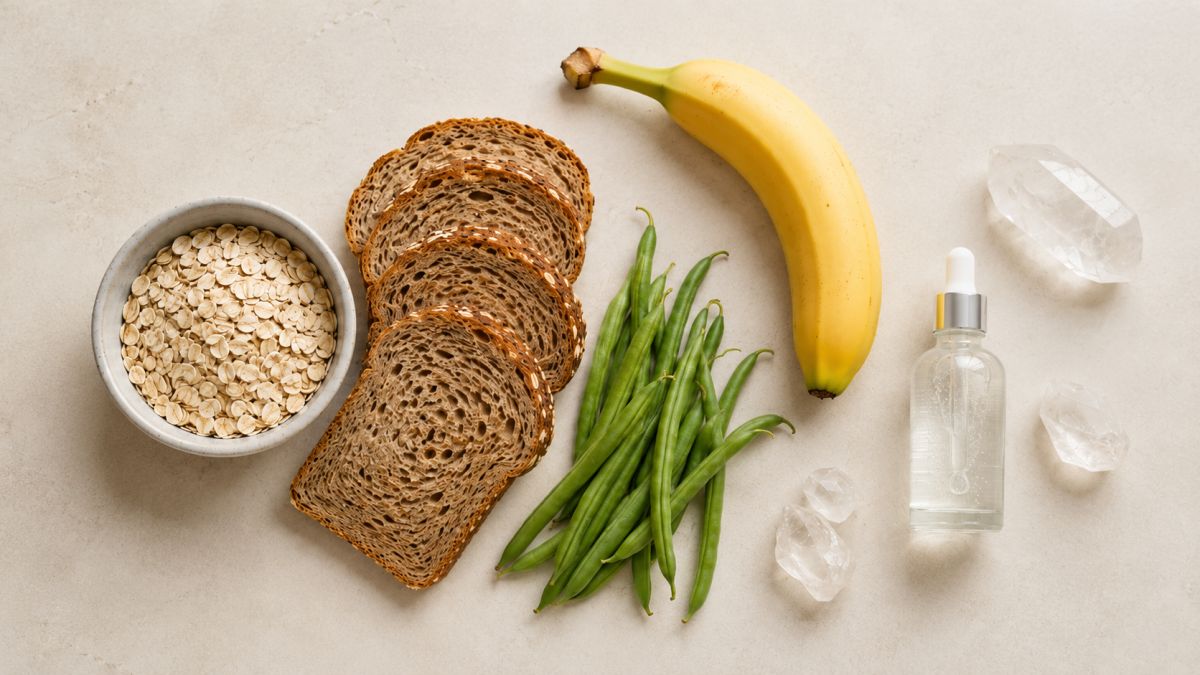
Walk down any supplement aisle and you'll spot silica capsules promising thicker hair, firmer skin, and stronger nails. It's a trendy ingredient in beauty supplements, yet silicon rarely gets the same attention as calcium or iron in mainstream nutrition advice. So what does silicon actually do in the body, and does the supplement hype hold up?
What is silicon, and is it essential?
Silicon is a trace element found throughout your body, especially in connective tissue, bone, and skin, where it's thought to help build collagen and elastin. Here's what the science says so far:
- No major health authority, including the U.S. National Academies or the NIH Office of Dietary Supplements, has officially classified silicon as an essential nutrient for humans.
- There is no established Recommended Dietary Allowance (RDA) or Adequate Intake (AI) for silicon, unlike well-studied minerals such as calcium or magnesium.
- Animal studies hint at a role in bone and connective tissue growth, but there isn't much human data yet.
Where does dietary silicon come from?
Most people get silicon from food without ever thinking about it. The richest sources include:
- Whole grains and bran, especially oat bran, wheat bran, and rice bran.
- Oats and unrefined cereals.
- Beer, one of the most concentrated everyday sources of dietary silicon.
- Bananas and green beans.
- Brown rice and other minimally processed grains.
In Western countries, people typically get about 20–50 mg a day, with men usually getting a bit more than women — mostly from beer and whole grains.
Silica supplements for hair, skin, and nails: what does the research show?
The most-studied supplemental form is choline-stabilized orthosilicic acid (ch-OSA), a bioavailable form of silicon:
- In a study of women with sun-damaged skin, taking ch-OSA daily for 20 weeks was linked to less brittle hair and nails and more elastic skin, compared to a placebo group.
- A separate study in women with fine hair reported thicker hair strands after nine months of daily supplementation.
- Other trials combining silica with biotin have reported improvements in nail thickness and strength over a few weeks.
That said, the evidence has real limits: most studies are small, don't run very long, and several were paid for by the companies selling the supplement. How well your body absorbs it matters too — research suggests plain or generic silica isn't absorbed well, while ch-OSA and similar stabilized forms work better. If you're curious about the wider landscape of hair-focused supplements, our guide to vitamins for hair myths and facts covers which ingredients have solid backing and which are mostly marketing. Silica is also frequently combined with biotin in beauty formulas, so it's worth reading our comprehensive biotin guide to understand how the two nutrients differ and where their evidence overlaps.
Silica and skin aging
Silicon's link to skin mostly comes from its role in collagen cross-linking — the process that keeps skin firm and elastic. As you age, collagen production naturally slows down and becomes more vulnerable to damage from sun exposure and free radicals. Our article on oxidative stress and how it shows on facial skin explains this process in more depth, including which lifestyle factors speed it up. Some small trials suggest ch-OSA supplements may modestly improve skin elasticity, but silica is just one of many nutrients linked to skin health; our broader guide to the best vitamins for skin puts it in context alongside vitamin C, vitamin E, and other better-established options.
What if hair loss or brittle nails have another cause?
Brittle nails, thinning hair, and dull skin are common complaints with many possible causes that have nothing to do with silicon at all, including:
- Iron deficiency, one of the best-documented causes of hair shedding — our guide on whether iron deficiency causes hair loss explains when it's worth testing ferritin levels rather than reaching for a beauty supplement.
- Thyroid conditions.
- Biotin deficiency.
- Chronic stress and simply aging.
Taking a silica supplement without fixing the actual underlying cause probably won't solve the problem.
Is silica safe? Dosage and precautions
Here's what the safety data shows:
- The European Food Safety Authority (EFSA) has reviewed silicon dioxide and silicic acid gel used in food supplements and concluded that intakes of up to about 700 mg of silicon per day from silicon dioxide, and up to 200 mg per day from silicic acid gel, raise no safety concern.
- In practice, most commercial ch-OSA supplements are dosed far lower, typically around 6–10 mg of silicon daily.
- Amorphous silica, the kind used in food and supplements, is considered safe at these doses. Crystalline silica, found in sand, quartz, and construction dust, only carries a lung-health risk if you breathe it in repeatedly over years — not from anything you eat or swallow.
- Long-term data on people who eat a lot of dietary silicon haven't shown links to kidney or liver problems, though a few isolated case reports of kidney stones have been tied to very high, long-term use of silicate-containing antacids — not typical dietary supplements.
Who should be cautious or check with a doctor first?
- People with kidney disease, since data on long-term supplement safety in this group is limited.
- Pregnant or breastfeeding women, given the lack of dedicated safety studies.
- Anyone already taking several supplements or medications, to avoid unnecessary overlap.
- Anyone with persistent hair, skin, or nail changes, who should first rule out an underlying medical cause rather than assume a mineral gap.
Frequently asked questions about silica
Is silicon an essential nutrient like iron or calcium?
No major health body has officially classified it as essential for humans, and there is no established RDA or AI, though research continues.
What foods contain the most silicon?
Whole grains and bran, oats, brown rice, beer, bananas, and green beans are among the richest sources.
Does silica supplementation really strengthen hair and nails?
Small studies on ch-OSA show improvements in hair strength and nail hardness over months, but the evidence is limited and some research was industry-funded.
What is the difference between amorphous and crystalline silica?
Amorphous silica used in food and supplements is considered safe at recommended doses; crystalline silica poses a respiratory risk only when inhaled repeatedly, not when eaten.
Can silica supplements cause kidney stones?
This is a theoretical concern at very high, prolonged doses, not clearly shown at typical supplement amounts; people with kidney disease should check with a doctor.
Should I take silica if I have hair loss or brittle nails?
Not necessarily — these symptoms have many causes, so it's best to identify the underlying reason first.
Who should avoid silica supplements or ask a doctor first?
People with kidney disease, pregnant or breastfeeding women, and anyone taking multiple supplements already.
The bottom line
Silicon is an interesting trace element with a possible, but not yet fully proven, role in hair, skin, and nail health. The best-absorbed supplement forms show promising early results in small studies, while food sources like whole grains, oats, and beer give you silicon as part of a normal diet, with no need for supplements for most healthy people. If you're dealing with ongoing hair, skin, or nail changes, it's worth checking other, better-proven causes before reaching for a silica supplement — and talking to a doctor or pharmacist if you have kidney disease, are pregnant, or take other medications.
Scientific references
- EFSA – Opinion on the Tolerable Upper Intake Level of Silicon
- Journal of the American Academy of Dermatology – Effect of Oral ch-OSA on Skin, Nails, and Hair
- PubMed – Dietary Silicon Intake and Absorption
- PubMed – Silicon in Foods and Diets
- NIH Office of Dietary Supplements – Vitamin and Mineral Supplement Fact Sheets