Sodium: Its Role in Blood Pressure and Hydration — How Much Is Safe Per Day?
Sodium: Its Role in Blood Pressure and Hydration — How Much Is Safe Per Day?
Most people think of sodium as just "salt." But it's actually a mineral your body needs to keep fluids balanced, send nerve signals, and help muscles work. The real problem today isn't getting too little sodium — it's getting too much. Most people eat way more than the safe limit, and over time that raises the risk of high blood pressure and heart disease.
What is sodium and why does the body need it?
Sodium is a mineral your body needs, and you get it mainly from table salt (sodium chloride), which is about 40% sodium and 60% chloride. Sodium does a few important jobs:
- Keeps the right balance of fluid inside and outside your cells.
- Helps send nerve signals and helps muscles work, alongside potassium.
- Helps keep blood pressure in a healthy range.
How much sodium is safe per day?
Guidelines vary a little by organization, but they all agree on one thing: most people eat far more sodium than they should.
- Adequate Intake: 1,500 mg per day for most adults up to age 51 (U.S. National Academies).
- Upper limit: 2,300 mg per day, the Chronic Disease Risk Reduction intake for adults.
- WHO recommendation: less than 2,000 mg per day, or roughly 5 grams of salt.
- Actual global average intake: about 4,300 mg per day — more than double the WHO-recommended limit.
Where does most dietary sodium actually come from?
You'd think the salt you add while cooking would be the main source. But more than 70% of the sodium in a typical diet actually comes from processed foods and restaurant meals, not the salt shaker on the table. Common sources include:
- Sauces and gravies, such as soy sauce, salad dressings, and ready-made tomato sauce.
- Canned soups and bouillon cubes.
- Processed and cured meats, such as sausages, deli meats, and pastrami.
- Processed cheeses and pickles.
- Fast food and frozen ready meals.
- Salted nuts and salty snack foods.
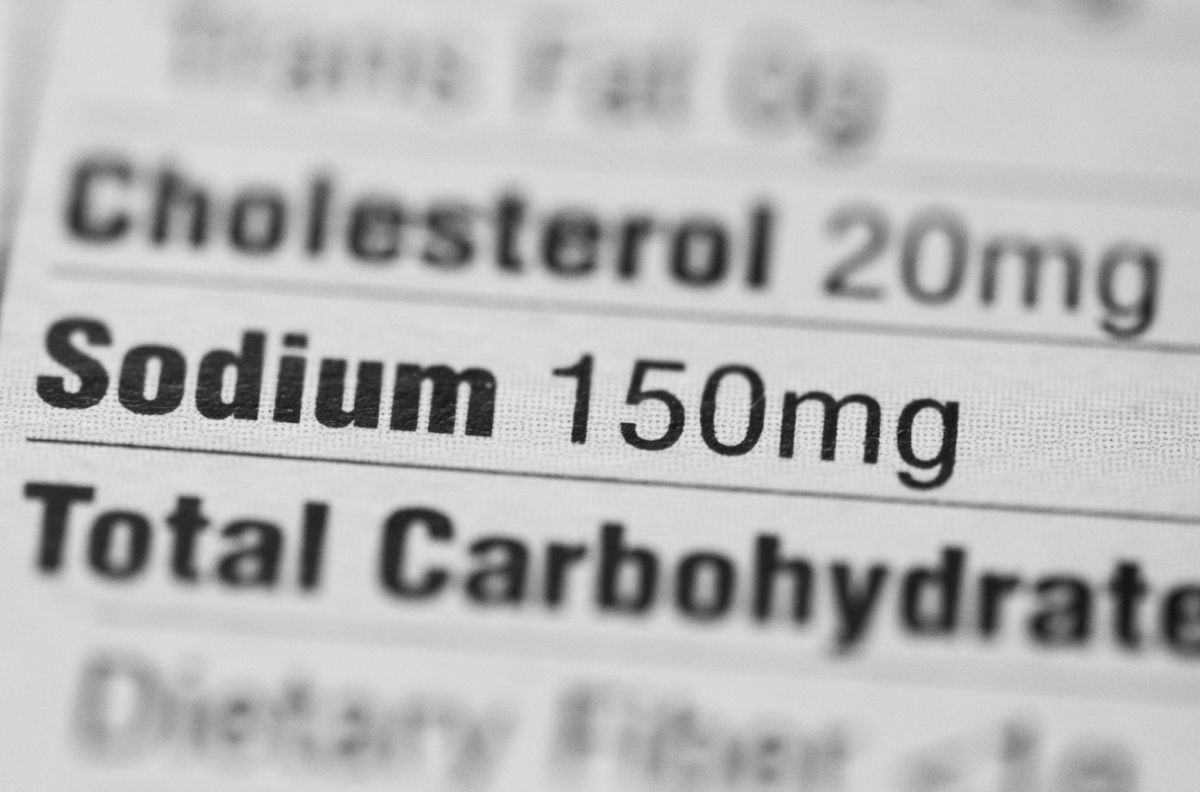
Reading the nutrition label and comparing sodium per serving across similar products is one of the easiest ways to cut back without giving up your favorite foods.
Sodium and blood pressure: what's the connection?
The link between sodium and blood pressure is well proven, but it's a bit more complicated than "salt is bad":
- Eating more sodium is linked to higher blood pressure, and eating less improves blood pressure whether or not you already have high blood pressure.
- It's not just about sodium on its own — it's about the balance between sodium and potassium in your diet. The more potassium you get relative to sodium, like in the DASH eating pattern, the bigger the drop in blood pressure tends to be. That's where potassium's role in balancing sodium's effect on the heart and blood vessels comes in — it works alongside cutting back on salt, not instead of it.
- A well-known study called the DASH-Sodium trial found that combining the DASH diet with less sodium lowered blood pressure more than either one alone.
What happens when sodium levels are too low?
Hyponatremia is the medical name for blood sodium dropping below normal. It's usually caused by the body holding onto too much water, not by actually running short on sodium. Common causes include:
- Drinking too much water without replacing electrolytes — common among endurance athletes.
- Kidney, heart, or liver disease.
- Certain water-pill (diuretic) medications.
- A hormone condition called SIADH, which makes the body hold onto extra water.
Symptoms include nausea, headache, confusion, and fatigue, and severe cases can lead to seizures or coma. Older adults are more at risk because of medications and other health conditions, so any severe symptoms need prompt medical attention.
What happens when sodium intake is too high?
Over the long run, eating too much sodium carries real risks:
- High blood pressure — the most consistent, well-proven effect.
- Fluid retention, since the body holds onto extra water to balance out the sodium.
- Extra strain on the heart and kidneys over time.
- An estimated 1.9 million deaths worldwide each year are linked to eating too much sodium, according to the World Health Organization.
People with high blood pressure, kidney disease, or heart failure feel the effects of extra sodium more strongly, so a doctor may tell them to cut back on salt more than a healthy person would need to.
Practical ways to cut back on sodium without losing flavor
- Gradually replace salt with fresh or dried herbs and spices, like lemon, garlic, cumin, and thyme.
- Choose "low-sodium" or "no added salt" options when available, and compare nutrition labels.
- Cut back on processed, canned, and ready-made foods where possible.
- Rinse canned foods like beans and vegetables before cooking to reduce their sodium content.
- Eat more potassium-rich fruits and vegetables as part of a balanced, DASH-style eating pattern.
Who should be more cautious about sodium?
- People with high blood pressure, heart disease, or kidney disease.
- Older adults, who are more at risk from both low and high sodium levels.
- Pregnant and breastfeeding women, who should let their doctor decide the right amount.
- Athletes who lose a lot of sodium through heavy, prolonged sweating.
Talk to your doctor or a registered dietitian before making any big change to your sodium intake, especially if you take blood pressure medication or manage a chronic condition.
Frequently asked questions about sodium
Is sodium the same thing as table salt?
No, sodium is a component of table salt (sodium chloride), which is about 40% sodium and 60% chloride. Salt is one source of sodium, not a perfect synonym for it.
How much sodium per day is considered safe?
U.S. guidelines set 2,300 mg per day as an upper limit for adults, while the World Health Organization recommends less than 2,000 mg per day.
Can low sodium cause serious symptoms?
Yes. Severe hyponatremia can cause nausea, headache, and confusion, and in serious cases seizures or coma — so see a doctor right away if this happens.
What is the relationship between sodium and potassium?
They work together to balance fluids, but getting more potassium compared to sodium helps lower blood pressure even more.
Do intense workouts require extra sodium?
If you do long, hard endurance exercise, especially in hot weather, you may need to replace extra sodium lost through sweat. It's best to check with a specialist on the right amount for you.
Are sodium supplements necessary?
Rarely, for healthy people — most already get enough, or more than enough, sodium through their daily diet.
How can I check how much sodium is in my food?
By reading the nutrition facts label, which shows sodium per serving and the percentage of the recommended daily value.
The bottom line
Sodium is a mineral your body truly needs, but most of us eat far more than we need without even realizing it, mostly because of processed foods. Checking food labels, cutting back on ready-made meals, and eating more natural potassium sources are simple, effective steps to protect your blood pressure and heart health long-term — without giving up flavor.
Scientific references
- National Academies – Sodium: Dietary Reference Intakes for Adequacy (2019)
- National Academies – Sodium: Dietary Reference Intakes for Toxicity
- World Health Organization – Guideline: Sodium intake for adults and children
- Mayo Clinic – Hyponatremia: Symptoms and causes
- American Heart Association – Sodium Sources
- New England Journal of Medicine – Effects on Blood Pressure of Reduced Dietary Sodium and the DASH Diet