Suhoor Vitamins: What Your Body Needs Before Fasting – A Comprehensive Guide to the Health and Energy of the Fasting Person
Suhoor Vitamins: What Does Your Body Need Before Fasting in Ramadan?
Suhoor is one of the most important meals during Ramadan because it helps prepare the body for long hours without food or fluids. A balanced suhoor can support steadier energy, better focus, hydration, digestion, and overall comfort during the fasting day.
When people talk about suhoor vitamins, it is important to be accurate: vitamins do not provide energy directly like carbohydrates or fats, and they do not prevent thirst on their own. However, certain vitamins and minerals help the body use food properly, support nerves and muscles, improve iron absorption, and reduce fatigue when intake is low or deficiency is present.
In this guide, we explain which vitamins and minerals matter before fasting, how to build a healthy suhoor, which foods may help reduce thirst, and when supplements before fasting may be useful. For a complete Ramadan nutrition path, you can also read Vitaminati’s guides on iftar vitamins and vitamins for energy and fatigue during Ramadan.
Key Takeaways
- A balanced suhoor can help reduce hunger, support focus, and provide steadier energy during fasting hours.
- No vitamin directly prevents thirst; thirst is affected more by water intake, salt, caffeine, water-rich foods, and electrolyte balance.
- B vitamins help the body convert food into usable energy, but they are not direct stimulants.
- Vitamin C supports non-heme iron absorption from plant foods such as legumes and leafy greens.
- Magnesium and potassium support muscle function, nerve function, and fluid balance.
- Supplements before fasting are not necessary for everyone and should be used when there is a real need, deficiency risk, or professional recommendation.
Why Suhoor Matters During Ramadan
Suhoor gives the body a final opportunity to receive fluids, protein, fiber, minerals, and slow-digesting carbohydrates before the fasting day begins. When this meal is balanced, it may help reduce early hunger, mid-day fatigue, headaches, and poor concentration.
A healthy suhoor can help:
- Provide gradual energy from complex carbohydrates.
- Support fullness through protein and fiber.
- Reduce sharp blood sugar swings compared with sugary meals.
- Support fluid balance when paired with water-rich foods and lower salt intake.
- Provide vitamins and minerals needed for muscles, nerves, and normal metabolism.
A weak suhoor, such as only tea, sweets, salty cheese, or refined pastries, may increase thirst and sluggishness even if supplements are used.
Are There Vitamins That Reduce Thirst During Ramadan?
No vitamin directly prevents thirst. Thirst during fasting is influenced by several practical factors: how much water you drink between iftar and suhoor, how salty your food is, how much caffeine you consume, the weather, physical activity, and your overall fluid and electrolyte balance.
Instead of looking for “vitamins that reduce thirst,” the better strategy is to build a suhoor that supports hydration:
- Drink water gradually between iftar and suhoor.
- Limit pickles, chips, processed meats, salty cheese, and very salty sauces.
- Add water-rich foods such as cucumber, yogurt, tomatoes, lettuce, and fruit.
- Include potassium-rich foods such as banana, potato, dates in moderation, yogurt, spinach, or avocado.
- Avoid excessive tea or coffee close to dawn, especially if caffeine increases urination for you.
Important Vitamins for Suhoor
1. B Vitamins for Energy Metabolism
B complex vitamins are closely linked to energy metabolism because they help the body process carbohydrates, fats, and protein. They are not stimulants, but they support normal metabolic pathways that release energy from food.
Important B vitamins for suhoor include:
- Vitamin B1, or thiamine: supports carbohydrate metabolism.
- Vitamin B2, or riboflavin: supports energy production and normal cell function.
- Vitamin B3, or niacin: helps form compounds involved in energy metabolism.
- Vitamin B6: participates in many enzyme reactions involved in metabolism.
- Vitamin B12: supports red blood cell formation and normal nerve function.
- Folate: supports cell division and blood formation.
Suhoor-friendly sources of B vitamins include oats, whole grains, eggs, yogurt, legumes, nuts, seeds, meat, fish, and fortified foods.
2. Vitamin C for Iron Absorption
Vitamin C supports normal immune function, collagen formation, antioxidant protection, and absorption of non-heme iron from plant-based foods. This is especially useful if your suhoor includes lentils, chickpeas, fava beans, spinach, or whole grains.
For example, adding lemon to fava beans or chickpeas, or eating a vitamin C-rich fruit with suhoor, can help improve plant-based iron absorption.
Vitamin C Sources for Suhoor
- Orange or mandarin.
- Kiwi and strawberries.
- Bell peppers.
- Tomatoes.
- Parsley and arugula.
- Lemon added to beans, hummus, or salad.
3. Vitamin D for Muscles and Bones
Vitamin D helps the body absorb calcium and phosphate, and it supports bone and muscle health. During Ramadan, some people may get less sunlight because they sleep during the day, stay indoors, or avoid heat. This may increase the risk of low vitamin D in people who are already vulnerable.
Vitamin D is not an energy stimulant and should not be taken in high doses without testing or medical guidance. If you have confirmed deficiency or limited sun exposure, vitamin D may be taken with a suhoor or iftar meal that contains healthy fats. For more details, read Vitaminati’s article on vitamin D during Ramadan.
4. Vitamins A and E From Food, Not High-Dose Supplements
Vitamin A supports normal vision, skin, and mucous membranes, while vitamin E acts as an antioxidant. Both are fat-soluble vitamins, which means they are absorbed better with fat and can accumulate in the body when taken in high supplemental doses.
For most people, food sources are the better starting point. Suhoor options that provide these nutrients include eggs, dairy products, leafy greens, nuts, seeds, and olive oil.
Essential Minerals for Suhoor
1. Potassium for Fluid Balance and Muscle Function
Potassium is an important mineral for normal cell function, fluid balance, muscle contraction, nerve transmission, and heart function. Getting potassium from food can support overall hydration and electrolyte balance, especially when the diet also limits excess sodium.
Potassium Sources for Suhoor
- Banana.
- Potato or sweet potato.
- Dates in moderation.
- Avocado.
- Yogurt or laban.
- Spinach and leafy greens.
If you have kidney disease or take medications that affect potassium, such as some blood pressure medications, do not use potassium supplements without medical advice.
2. Magnesium for Muscles and Nerves
Magnesium is involved in hundreds of biochemical reactions, including muscle function, nerve signaling, and energy production. Low magnesium intake may contribute to fatigue, weakness, or cramps in some people.
Magnesium Sources for Suhoor
- Oats and whole grains.
- Almonds and cashews.
- Pumpkin seeds.
- Lentils, chickpeas, fava beans, and beans.
- Spinach and leafy greens.
- Dark chocolate in moderate amounts.
Magnesium supplements may be useful in specific cases, but they are not suitable for everyone, especially people with kidney disease or those taking regular medications.
3. Sodium in Moderation
Sodium is necessary for fluid balance and nerve and muscle function, but too much sodium at suhoor can increase thirst during the day. This is why it is better to limit pickles, salty cheeses, processed meats, chips, and very salty soups before dawn.
Most people should get sodium from regular food in moderate amounts, while focusing on water, vegetables, yogurt, and mineral-rich whole foods.
Best Suhoor Foods for Energy and Hydration
The ideal suhoor combines protein, fiber, complex carbohydrates, healthy fats, and fluids. This combination supports fullness and steadier energy better than a meal based mostly on sugar or white flour.
| Food | What It Provides | Suhoor Example |
|---|---|---|
| Oats | Fiber, slow carbohydrates, and some B vitamins | Oats with yogurt and nuts |
| Eggs | Protein, vitamin B12, and fats that support fullness | Eggs with whole grain bread and vegetables |
| Yogurt or laban | Fluids, protein, and calcium | Yogurt with fruit and seeds |
| Fava beans or chickpeas | Plant protein, fiber, magnesium, and iron | Fava beans with olive oil and lemon |
| Fresh vegetables | Water, fiber, potassium, and vitamin C | Cucumber, tomatoes, lettuce, and arugula |
| Nuts and seeds | Healthy fats, magnesium, and fullness | A small handful of almonds or pumpkin seeds |
Supplements Before Fasting: When Might You Need Them?
Not every suhoor needs supplements. If your diet is balanced and you do not have deficiency, chronic disease, or absorption problems, food may be enough. Supplements before fasting may be useful in specific cases, such as:
- Confirmed deficiency on blood tests.
- A vegan or restricted diet that does not provide certain nutrients, such as vitamin B12 or iron.
- Poor appetite or difficulty eating complete meals.
- Frequent fatigue or cramps with suspected low magnesium, vitamin D, or iron.
- A doctor or pharmacist recommending a specific supplement.
Supplements That May Be Taken With Suhoor When Needed
- B complex: when intake is low or a B vitamin deficiency is present.
- Vitamin B12: for vegans, people with absorption issues, or confirmed deficiency.
- Vitamin D: when deficiency or low sun exposure is present, preferably with a meal that contains healthy fats.
- Magnesium: when deficiency or repeated cramps are present, with kidney health considered.
- Iron: only when deficiency, anemia, or medical advice supports its use.
- Probiotics: may help some people with digestion, but they are not necessary for every fasting adult.
Before choosing any supplement, read Vitaminati’s guide on how to read vitamin supplement labels so you can check the dose, ingredients, and warnings.
Common Suhoor Mistakes
- Only drinking tea or coffee: hot drinks alone do not provide enough protein, fiber, or minerals.
- Eating very salty foods: pickles and salty cheeses may increase thirst.
- Relying on sugar: sweets can provide quick energy followed by sluggishness.
- Skipping protein: this may reduce fullness and increase early hunger.
- Drinking too much water at once: it is better to spread water intake between iftar and suhoor.
- Ignoring fruits and vegetables: this reduces water, fiber, potassium, and vitamin C intake.
- Taking many supplements without need: this can duplicate doses without clear benefit.
Fluid Balance Before Fasting
Drinking water at suhoor matters, but balance is more important than quantity. Drinking a large amount of water right before dawn does not guarantee better hydration during the day and may cause stomach discomfort or frequent urination.
To support hydration before fasting:
- Drink water gradually from iftar until suhoor.
- Add water-rich foods such as cucumber, lettuce, tomatoes, yogurt, and fruit.
- Limit salt, pickles, and processed foods.
- Reduce tea and coffee before dawn if they make you urinate more often.
- Include fiber and protein at suhoor instead of relying on fast sugars.
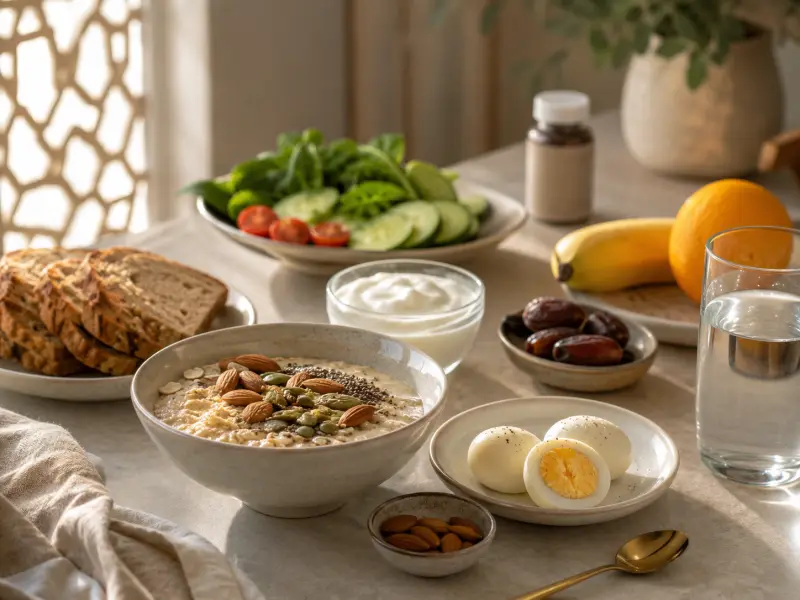
A Simple Balanced Suhoor Example
A good suhoor can be simple. The key is combining the right food groups:
- Water spread gradually before suhoor.
- Eggs, yogurt, or fava beans as a protein source.
- Whole grain bread or oats as a complex carbohydrate.
- Cucumber, tomatoes, arugula, or leafy greens.
- Olive oil or a small handful of nuts for healthy fats.
- A fruit such as orange, kiwi, or banana depending on your needs.
This type of suhoor supports fullness, hydration, and steadier energy better than a meal based mainly on sweets or white pastries.
How Suhoor Affects Daily Performance
A balanced suhoor may support daily performance by helping maintain energy, focus, hydration, and satiety. However, the effect also depends on sleep, total fluid intake, activity level, health status, and the quality of iftar.
A good suhoor may help:
- Support concentration and attention.
- Reduce mid-day sluggishness.
- Support work or study performance.
- Reduce early hunger.
- Support mood through steadier energy.
FAQs About Suhoor Vitamins
What are the best vitamins for suhoor?
There is no single best vitamin for everyone. B vitamins, vitamin C, vitamin D, magnesium, potassium, and iron may matter depending on your suhoor pattern, health status, and whether deficiency is present.
Are there vitamins that reduce thirst?
No vitamin directly prevents thirst. Reducing thirst depends more on water distribution, limiting salt, eating water-rich and fiber-rich foods, and supporting mineral balance through foods such as yogurt, fruits, and vegetables.
Can I take vitamin D at suhoor?
Yes. Vitamin D can be taken at suhoor if the meal contains healthy fats, such as eggs, olive oil, full-fat yogurt, nuts, or avocado.
Do B vitamins give energy during fasting?
B vitamins help the body produce energy from food, but they are not direct stimulants. Their benefit is clearer when intake is low or deficiency is present.
Does drinking a lot of water at suhoor prevent thirst?
Not necessarily. It is better to spread water intake between iftar and suhoor, reduce salt and caffeine, and include water-rich foods.
Are supplements before fasting necessary?
No. They are not necessary for everyone. They may be useful when there is deficiency, a restricted diet, malabsorption, or a professional recommendation.
What is the best suhoor to reduce fatigue?
A suhoor that contains protein, fiber, complex carbohydrates, healthy fats, and fluids is best. For example, eggs or fava beans with whole grain bread, vegetables, yogurt, and water.
Conclusion
Suhoor vitamins are not a replacement for a balanced meal, but they are part of healthy Ramadan nutrition when they come from the right foods or targeted supplements when needed. The most important goal is to build a suhoor that includes protein, fiber, complex carbohydrates, healthy fats, fluids, and natural sources of vitamins and minerals.
To reduce thirst during Ramadan, focus on spreading water intake, limiting salt, adding water-rich and potassium-rich foods, and avoiding excess sugar and caffeine. To reduce fatigue, pay attention to B vitamins, magnesium, iron, vitamin C, and vitamin D when needed.
If you experience severe fatigue, unusual thirst, dizziness, persistent headache, cramps, or if you take chronic medications, speak with a doctor or pharmacist before using supplements before fasting.
Medical disclaimer: This article is for general educational purposes only and does not replace medical advice. Consult a healthcare professional before using supplements if you have kidney disease, heart disease, diabetes, high blood pressure, pregnancy, breastfeeding, chronic medication use, or if you take multiple supplements.
Scientific References
- NIH Office of Dietary Supplements: Vitamin B6 Fact Sheet for Health Professionals
- NIH Office of Dietary Supplements: Vitamin C Fact Sheet for Health Professionals
- NIH Office of Dietary Supplements: Magnesium Fact Sheet for Health Professionals
- NIH Office of Dietary Supplements: Potassium Fact Sheet for Health Professionals
- NIH Office of Dietary Supplements: Vitamin D Fact Sheet for Health Professionals
- MedlinePlus: Healthy Eating During Ramadan