Sulfur and MSM: What They Really Do for Joints, Skin, and Hair
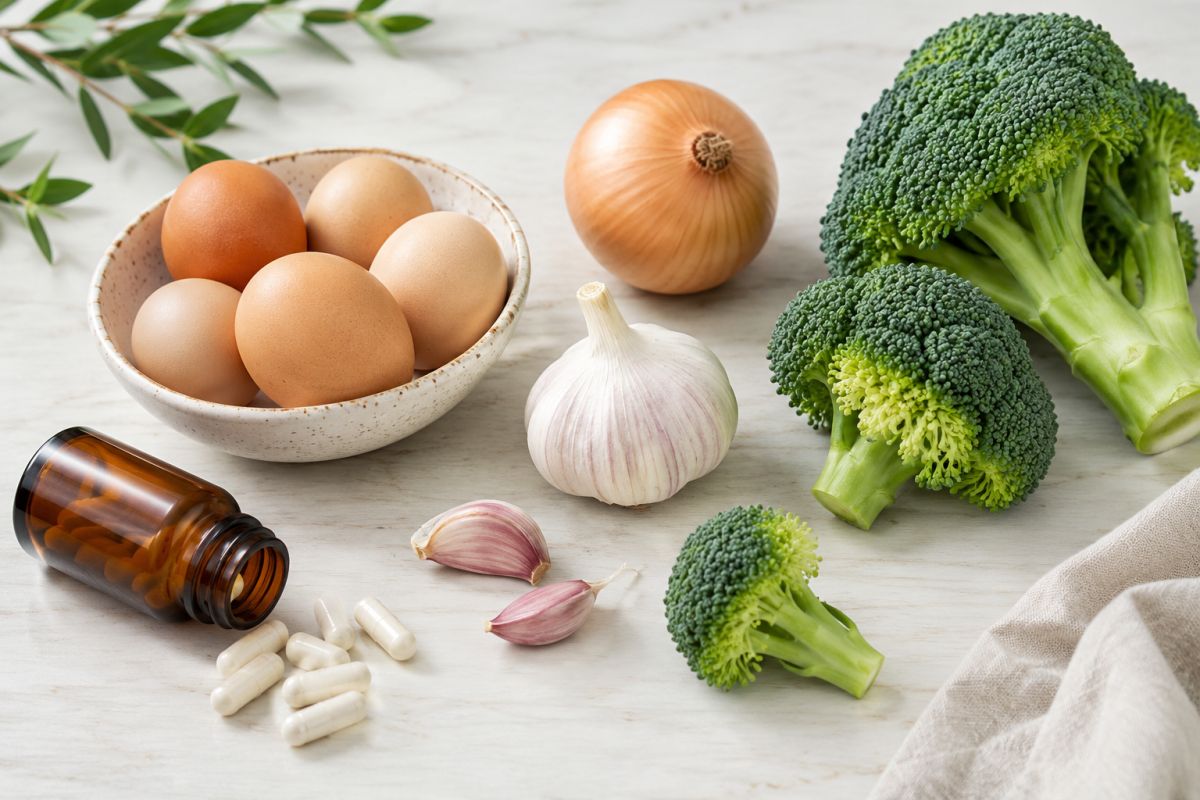
Sulfur doesn't usually make headlines the way calcium or iron do, yet it's the third most abundant mineral in the human body. Lately it's gotten attention in a different form: MSM, a popular joint and beauty supplement sold in pharmacies and health stores. Are the two the same thing, and does the supplement actually live up to its reputation?
What is sulfur, and what is MSM?
Sulfur and MSM are related but not the same thing:
- Sulfur is a mineral your body uses mainly as part of two amino acids, methionine and cysteine, which then build proteins, enzymes, and connective tissue throughout your body.
- Unlike sodium or potassium, sulfur doesn't have its own recommended daily amount — you get enough automatically once you're eating enough protein.
- Methylsulfonylmethane (MSM) is a specific organosulfur compound found naturally in small amounts in fruits, vegetables, and grains.
- MSM is the form most commonly isolated and sold as a dietary supplement for joints, skin, and hair.
Where does dietary sulfur come from?
Most of the sulfur you eat comes from protein, not some separate food group you need to track:
- Eggs, one of the richest sources of sulfur-containing amino acids.
- Meat, poultry, and fish.
- Dairy products.
- Allium vegetables such as garlic and onion.
- Cruciferous vegetables like broccoli, cabbage, and Brussels sprouts.
The U.S. National Academies estimate people typically get around 3 to 6 grams of sulfur-containing compounds a day just from normal eating — well above the roughly 0.2 to 1.5 grams thought to be needed. That's why sulfur deficiency on its own isn't really a concern for most healthy people.
MSM for joints: what does the research show?
MSM is best known as a joint-health supplement, and it has more research behind it than most trendy joint ingredients:
- A pilot clinical trial in people with knee osteoarthritis found that MSM improved pain and physical function over several weeks without major side effects.
- A larger analysis combining MSM and the related compound DMSO found only a small pain reduction — not enough to be considered clinically meaningful.
- Researchers noted that studies have generally been short, with no solid data on long-term safety or how well it works over time.
If you're exploring natural options for joint comfort, it's worth comparing MSM with better-studied alternatives. Our guide to turmeric for joint comfort and our overview of boswellia for joint health cover two other commonly used natural options with their own evidence and limitations. For background on the condition MSM is most often used for, see our guide to osteoarthritis causes, symptoms, and treatment.
MSM for skin and hair: does it hold up?
MSM is often marketed alongside biotin and collagen in beauty supplements, based on the idea that sulfur is a building block of keratin (the protein in hair and nails) and plays a role in collagen cross-linking in skin. That logic makes sense, but there isn't much direct research testing MSM specifically for hair growth or skin appearance — a lot less than for joints — and the marketing goes further than the evidence does. If you're weighing which beauty-supplement ingredients are actually backed by data, our guides to hair vitamin myths and facts and the best vitamins for skin put MSM's claims in context alongside better-established nutrients.
Is MSM safe? Dosage and precautions
Here's what the safety and dosage data shows:
- MSM is recognized as Generally Recognized As Safe (GRAS) and is generally well tolerated at doses up to about 4 grams per day.
- Most side effects are just mild stomach issues, like bloating or diarrhea, at higher doses.
- Clinical studies have used doses ranging from about 1.5 to 6 grams daily, usually split into two or three doses, for periods up to around 12 weeks.
- As a dietary supplement, MSM isn't reviewed by the FDA for safety and effectiveness the way medications are, so product quality can vary between brands.
- MSM may interact with blood thinners, blood pressure medications, and anti-inflammatory drugs, which is worth discussing with a doctor or pharmacist before starting it.
Who should be cautious or check with a doctor first?
- People taking blood thinners, blood pressure medications, or anti-inflammatory drugs, due to possible interactions.
- Pregnant or breastfeeding women, since dedicated safety data is lacking.
- People with kidney or liver conditions, who should generally check with a doctor before starting any new supplement.
- Anyone considering MSM for long-term daily use, since most trials only studied short periods of up to about 12 weeks.
Frequently asked questions about sulfur and MSM
Is sulfur the same thing as MSM?
No, sulfur is a mineral built into amino acids throughout the body, while MSM is one specific organosulfur compound sold as a supplement.
Can you be deficient in sulfur?
Practically not, since sulfur needs are met automatically through normal protein intake.
Does MSM really help joint pain?
Some short-term trials suggest modest benefits for knee osteoarthritis, but a meta-analysis found the effect wasn't clinically meaningful, and long-term data is lacking.
Does MSM improve skin and hair?
Direct evidence is limited; the biological rationale is reasonable, but MSM-specific clinical trials for skin and hair are few.
What is a safe dose of MSM?
Studies have used 1.5 to 6 grams daily, and MSM is generally well tolerated at up to about 4 grams per day.
Does MSM interact with medications?
It may interact with blood thinners, blood pressure medications, and anti-inflammatory drugs, so check with a doctor first.
Where does dietary sulfur come from?
Mainly protein foods like eggs, meat, poultry, fish, and dairy, plus garlic, onion, and cruciferous vegetables.
The bottom line
Sulfur itself is a mineral you get automatically through everyday protein, with no real risk of deficiency for most healthy people. MSM, the popular supplement form, has modest short-term evidence for knee osteoarthritis pain, but much thinner evidence for skin and hair, despite the marketing claims. If you're considering it, keep your expectations realistic, stick to the doses studies have used, and check with a doctor first if you take blood thinners, blood pressure medication, or anti-inflammatory drugs.
Scientific references
- National Academies – Dietary Reference Intakes for Water, Potassium, Sodium, Chloride, and Sulfate
- PubMed – Efficacy of Methylsulfonylmethane (MSM) in Osteoarthritis Pain of the Knee: A Pilot Clinical Trial
- PMC – Meta-Analysis of DMSO and MSM in the Treatment of Osteoarthritis of the Knee
- PMC – Methylsulfonylmethane: Applications and Safety of a Novel Dietary Supplement
- Cleveland Clinic – Methylsulfonylmethane (MSM) Oral Dosage Forms