Banning Smoking in Public Places: Why It Matters
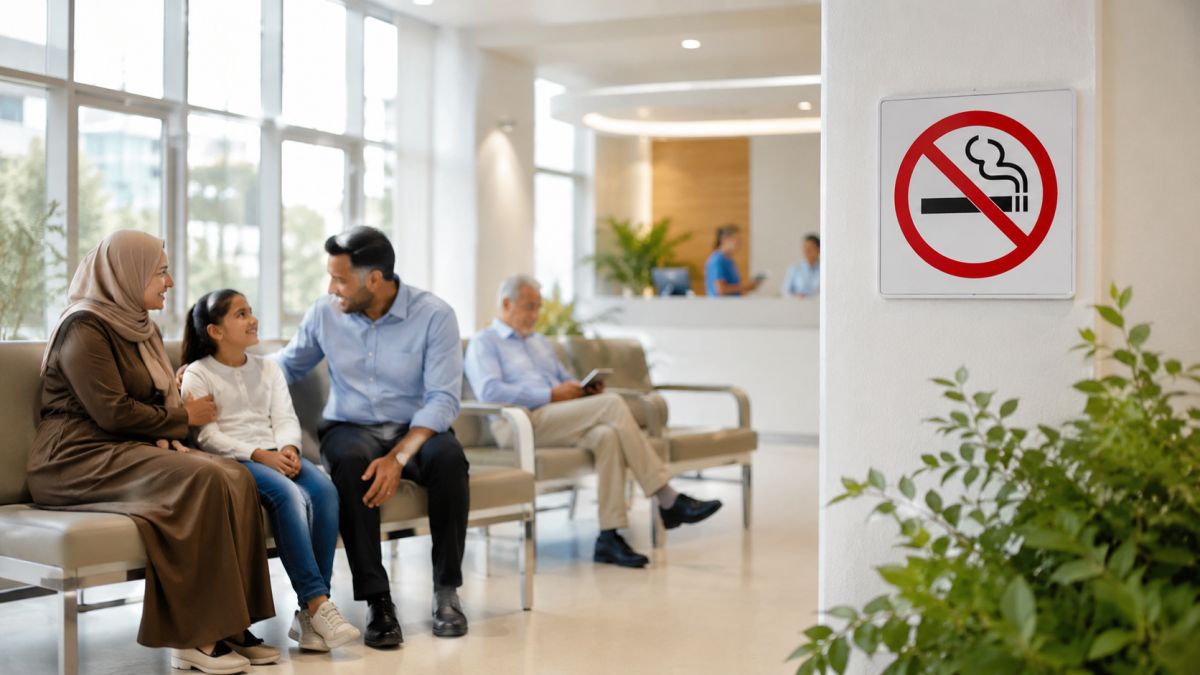
Banning smoking in public places is no longer merely a regulatory measure or an administrative decision. It has become a health and social necessity to protect every person’s right to clean air and a safe environment. Smoking does not harm smokers alone; its effects extend to everyone around them, especially children, pregnant women, older adults, and people with heart disease and respiratory conditions.
The World Health Organization confirms that there is no safe level of exposure to secondhand smoke, and that ventilation or designated smoking areas do not provide effective protection from its harms. It also recommends that enclosed workplaces, transportation, schools, and healthcare institutions be completely smoke-free. (EMRO)
Smoking in restaurants, cafés, hospitals, schools, transportation, and offices is not a personal freedom, because it imposes harm on others without their choice. Freedom ends when harm to others begins. Therefore, banning smoking in public places is a defense of non-smokers’ right to breathe, and children’s right to grow in a healthy environment.
In Jordan, laws include a smoking ban in several public places, such as hospitals, health centers, schools, cinemas, theaters, public libraries, museums, governmental and non-governmental public buildings, transportation, and airport arrival and departure halls. (Tobacco Control Laws) Later measures were also announced to make enclosed public spaces completely smoke-free environments, including e-cigarettes and shisha. (The Guardian)
The effect of such bans is not limited to protecting non-smokers. They also help smokers themselves reduce consumption and attempt to quit smoking. Comprehensive smoke-free laws contribute to reducing exposure to secondhand smoke, improving public health, and changing the social perception of smoking, especially among young people. (Springer)
However, the success of these policies is not achieved by law alone. What is needed is clear and fair enforcement, guidance signs in public places, deterrent fines, and training for workers in institutions, in addition to continuous awareness campaigns. Support services must also be provided for those who wish to quit, because the smoker is not an opponent of society, but a person who needs support to overcome nicotine dependence.
Public places belong to everyone. They are not spaces for imposing smoke on others. Banning smoking in them is a civilized step that respects health, dignity, and the environment, and places the interest of society above harmful habits. A society that protects its air protects its children and its future.
Dr. Walid Sarhan
Senior Consultant Psychiatrist