Melasma vs Freckles: Key Differences, Causes, and Treatment
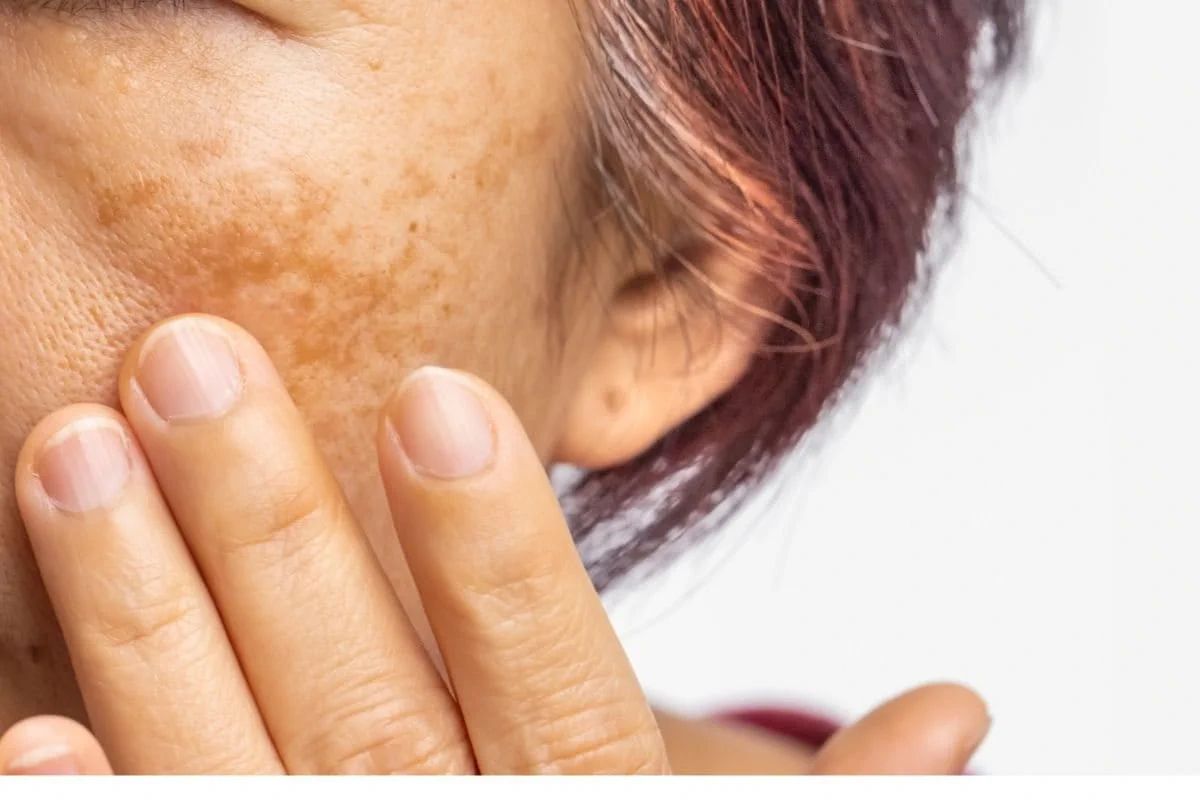
The difference between melasma and freckles is one of the most common questions when dark spots appear on the face, because both are linked to skin discoloration and pigmentation that can look similar at first. But when you look more closely at the shape of the spots, where they appear, what causes them, and how they are treated, the difference becomes much clearer.
Freckles usually appear as small brown or light brown dots linked to genetics and sun exposure, while melasma appears as larger and more visible patches and may be linked to sun exposure, hormones, pregnancy, or some types of birth control.
What Is the Difference Between Freckles and Melasma?
Freckles are small, flat spots that usually appear on the face or other exposed areas of the body and become more visible with sun exposure. Melasma, on the other hand, appears as larger dark patches that may look brown or gray-brown and usually show up on the cheeks, forehead, nose, or upper lip.
Freckles may appear from childhood or adolescence, especially in people with fair skin. Melasma usually appears in adults and is more common in women, especially during pregnancy or with hormonal changes. In simple terms, freckles are small scattered dots, while melasma is broader and more persistent.
What Do Freckles Look Like?
Freckles are usually easier to recognize by looking at the size and pattern of the spots. They appear as small, flat dots that are light brown or medium brown and may show up on the nose, cheeks, forehead, shoulders, arms, or any area that gets repeated sun exposure.
Freckles are usually separate rather than forming one large patch. They often become darker in summer after sun exposure and may fade in winter. In many cases, freckles are not a health problem and are simply part of a person’s natural skin pattern.
What Does Melasma Look Like?
Melasma looks different from freckles because it does not appear as tiny dots. Instead, it appears as wider and less regular patches. Melasma may look brown, dark brown, or gray-brown and usually appears on areas such as the cheeks, forehead, nose, chin, or upper lip.
One of the signs that can help identify melasma is that it may appear symmetrically on both sides of the face. It also tends not to fade quickly and may get worse with sun exposure or hormonal changes. Melasma may be superficial or deeper in the skin, and that affects how quickly it responds to treatment.
A Table That Shows the Difference Between Melasma and Freckles
| Comparison | Freckles | Melasma |
|---|---|---|
| Shape | Small, flat dots | Larger, less regular patches |
| Color | Light brown or medium brown | Dark brown or gray-brown |
| Size | Small and separate | Wider and may cover a larger area |
| Common areas | Nose, cheeks, shoulders, arms | Cheeks, forehead, nose, upper lip |
| Main cause | Sun exposure and genetics | Sun exposure, hormones, pregnancy, birth control |
| Typical age | Childhood or adolescence | Usually adulthood |
| Effect of sun | Gets darker with sun and may fade in winter | Worsens with sun and may be more persistent |
| Treatment | Sun protection and optional cosmetic treatments | Needs a longer treatment plan and may need a doctor |
This table helps explain the difference, but it does not replace a dermatologist’s evaluation if the spots are unclear or changing quickly.
Causes of Melasma
Melasma has more than one possible cause, and it is often not caused by one factor alone. Melasma is more complex than simple sun exposure, because it often appears with a mix of genetic tendency and hormonal triggers:
- Continuous sun exposure, because ultraviolet light stimulates melanin production.
- Hormonal changes, especially during pregnancy, which is why melasma is sometimes called the mask of pregnancy.
- Using birth control pills or some hormone-based treatments.
- Genetic tendency, since some people are more likely to develop it if it runs in the family.
- Skin irritation or using strong products that do not suit the skin.
If melasma appears suddenly or becomes severe, it is best to speak with a doctor to rule out deeper hormonal causes.
Causes of Freckles
Freckles are usually linked to sun exposure and genetics. When skin is exposed to ultraviolet light, pigment cells increase melanin production, which leads to small brown spots appearing on the surface:
- Repeated sun exposure without enough protection.
- Genetics, since some people are naturally more likely to have freckles.
- Fair skin and light hair, where freckles often appear more clearly.
- Sun exposure from an early age, especially in children.
Freckles do not appear because of poor hygiene or bad skincare. They are related to how the skin responds to the sun and to inherited traits.
Causes of Sudden Freckles
Sudden freckles may be linked to a short period of heavier sun exposure, such as travel or spending a long time outdoors without sunscreen. In that case, the spots may have already been present very lightly but became more visible after exposure.
Still, it is important to remember that not every new spot is a freckle. Some may be sunspots, post-acne marks, post-inflammatory pigmentation, or moles. If new spots are irregular, growing quickly, or itchy, they should be checked by a dermatologist.
Causes of Sudden Freckles in Children
Sudden freckles in children are usually linked to sun exposure together with a genetic tendency. They may start appearing at a young age, especially in fair-skinned children, and become more visible after outdoor play.
In most cases, freckles in children are normal and not dangerous, but they are a sign that the skin is sensitive to sunlight. That is why sunscreen and protective clothing are important.
If a child’s spots are large, irregular, painful, or changing quickly, they should be checked by a dermatologist and not assumed to be ordinary freckles.
The Difference Between Melasma and Hyperpigmentation
Melasma is one specific type of pigmentation, with a distinct pattern and distinct triggers. Hyperpigmentation is a broader term that includes any increase in skin color:
- Melasma
- Freckles
- Post-acne marks
- Sunspots
- Post-inflammatory pigmentation after irritation or burns
- Pigmentation caused by skin irritation
That means not every dark mark on the face is melasma. A dark spot may be an old acne mark, a sunspot, a freckle, or pigmentation caused by an irritating product.
Can Freckles Turn Into Melasma?
Freckles do not turn into melasma, because each condition has a different nature. However, freckles and melasma can appear on the same skin, especially if the skin is exposed to the sun often. Sun exposure can darken freckles and worsen melasma at the same time, which may make it seem as if freckles have turned into melasma when a different type of pigmentation has actually appeared.
Is the Treatment for Melasma and Freckles the Same?
Treatment for melasma and freckles is not exactly the same, although sun protection is essential in both.
Treatment for freckles
Freckle treatment focuses on reducing their visibility and preventing them from darkening:
- Using sunscreen every day.
- Avoiding prolonged sun exposure.
- Wearing a hat and using added sun protection.
- Ingredients that help brighten the skin, such as vitamin C or niacinamide.
- Seeing a dermatologist if cosmetic procedures are being considered.
Treatment for melasma
Melasma needs more commitment because it can be chronic or recurrent:
- Broad-spectrum sunscreen every day, which is the foundation of treatment.
- Ingredients such as vitamin C, niacinamide, azelaic acid, or tranexamic acid.
- Avoiding strong exfoliation or random laser treatments, because irritation can worsen melasma.
- Seeing a dermatologist before using stronger ingredients such as hydroquinone or retinol and related products.
Best Ingredients That May Help With Melasma and Freckles
Some ingredients may help improve the appearance of pigmentation, but they need to be used consistently and correctly:
| Ingredient | When may it help? |
|---|---|
| Vitamin C | For dullness and sun-related spots, and best used in the morning with sunscreen |
| Niacinamide | Gentle for uneven tone and redness, and suitable for most skin types |
| Azelaic acid | For pigmentation, acne marks, and mild melasma |
| Tranexamic acid | For melasma and stubborn pigmentation, but it needs consistency |
| Retinol | For skin renewal and pigmentation marks, but it should not be used during pregnancy unless guided by a doctor |
| Hydroquinone | For severe melasma and pigmentation, and it should be used under medical supervision |
| Sunscreen | The most important protective step in any pigmentation routine |
Niacinamide is one of the safest and most effective ingredients for uneven tone and redness, and it suits most skin types including sensitive skin. Retinol can help renew skin cells and improve pigmentation over time, but it needs gradual introduction and is not suitable during pregnancy.
To support the skin from the inside, the best vitamins for skin such as vitamin C, vitamin E, and zinc can support the external routine and improve overall results. They are supportive, not a replacement for topical ingredients.
How to Protect Your Skin From Melasma and Freckles
Prevention does not always mean fully stopping melasma or freckles from appearing, but it can reduce the chance of them developing or becoming darker. The most important step is using the right sunscreen for your skin every day, even on cloudy days or near windows. It should be reapplied with prolonged sun exposure or sweating.
It is also important to avoid irritating the skin with harsh exfoliants or aggressive home remedies, because inflammation can lead to new pigmentation, especially in sensitive skin or darker skin tones.
When Should You See a Dermatologist?
- If the spots appear suddenly in an unusual way or change color or size quickly.
- If the spots become irregular in shape or cause itching, pain, bleeding, or peeling.
- If melasma is severe or linked to pregnancy or medication use.
- If the pigmentation does not improve after following a suitable routine for several weeks.
- Before using strong lightening creams or having laser or peeling sessions.
Frequently Asked Questions
What is the difference between melasma and freckles?
Freckles appear as small brown spots that are usually linked to sun exposure and genetics, while melasma appears as larger brown or gray-brown patches and is linked to sun exposure, hormones, and pregnancy. Freckles are more common in childhood, while melasma usually appears in adults.
How do I recognize melasma?
Melasma appears as larger dark patches, often on the cheeks, forehead, or upper lip, and may be symmetrical on both sides of the face. Its color is brown or gray-brown, and it becomes more noticeable with sun exposure.
How do I recognize freckles?
Freckles are small, flat, separate spots that are light brown or medium brown. They often appear on the nose, cheeks, and sun-exposed areas, may fade in winter, and return in summer.
Can freckles turn into melasma?
No, freckles do not turn into melasma. But sun exposure can darken freckles and worsen melasma too, so both conditions may appear together on the same skin without one turning into the other.
What causes sudden freckles?
They are often linked to increased sun exposure without enough protection. But new spots may also be another type of pigmentation. If they are irregular or changing quickly, they should be checked by a dermatologist.
What is the difference between melasma and hyperpigmentation?
Melasma is one specific type of pigmentation with its own pattern and triggers, while hyperpigmentation is a broader term that includes melasma, freckles, acne marks, sunspots, and post-inflammatory pigmentation.
Is the treatment for melasma and freckles the same?
Not exactly. Sun protection is essential for both, but melasma usually needs a longer treatment plan because it may be linked to hormones. Freckles may improve with sun protection and some cosmetic procedures.
Can men get melasma?
Yes, men can also get melasma, although it is more common in women because of hormonal factors such as pregnancy and birth control.
Conclusion
The difference between melasma and freckles becomes clear through the shape of the spots, their size, their causes, and where they appear. Freckles are small spots linked to sun exposure and genetics, while melasma is broader and more persistent and is linked to sun exposure and hormones. The best next step is to pay attention to the shape of the spots, keep using sunscreen every day, choose a gentle skincare routine, and see a dermatologist when unusual spots appear.
For more information about skin health and how to choose the right ingredients for each concern, you can visit the skincare section on Vitaminati.
This article is for general education only. If pigmentation is severe or does not improve over time, speak with a dermatologist.