Milk Thistle Benefits for Men: Potential Uses and Safe Ways to Take It
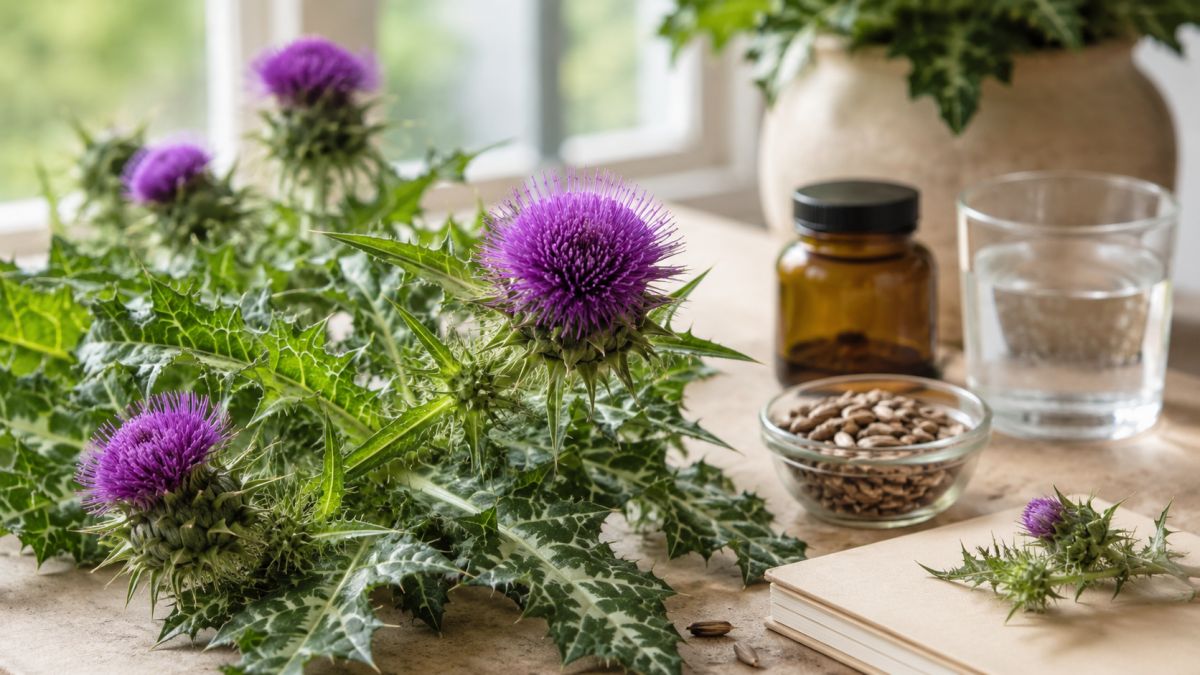
The potential benefits of milk thistle are mainly linked to silymarin, a group of plant compounds found in the fruit of the plant. Milk thistle has been studied mostly for liver support, antioxidant activity, and certain digestive symptoms, but human evidence does not prove that it treats liver disease or detoxifies the body.
Some studies have reported modest improvements in liver enzymes or blood sugar, but the findings are not consistent enough to support using milk thistle instead of medication or lifestyle changes. Milk thistle supplements also vary widely in silymarin concentration and quality, so it is important to check the product label carefully.
What Is Milk Thistle?
Milk thistle, also called Saint Mary’s thistle, is a medicinal plant with the scientific name Silybum marianum. It is recognized by its purple flowers and spiny green leaves with distinctive white marbling.
The plant belongs to the Asteraceae family, which also includes chamomile, daisies, and ragweed. It is native to the Mediterranean region and parts of Europe and Asia, but it now grows in many other areas.
The plant’s fruits, often called milk thistle seeds, are used to prepare powders, teas, liquid extracts, capsules, and standardized supplements. For a broader overview, see our complete guide to milk thistle benefits and uses.
What Is Silymarin?
Silymarin is not a single compound. It is a mixture of several plant substances, including silybin, also known as silibinin. Silymarin is the most widely studied component of milk thistle extracts.
Laboratory and animal studies suggest that these compounds have antioxidant activity and may affect pathways related to inflammation and cell protection.
However, antioxidant activity in a laboratory does not automatically mean that a supplement prevents disease or repairs liver damage in humans. Milk thistle benefits should therefore be judged by clinical evidence, not only by its proposed mechanism.
What Are the Benefits of Milk Thistle According to Science?
1. Possible Support for Certain Liver Function Markers
Most milk thistle research has focused on the effect of silymarin on the liver. Studies have included people with fatty liver disease, viral hepatitis, alcohol-related liver disease, and other conditions that affect liver function.
Some studies have reported modest reductions in liver enzymes such as ALT and AST, while others found no clear benefit. Differences in dose, extract concentration, treatment duration, and study quality make firm conclusions difficult.
It is also important to understand that improved liver enzyme levels do not necessarily mean the liver has healed, that liver fat has disappeared, or that fibrosis has been prevented.
The National Center for Complementary and Integrative Health notes that research findings on milk thistle for liver conditions are conflicting or too limited to support definite conclusions.
For a more focused review, read about milk thistle benefits for the liver and how it is used.
2. Possible Effects in Fatty Liver Disease
Some reviews suggest that silymarin may improve certain liver enzymes or metabolic markers in some people with metabolic dysfunction-associated fatty liver disease.
However, there is not enough evidence to show that milk thistle removes fat from the liver or prevents fibrosis and related complications. It should not replace gradual weight loss, physical activity, balanced nutrition, or proper control of blood sugar, cholesterol, and blood pressure.
You can learn more about the main risk factors and lifestyle measures in our guide to fatty liver disease and how to reduce its risks.
3. Antioxidant Activity
Antioxidants help limit certain reactions caused by free radicals. Silymarin has shown antioxidant activity in laboratory and animal studies.
This does not prove that milk thistle prevents aging, cancer, heart disease, or rebuilds liver cells. Direct clinical benefits from this antioxidant activity still require stronger human evidence.
4. Possible Effects on Blood Sugar
Several small studies have examined milk thistle extracts in people with type 2 diabetes. Some results suggest a possible modest improvement in blood glucose or insulin resistance.
However, the number of studies is limited, and the products and doses used vary considerably. Milk thistle should not replace diabetes medication, healthy eating, or physical activity.
Combining a supplement that may lower blood sugar with diabetes medication could increase the risk of low blood sugar in some people. Speak with a doctor or pharmacist before use. You can also review the symptoms, causes, tests, and prevention of type 2 diabetes.
5. Traditional Use for Indigestion
The European Medicines Agency recognizes the traditional use of certain milk thistle fruit preparations for digestive symptoms such as indigestion and a feeling of fullness.
This recognition is based mainly on long-standing use rather than strong clinical trial evidence. Medical advice is recommended if symptoms last longer than two weeks, become more severe, or occur with vomiting, unexplained weight loss, or persistent pain.
Does Milk Thistle Detox the Liver?
There is no reliable scientific evidence that milk thistle performs a “liver cleanse” or removes toxins from the body. The liver processes many substances, while the kidneys, lungs, and digestive system help eliminate waste.
The phrase “liver detox” is often used to market blends containing several herbs. These products are not necessarily more effective or safer, and multiple ingredients can make side effects or drug interactions harder to identify.
Milk thistle should not be used to hide abnormal liver enzymes or delay diagnosis. Elevated liver enzymes may be related to fatty liver disease, medication effects, infection, bile duct problems, or other conditions that require medical evaluation.
What Are the Benefits of Milk Thistle for Men?
There are no proven milk thistle benefits for men that clearly differ from its possible effects in women. Any potential effect on liver markers or blood sugar would depend on the person’s health and the product used, not simply on sex.
Can It Support Liver Health in Men?
Men with excess weight, type 2 diabetes, high triglycerides, or high alcohol intake may have a greater risk of certain liver conditions.
However, milk thistle has not been proven to prevent fatty liver disease or reverse liver damage. Weight management, physical activity, a balanced diet, reduced alcohol intake, and proper control of chronic conditions remain the most important steps.
Does Milk Thistle Increase Testosterone?
There is no reliable human evidence showing that milk thistle or silymarin increases testosterone. It should not be used to manage low testosterone or related symptoms.
Does Milk Thistle Improve Male Fertility?
There is not enough human evidence to show that milk thistle improves sperm count, movement, quality, or the chance of pregnancy.
Male fertility problems may be related to hormonal disorders, varicocele, chronic conditions, medication use, or lifestyle factors and require proper assessment.
Does Milk Thistle Improve Sexual Performance?
Milk thistle has not been proven to improve erectile function, sexual desire, or sexual performance. These concerns may be linked to diabetes, blood vessel disease, stress, hormonal changes, or medication effects.
Is Milk Thistle Good for the Prostate?
There is no strong evidence supporting milk thistle for enlarged prostate, prostatitis, or prostate cancer prevention.
What Does Wild Milk Thistle Mean?
The term wild milk thistle usually refers to Silybum marianum growing naturally without cultivation. However, common names may be used for several different spiny plants and may vary between countries and regions.
Collecting and eating a wild plant based only on appearance or a local name is not recommended because:
- It may be confused with another plant.
- The correct plant part may not be identified.
- The amount of silymarin cannot be measured.
- The plant may be exposed to pesticides, heavy metals, or other contaminants.
- Poorly stored seeds may contain mold or mycotoxins.
- The spines may cause injury.
- Allergic reactions may occur.
A clearly labeled product made under defined quality standards is generally more reliable than a wild plant collected without expert identification.
How to Use Milk Thistle
How milk thistle is used depends on the product form, extract amount, silymarin concentration, and the person’s health. There is no single dose that applies to every product or purpose.
1. Capsules and Tablets
Capsules and tablets are among the most common forms. They may contain whole seed powder or a concentrated extract.
Before use, check:
- The scientific name Silybum marianum.
- The plant part used.
- The amount of extract per serving.
- The percentage or amount of silymarin, if listed.
- The number of capsules included in one serving.
- Any additional ingredients or herbs.
2. Standardized Extracts
A standardized extract lists a defined amount or percentage of silymarin. This makes the active compound concentration easier to understand than in a non-standardized seed powder.
Still, a stated silymarin percentage does not by itself guarantee quality. Scientific reports have found differences between milk thistle products in actual concentration, purity, and contamination.
3. Liquid Extracts
Liquid extracts vary in concentration and preparation method. Use the measuring device supplied with the product rather than a household spoon.
4. Milk Thistle Seed Powder
Milk thistle seed powder can be added to foods or drinks, but the amount of silymarin may be lower and less consistent than in standardized extracts.
A spoonful of seed powder should not be assumed to equal a capsule of concentrated extract because the concentration and manufacturing process are different.
5. Milk Thistle Tea
Milk thistle tea may be prepared from crushed seeds or tea bags. However, silymarin does not dissolve well in water, so tea may provide less silymarin than concentrated extracts.
For this reason, milk thistle tea is not equivalent to the standardized extracts used in many studies.
Should Milk Thistle Be Taken With Food?
Milk thistle may be taken with food if it causes nausea, bloating, or stomach discomfort, unless the product instructions say otherwise.
There is no universal rule stating that it must be taken in the morning or evening. The main priority is to follow the label and avoid doubling the amount after a missed dose.
How Long Can Milk Thistle Be Used?
The duration depends on the product, purpose, and health condition. There is no standard duration proven to be appropriate for everyone.
Milk thistle should not be used for several months simply to lower liver enzymes without identifying the cause and arranging medical follow-up. Digestive symptoms that continue for more than two weeks or become worse also require evaluation.
How to Choose a Milk Thistle Supplement
- Choose a product that clearly lists the scientific name.
- Check the extract amount and silymarin concentration per serving.
- Confirm how many capsules are included in one serving.
- Select products with a complete ingredient list.
- Prefer companies that provide clear quality and purity testing information.
- Check the manufacturing date, expiration date, and storage instructions.
- Avoid products claiming to cleanse the liver or treat fibrosis or hepatitis.
- Avoid blends containing many herbs in undisclosed amounts.
- Do not combine multiple milk thistle products without calculating the total amount.
Visit the Vitaminati herbs section to compare milk thistle with other herbal ingredients and review their uses and safety considerations.
What Are the Possible Side Effects of Milk Thistle?
Milk thistle appears to be well tolerated by many adults when taken by mouth, but possible side effects include:
- Bloating and gas.
- Nausea.
- Indigestion or stomach irritation.
- Abdominal pain.
- Diarrhea.
- Headache.
- Itching or skin rash.
Allergic reactions may be more likely in people who are sensitive to plants in the Asteraceae family, including ragweed, daisies, chamomile, and marigold.
Stop the product and seek urgent medical help if you develop difficulty breathing, swelling of the face, lips, or tongue, or a severe skin reaction.
Who Should Consult a Doctor Before Using Milk Thistle?
- People with liver disease or unexplained abnormal liver enzymes.
- People with diabetes or those using blood-sugar-lowering medication.
- Anyone taking regular medications or medicines that require precise dosing.
- Pregnant or breastfeeding women because safety information is limited.
- Children and adolescents.
- People allergic to milk thistle or plants in the Asteraceae family.
- Anyone preparing for surgery.
- People who develop new symptoms after starting the supplement.
Tell your doctor or pharmacist about all supplements and herbs you use, even if they are described as natural. Herbal products may affect medications or interfere with medical follow-up.
When Do Liver Symptoms Need Medical Evaluation?
Milk thistle should not be relied on when symptoms suggest a possible liver or bile duct problem. Seek medical evaluation if you develop:
- Yellow skin or yellowing of the whites of the eyes.
- Dark urine or unusually pale stool.
- Severe or persistent upper abdominal pain.
- Repeated vomiting or unexplained weight loss.
- Swelling in the abdomen or legs.
- Unusual confusion or severe drowsiness.
Frequently Asked Questions
What are the benefits of milk thistle?
Milk thistle contains silymarin, which has antioxidant activity and has mainly been studied for liver support. Human evidence remains limited and mixed, and it is not a treatment for liver disease.
Is milk thistle helpful for fatty liver?
It may improve certain liver enzymes in some people, but it has not been proven to remove liver fat or prevent fibrosis and complications.
Does milk thistle detox the liver?
No reliable evidence supports this claim. The liver, kidneys, lungs, and digestive system naturally process and eliminate waste.
What are the benefits of milk thistle for men?
There are no proven benefits specific to men, and it has not been shown to improve testosterone, fertility, sexual performance, or prostate health.
Does milk thistle increase testosterone?
There are no reliable human studies showing that milk thistle increases testosterone levels.
How should milk thistle be used?
Use depends on the form and silymarin concentration. Follow the product instructions and do not exceed the recommended amount.
Should milk thistle be taken with food?
It may be taken with food if it causes nausea or stomach discomfort, unless the product label advises otherwise.
Can milk thistle be taken daily?
It may be well tolerated for a limited period, but long-term daily use should be discussed with a doctor or pharmacist.
Is milk thistle tea equivalent to capsules?
No. Silymarin does not dissolve well in water, so tea may provide less and more variable amounts than standardized extracts.
Is milk thistle safe during pregnancy and breastfeeding?
There is not enough information to confirm safety during pregnancy or breastfeeding, so it should be avoided unless recommended by a healthcare professional.
Conclusion
The possible benefits of milk thistle are mainly linked to silymarin and its antioxidant activity. Some studies suggest modest improvements in liver enzymes or blood sugar, but the evidence does not show that milk thistle treats liver disease, removes liver fat, or detoxifies the body.
There are no proven milk thistle benefits for men related to testosterone, fertility, erectile function, or prostate health. Wild milk thistle should also not be consumed without reliable botanical identification.
When deciding how to use milk thistle, choose a clearly labeled product that states the extract amount and silymarin concentration. Follow the product directions and speak with a doctor or pharmacist if you take medication or have a medical condition.
This content is intended for general health education and does not replace medical diagnosis or professional advice. It should not be used to change medication or self-treat liver disease.