Benefits of Milk Thistle for the Liver: A Guide to Silybum marianum and How to Use It
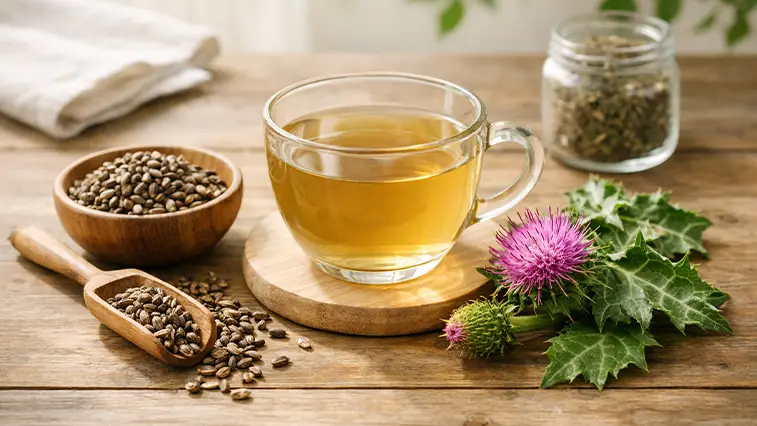
Milk Thistle Benefits for Liver Health: A Guide to Silymarin and Safe Use
Milk thistle, also known as Silybum marianum, is one of the most popular herbs traditionally used to support liver health. It is also known in Arabic as kharfish, milk thistle, and holy thistle. This flowering plant has been used for centuries in traditional practices related to liver and digestive wellness.
The reputation of milk thistle benefits for liver health is mainly linked to silymarin, a mixture of plant compounds found in the seeds. Silymarin may help support antioxidant balance and liver-cell health. However, milk thistle is not a treatment for liver disease and should not replace medical diagnosis or prescribed care.
Health note: Milk thistle should not be used instead of medical treatment, especially in viral hepatitis, fatty liver disease, cirrhosis, or chronic health conditions. If you take regular medications, have liver disease, or have plant allergies, speak with a doctor or pharmacist before use.
What Is Milk Thistle?
Milk thistle is the common name for the plant Silybum marianum. It is known for its spiny leaves, purple flowers, and seed-based preparations that are often used in supplements.
The seeds are usually the part used to prepare extracts containing silymarin. Milk thistle is commonly taken as capsules, tablets, liquid extracts, powders, or herbal tea preparations.
To see this herb within Vitaminati’s herbal category, you can visit the Milk Thistle — Herbal Supplements page.
The Active Compound in Milk Thistle: What Is Silymarin?
Silymarin refers to a group of plant compounds found in milk thistle seeds, including silibinin. These compounds are studied for their antioxidant properties and possible role in supporting liver-cell health.
Still, it is important to separate “support” from “treatment.” Research on milk thistle in liver diseases has produced mixed results, and the evidence is not strong enough to say that it treats hepatitis, fatty liver disease, or cirrhosis. It is best viewed as a supportive supplement within a broader health plan, not as a medical alternative.
Potential Milk Thistle Benefits for Liver Health
When people mention milk thistle for liver health, they usually mean its possible supportive effects through silymarin. Below are the main potential benefits, with evidence limits clearly explained.
1. Antioxidant Support
One of the best-known potential benefits of milk thistle is antioxidant support. The liver is exposed to several stressors, including some medications, infections, pollution, and an unbalanced diet. Plant antioxidants in milk thistle may help support liver cells against oxidative stress.
However, this does not mean milk thistle “detoxes” the liver or reliably prevents liver damage. Liver health depends mainly on lifestyle, healthy weight, alcohol reduction, blood sugar and lipid control, and medical follow-up when disease is present. A different compound often discussed in this area is NAC, which has its own role in liver detoxification, as covered in N-acetyl cysteine and its benefits for the liver.
2. Inflammatory Balance Support
Milk thistle may support inflammatory balance in the body. This matters because chronic inflammation can place stress on liver tissue, especially in people with fatty liver disease or other chronic metabolic problems.
If you are learning about fatty liver disease, it is important to know that nutrition, weight management, and physical activity come before supplements. You can read Vitaminati’s article on fatty liver disease and natural prevention.
3. Supporting Liver Function Without Overusing “Detox” Claims
Milk thistle is often marketed as a liver-support ingredient when the body is exposed to factors that may burden the liver, such as an unbalanced diet or certain medications. However, the term “liver cleanse” can be misleading because the liver naturally processes substances and waste without needing a quick detox.
A more accurate statement is that milk thistle may support normal liver function as part of a healthy lifestyle. It does not treat poisoning and should not replace medical care in cases of elevated liver enzymes or chronic liver disease.
4. Supporting Liver Cells and Liver Function
Milk thistle is traditionally used to support general liver function. Some research suggests that silymarin may have properties that support liver-cell health, but this does not mean it directly regenerates the liver or treats liver damage.
If you have a diagnosed liver condition, medical evaluation and follow-up should come first, and supplements should only be used with professional approval.
Where Does Wild Milk Thistle Grow?
Wild milk thistle is native to the Mediterranean region and also grows in southern Europe, parts of Asia, and North Africa. It has also been introduced to other regions because it can grow in diverse environments.
Although it is a common wild plant, it is not recommended to collect it randomly from roadsides or contaminated areas because wild plants may be exposed to pesticides, heavy metals, or environmental pollutants.
How to Use Milk Thistle
How to use milk thistle depends on the available form, the reason for use, and the person’s health condition. The most common forms are tea, capsules, extracts, and powder.
Milk Thistle Tea or Seed Infusion
- Crush the seeds lightly because whole seeds may pass through the digestive system with limited extraction.
- Steep in hot water for 10 to 15 minutes.
- Drink without sugar, or add mint or anise according to preference.
Tea may be a gentle starting point, but it does not always provide the same concentration as standardized extracts.
Milk Thistle Capsules or Extract
This is the most common supplement form and often lists the silymarin concentration. Follow the product instructions, avoid exceeding the recommended dose, and choose a reputable standardized product when possible.
Milk Thistle Powder
Milk thistle powder may be added to yogurt, smoothies, or food. However, dosing can be less precise than capsules, so caution is recommended, especially when using it for a specific health purpose.
What Is the Right Amount?
There is no single dose that fits everyone because dosing varies by supplement form and extract concentration. Follow the label instructions or a healthcare professional’s recommendation, especially if you have liver disease, diabetes, plant allergies, or take regular medications.
Important Precautions Before Using Milk Thistle
Even though milk thistle is natural, it is not suitable for everyone. Key precautions include:
1. Consult a Healthcare Professional First
Medical advice is especially important in the following cases:
- Chronic liver disease or viral hepatitis.
- Pregnancy or breastfeeding.
- Use of regular medications, especially diabetes medications, blood thinners, hormonal medicines, or drugs metabolized by the liver.
- A history of hormone-sensitive conditions such as breast, uterine, or ovarian cancer, endometriosis, or uterine fibroids.
2. Follow the Dose and Avoid Overuse
Overuse may cause digestive symptoms such as nausea, diarrhea, bloating, or gas in some people. Headache, itching, or skin reactions may occur less commonly.
3. Watch for Allergies
Milk thistle may cause allergic reactions in people sensitive to plants in the Asteraceae family, such as ragweed, chrysanthemums, marigolds, daisies, or chamomile. Stop using it and seek medical help if you develop severe allergy symptoms such as facial swelling, breathing difficulty, or widespread rash.
4. Choose High-Quality Supplements
Choose products that clearly state extract and silymarin concentration, preferably from reputable companies or those using quality testing. Herbal products can vary in strength or be contaminated, so source quality matters.
Is Milk Thistle Suitable for People With Hepatitis B?
Some people with hepatitis B may consider milk thistle to support liver health, but it is important to be clear: milk thistle does not treat hepatitis B and is not a substitute for antiviral therapy or a doctor’s care plan.
Research on milk thistle in viral liver diseases has shown mixed or limited results, so it should not be relied on to change disease progression. In viral hepatitis, regular medical follow-up and laboratory monitoring are essential. You can read Vitaminati’s article on understanding hepatitis B or hepatitis B and liver health.
Milk Thistle vs. Dandelion Root: Which Is Better for the Liver?
Milk thistle and dandelion root are both commonly discussed in liver-support contexts, but they are not the same. Milk thistle is mainly associated with silymarin and liver-cell support, while dandelion root is traditionally used for digestion, bile flow, and urination.
There is no single herb that is “best” for everyone. The right choice depends on the goal, health condition, medications, and whether liver or gallbladder disease is present. For comparison, you can read Vitaminati’s article on dandelion benefits for digestion and more.
FAQs About Milk Thistle and Liver Health
What are the benefits of milk thistle?
Milk thistle is most often discussed for liver support because it contains silymarin, which may help support antioxidant balance and inflammatory balance. It is not a substitute for medical treatment.
Is milk thistle the same as kharfish?
Yes. In common Arabic usage, kharfish often refers to milk thistle, also called Silybum marianum, holy thistle, or شوكة الحليب.
Is milk thistle the same as artichoke?
No. Milk thistle and artichoke are different plants. Both may be discussed in relation to liver and digestive support, but they contain different compounds and have different uses.
Which is better for the liver: artichoke or milk thistle?
There is no single answer for everyone. Milk thistle is usually discussed for silymarin and liver-cell support, while artichoke is more often discussed for digestion and bile flow. The best choice depends on the person’s health status and medications.
What is the best herb for liver cleansing?
The term “liver cleansing” can be misleading. The liver naturally performs detoxification functions. Real liver support depends on healthy eating, weight management, physical activity, sleep, and medical follow-up when needed.
Does artichoke remove liver fat?
No herb directly “removes” liver fat. Fatty liver usually improves with weight loss, reduced added sugars and excess calories, and increased physical activity. Artichoke may support a healthy diet but is not an independent treatment.
How long does milk thistle take to improve liver function?
The timeline varies depending on the cause, health condition, product quality, and dose. There is no guaranteed timeline. If the goal is improving liver enzymes, blood tests should be monitored with a doctor.
Is milk thistle safe every day?
It may be safe for many adults at appropriate doses, but it may not be suitable for people with plant allergies, chronic conditions, diabetes, pregnancy, breastfeeding, or regular medication use.
Conclusion
Milk thistle is one of the most widely used traditional herbs for liver support, mainly because of silymarin in its seeds. It may support antioxidant balance, inflammatory balance, and liver-cell health, but it does not treat liver disease or replace medical care.
The best way to use milk thistle is as a supportive factor within a broader plan that includes healthy nutrition, physical activity, weight control, reduced alcohol intake, and laboratory monitoring when needed. Before using it—especially with hepatitis B, fatty liver disease, or chronic medication use—consult a doctor or pharmacist.
Scientific References
- NCCIH: Milk Thistle — Usefulness and Safety
- European Medicines Agency: Silybi mariani fructus — Milkthistle Fruit
- Mayo Clinic: Milk Thistle
- JAMA / PubMed: Effect of Silymarin on Chronic Hepatitis C Liver Disease
- PubMed: Randomized Trial of Silymarin for Nonalcoholic Steatohepatitis
- Cochrane Review: Milk Thistle for Alcoholic and/or Hepatitis B or C Liver Diseases
Medical disclaimer: This article is for general educational purposes only and is not a substitute for medical or pharmaceutical advice. If you are pregnant, breastfeeding, have liver disease, diabetes, a hormone-sensitive condition, plant allergies, or take regular medications, consult a healthcare professional before using milk thistle or any herbal supplement.