Dandelion Root Benefits for Liver Health
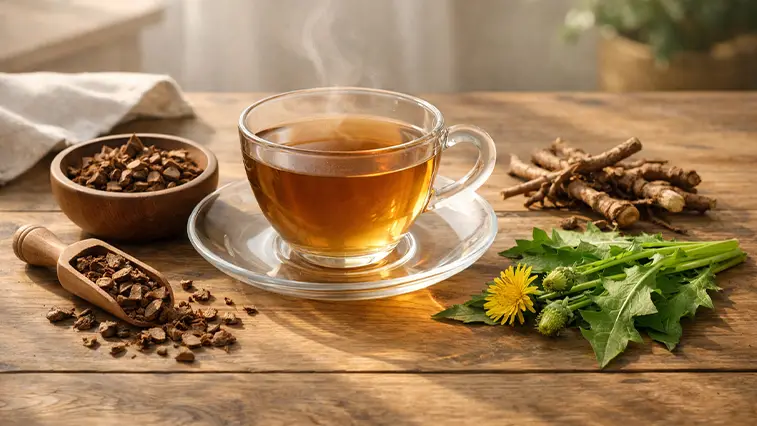
Dandelion Root for Liver Health: Can It Really Support the Liver and Digestion?
Dandelion root (Taraxacum officinale), often dismissed as a common weed, is a traditional herb that has been used for centuries, especially to support digestion, bile flow, and urination.
The root, in particular, contains bioactive plant compounds such as polyphenols, flavonoids, and sesquiterpene lactones, which are associated with antioxidant and anti-inflammatory properties in laboratory and preclinical studies.
This article explains how dandelion root may naturally support liver and digestive health, and where it may fit as a supportive herb. However, it is important to be clear: dandelion root does not treat chronic liver diseases such as hepatitis B and should not replace medical follow-up or prescribed treatment.
Health Benefits of Dandelion Root
1. Supporting Normal Liver Function
- Dandelion root has traditionally been used to support liver and digestive function, partly because it may help stimulate bile flow, which supports fat digestion.
- Instead of describing it as a direct “liver cleanser,” it is more accurate to say that dandelion root may support some natural body processes related to digestion and fluid elimination.
- This support may be useful within a healthy lifestyle, but it does not mean dandelion treats liver disease or guarantees liver protection.
If you want to understand liver health more broadly, you can read Vitaminati’s guide to hepatitis B and liver health to understand the difference between nutritional support and medical care.
2. Anti-Inflammatory Effects
- Chronic inflammation can add stress to body tissues, including liver tissue.
- Dandelion root contains plant compounds that may influence some inflammatory pathways, but most available evidence comes from laboratory or animal studies rather than large human clinical trials.
- For this reason, dandelion root is best viewed as a supportive herb, not an anti-inflammatory treatment or a substitute for medication.
To compare it with another herb commonly associated with liver support, you can review Vitaminati’s article on milk thistle benefits for the liver.
3. Antioxidant Protection
- Oxidative stress caused by free radicals is one factor that may contribute to cellular stress, including stress in liver cells.
- Dandelion root contains antioxidant compounds such as polyphenols and flavonoids, which may help reduce free radical effects in early research.
- Still, this does not mean that dandelion root alone can protect the liver from disease or reverse liver damage.
4. Does Dandelion Root Support Liver Regeneration?
- Some preclinical studies suggest that dandelion extracts may have liver-protective properties, especially through antioxidant and anti-inflammatory activity.
- However, the claim that dandelion root “regenerates the liver” requires caution, because this benefit has not been proven well enough in strong human studies.
- A safer way to describe it is as potential support for liver-cell health within a broader wellness plan, not a treatment for liver damage.
If you have hepatitis, elevated liver enzymes, or chronic liver disease, always begin with medical diagnosis and follow-up. You can also read Vitaminati’s article on understanding hepatitis B.
5. Digestive Health Support
- Liver health is closely connected to digestion because the liver produces bile, which helps digest fats.
- Dandelion root has traditionally been used to help with feelings of fullness, bloating, slow digestion, and mild appetite loss.
- Dandelion tea may be a gentle option for some people after meals, but it is not suitable for everyone, especially people with gallbladder or bile duct problems.
For more on dandelion as a general herb, you can read Vitaminati’s article on dandelion benefits for digestion and more.
How to Use Dandelion Root for Liver and Digestive Health
- Tea: One of the most common forms, with a mild earthy flavor. Use moderately and consider starting with one cup to assess your tolerance.
- Capsules or tablets: These provide a more defined dose, but product instructions should be followed carefully.
- Tinctures or liquid extracts: These may be more concentrated, so they require greater caution, especially with medications or chronic conditions.
If you are new to herbs, tea may be a simpler starting point than concentrated extracts. You can also explore Vitaminati’s herbs section to understand herbal use more responsibly.
Precautions Before Using Dandelion Root
- Consult your healthcare provider: Always check with your doctor or pharmacist before using dandelion root, especially if you take medications or manage a chronic condition.
- Liver and gallbladder conditions: Do not use dandelion root as a replacement for liver treatment, and do not use it without advice if you have gallstones, bile duct obstruction, or known liver disease.
- Allergic reactions: Some people may react to dandelion, especially those sensitive to plants in the Asteraceae family such as ragweed, chrysanthemums, or chamomile.
- Possible drug interactions: Dandelion may interact with diuretics, diabetes medications, blood thinners, and some drugs metabolized by the liver.
- Pregnancy and breastfeeding: There is not enough information about the safety of medicinal amounts of dandelion root during pregnancy or breastfeeding, so medical advice is recommended.
Where Does Dandelion Grow?
Dandelion grows in many regions around the world, especially Europe, Asia, and North America. It thrives in moist soils and temperate climates and is known for its resilience and rapid growth.
Although this makes it widely available, roots used for wellness purposes should come from clean and reliable sources, away from roadsides or areas contaminated with pesticides or heavy metals.
Conclusion
Dandelion root offers interesting potential benefits, especially for supporting digestion, bile flow, and urination in traditional herbal use. It also contains plant compounds with antioxidant and anti-inflammatory properties, making it a natural addition that may support a healthy lifestyle.
However, it should not be treated as a liver cure or as a way to treat hepatitis B or any chronic liver disease. Safe use begins with understanding its limits, choosing a reliable source, and avoiding use with medications or chronic conditions unless a healthcare professional approves.
FAQs About Dandelion Root
Does dandelion root cleanse the liver?
There is no strong evidence that dandelion root “cleanses” the liver in a medical sense. It is more accurate to describe it as a traditional herb that may support digestion and urination.
Is dandelion root good for hepatitis B?
Dandelion root does not treat hepatitis B and should not replace medical care. It may only be considered as part of a supportive nutrition approach after professional advice.
Is dandelion tea safe every day?
It may be safe for some adults in moderate amounts, but long-term daily use requires caution if you take medications or have a chronic condition.
Can dandelion root cause allergies?
Yes. Some people may be sensitive to dandelion, especially those allergic to plants in the Asteraceae family, such as ragweed or chrysanthemums.
Who should avoid dandelion root?
Pregnant or breastfeeding women, people with liver, gallbladder, or kidney conditions, and those using diuretics, diabetes medications, blood thinners, or chronic medications should seek professional advice first.
What is the best form of dandelion root?
Tea is the simplest option for beginners. Capsules and extracts are more concentrated and should be used according to product instructions and personal safety considerations.
Scientific References
- NCCIH: Dandelion — Usefulness and Safety
- European Medicines Agency: Taraxaci officinalis radix — Dandelion Root
- Memorial Sloan Kettering Cancer Center: Dandelion
- PubMed: The Diuretic Effect in Human Subjects of an Extract of Taraxacum officinale Folium
- WHO: Hepatitis B Fact Sheet
Medical disclaimer: This article is for general educational purposes only and is not a substitute for medical or pharmaceutical advice. If you are pregnant, breastfeeding, have liver, gallbladder, or kidney disease, or take regular medications, consult a healthcare professional before using dandelion root or any herbal supplement.