Natural Calcium Sources: Calcium-Rich Foods Beyond Milk
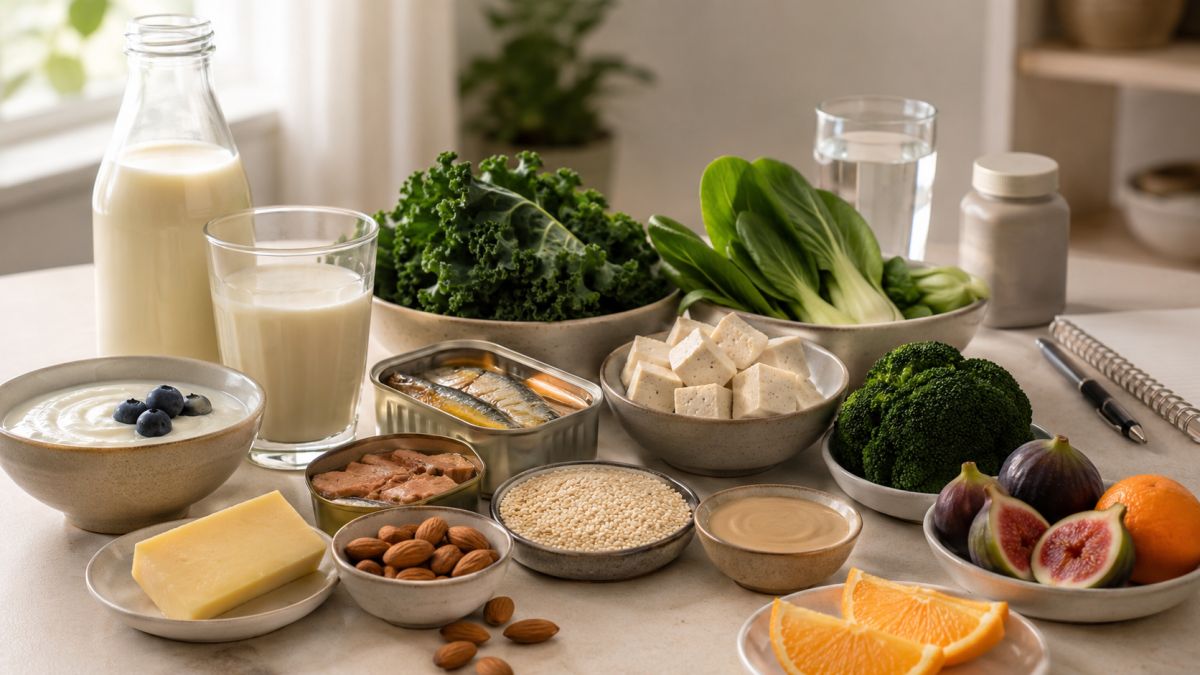
Natural calcium sources are not limited to milk. Milk, yogurt, and cheese are well-known sources, but calcium is also found in fish eaten with bones, some leafy vegetables, legumes, seeds, nuts, and fortified foods.
Calcium is essential for bones and teeth, but it does not work alone. The body also needs vitamin D, protein, magnesium, phosphorus, and regular movement to support bone health. That is why calcium should be viewed as part of a complete nutrition pattern, not as one isolated number.
Calcium benefits: why does the body need it?
The most familiar calcium benefit is supporting bones and teeth, because most of the body’s calcium is stored in the skeleton. But calcium also helps muscles contract, nerves send signals, blood clot normally, and the heart function properly.
When calcium intake stays low for a long time, the body may pull calcium from bones to keep blood calcium within a normal range. Over time, chronically low intake may affect bone density, especially in older adults, postmenopausal women, and people with low vitamin D.
Among essential minerals, calcium remains one of the most important nutrients to balance through food before considering supplements.
How much calcium do you need daily?
Calcium needs vary by age, sex, and health status. Many adults need about 1,000 mg per day. Needs may increase to about 1,200 mg per day for women after age 50 and men after age 70. Children and teenagers need different amounts depending on growth stage.
These numbers do not mean everyone should immediately take a supplement. The first step is to estimate calcium from food. If your diet includes enough yogurt, milk, cheese, fish with bones, leafy greens, legumes, or fortified foods, you may already be close to your daily target.
If you rarely consume dairy, have lactose intolerance, have milk allergy, or follow a plant-based diet, planning non-dairy calcium sources becomes more important.
Calcium levels in food: practical examples
The amount of calcium in food depends on the food type, serving size, preparation method, and whether the product is fortified. This table gives approximate examples to help you understand the idea. For packaged foods, the nutrition label is still the best guide.
| Food | Approximate serving | Approximate calcium amount |
|---|---|---|
| Low-fat yogurt | About 1 cup | About 300–400 mg |
| Milk | 1 cup | About 300 mg |
| Cheddar cheese | Small 40 g piece | About 300 mg |
| Sardines with bones | About 85 g | May exceed 300 mg depending on the product |
| Canned salmon with bones | About 85 g | About 180 mg or more depending on the product |
| Fortified plant-based milk | 1 cup | Often about 300 mg or more depending on fortification |
| Cooked kale or turnip greens | 1 cup | A useful amount, depending on the type |
| Broccoli | ½ to 1 cup | Moderate amount, not very high |
| Almonds | Small handful | Contributes calcium but is not a complete replacement |
| Tahini or sesame seeds | 1–2 tablespoons | Can be calcium-rich, but also calorie-dense |
Fortified foods need special attention because calcium amounts vary widely by brand. When choosing plant-based milk, fortified juice, or breakfast cereal, check the nutrition label instead of relying on the product name.
Animal sources of calcium
Animal sources of calcium include dairy products and fish eaten with their bones. These foods can be practical because they provide a meaningful amount of calcium in a relatively small serving.
Milk, yogurt, and cheese
Milk, yogurt, and cheese are among the most common calcium sources. Yogurt can be especially practical because it provides calcium and protein, and some people tolerate it better than milk.
Choosing dairy does not mean choosing high sugar or high saturated fat. It is better to choose lower-sugar options and pay attention to salt in some cheeses, especially for people who need to reduce sodium.
Sardines and canned salmon with bones
Sardines and canned salmon with soft edible bones are valuable calcium sources because the bones are the calcium-rich part. If the bones are removed, the calcium content drops significantly.
These options may help people who do not drink milk, but they may not suit everyone because of taste, sodium content, or allergy. Reading the label is helpful.
Non-dairy calcium sources
Many people search for non-dairy calcium sources because of lactose intolerance, milk allergy, vegan eating patterns, or simply because they do not like milk. The good news is that several options can be added to daily meals.
- Sardines or canned salmon with bones.
- Calcium-set tofu.
- Fortified soy, almond, oat, or other plant-based milk.
- Kale, turnip greens, bok choy, collard greens, and broccoli.
- Beans, chickpeas, and lentils in contributing amounts.
- Almonds, sesame seeds, and tahini.
- Some fortified breakfast cereals or juices.
If the reason for avoiding milk is lactose intolerance, some people may tolerate yogurt or lactose-free milk. If the reason is a true milk protein allergy, dairy products should be avoided, and alternatives should be discussed with a qualified professional.
Which vegetables contain calcium?
Calcium is found in some leafy vegetables, including kale, turnip greens, bok choy, and collard greens. Broccoli also contributes calcium, although it is not as rich as dairy products or fish with bones.
Not all leafy greens are equal. Spinach contains calcium, but it also contains oxalates, which reduce calcium absorption. For this reason, spinach is not the best choice if the main goal is increasing absorbable calcium.
A varied plate is better than relying on one vegetable. A meal with kale or turnip greens, enough protein, and good vitamin D status may support bone nutrition more effectively than spinach alone.
Calcium in fruits: which fruits help?
Fruits are usually not the richest calcium sources, so they should not be the main strategy for meeting daily calcium needs. Still, some fruits can add small useful amounts as part of a balanced diet.
Fruits that may contribute calcium include figs, oranges, kiwi, and berries. Calcium-fortified orange juice can provide more calcium, but it is a fortified food, not a purely natural source.
The smarter approach is to use fruit as part of a calcium-containing meal. For example, yogurt with figs or berries, or oatmeal made with fortified milk plus fruit and nuts, provides more calcium than fruit alone.
The fastest way to increase calcium safely
The fastest way to increase calcium is not to take a large supplement immediately. The safer approach starts with three steps: estimate your calcium intake from food, improve absorption factors, then use a supplement only when there is a clear need.
1. Add a clear calcium source to two meals daily
Instead of changing your whole diet at once, choose two daily calcium sources. For example, yogurt in the morning, then sardines, fortified milk, tofu, or leafy greens in another meal.
2. Do not ignore vitamin D
Vitamin D helps the body absorb calcium. If vitamin D is low, the body may not use calcium as effectively. When thinking about bone health, it is important to understand the relationship between vitamin D and bone health, not calcium alone.
3. Use supplements only when needed
If food does not cover your needs, or if you have osteoporosis, pregnancy, lactation, or another medical reason, a doctor or pharmacist may recommend a calcium supplement. The supplement should complete the diet, not replace it.
Calcium supplements can also affect the absorption of some minerals, including iron, zinc, and magnesium. It is usually better not to take calcium and iron supplements at the same time. If low iron is a concern, understanding iron-rich foods and iron absorption can help organize supplement timing.
Do you always need a calcium supplement?
No. Many people can meet their calcium needs through food, especially if they consume dairy, fortified foods, or fish with bones. A supplement becomes more useful when dietary intake is low, or when a health condition increases needs or reduces absorption.
Using calcium supplements without need may cause constipation or digestive discomfort. In some people, high supplemental calcium intake may also increase the risk of kidney stones. Higher doses do not always mean stronger bones.
Bone health depends on several factors, including vitamin D, protein, physical activity, avoiding smoking, and preventing long-term nutritional deficiencies. If you are comparing minerals important for muscles and bones, magnesium also supports normal muscle and energy-related functions, but it does not replace calcium.
Common mistakes when trying to raise calcium
- Relying only on milk: milk is useful, but it is not the only source.
- Taking a large supplement without counting food intake: calcium from food and supplements should be considered together.
- Ignoring vitamin D: low vitamin D can reduce calcium absorption.
- Taking calcium with iron: calcium may reduce iron absorption when taken at the same time.
- Using spinach as the main calcium source: spinach contains oxalates that reduce calcium absorption.
- Forgetting movement: walking and resistance exercise support bone strength alongside nutrition.
Who should pay closer attention to calcium?
Some groups may need closer attention to calcium intake, including children and teenagers during growth, postmenopausal women, older adults, pregnant and breastfeeding women, people who avoid dairy, and people with osteoporosis or a family history of weak bones.
Caution is also important for people with kidney disease, repeated kidney stones, high blood calcium, or certain medications. In these cases, calcium supplements should not be used randomly without medical evaluation.
How to build a calcium-rich day
You can increase calcium by spreading calcium sources throughout the day instead of relying on one meal. For example:
- Breakfast: yogurt with fruit and nuts, or oatmeal made with fortified milk.
- Lunch: leafy green salad with kale or turnip greens, or a meal with sardines and edible bones.
- Snack: milk, low-salt cheese, yogurt, or almonds with fruit.
- Dinner: calcium-set tofu or legumes with vegetables, depending on your eating pattern.
Not every meal needs to be very high in calcium. What matters is the daily total, variety, and consistency.
FAQs about natural calcium sources
What are the best natural calcium sources?
Milk, yogurt, cheese, sardines with bones, canned salmon with bones, kale, turnip greens, calcium-set tofu, sesame seeds, tahini, almonds, and fortified foods.
What are non-dairy calcium sources?
Sardines, canned salmon with bones, calcium-set tofu, fortified plant-based milk, leafy greens, legumes, almonds, sesame seeds, and tahini.
What is the fastest way to increase calcium?
Add a clear calcium source to two meals daily, check vitamin D if it is low, and use a supplement only when there is a clear need.
Which vegetables contain calcium?
Kale, turnip greens, bok choy, broccoli, and collard greens contain calcium. Spinach contains calcium too, but it is less absorbable because of oxalates.
Which fruits contain calcium?
Figs, oranges, kiwi, and berries can contribute small amounts, but fruits are not the strongest calcium sources.
What are animal sources of calcium?
Milk, yogurt, cheese, sardines, and canned salmon with soft edible bones are animal sources of calcium.
Is milk necessary to get enough calcium?
No. Milk is a good source, but calcium can also come from fortified alternatives, fish with bones, vegetables, legumes, seeds, and nuts.
Is vitamin D necessary for calcium?
Vitamin D helps calcium absorption. If vitamin D is low, calcium intake should be evaluated together with vitamin D status.
Can calcium supplements cause kidney stones?
They may increase risk in some people, especially with high doses or a history of kidney stones. Use should depend on diet and medical status.
Can calcium be taken with iron?
It is usually better to separate them, because calcium may reduce iron absorption when taken at the same time.
Conclusion
Natural calcium sources are varied and not limited to milk. You can get calcium from dairy, fish with bones, leafy greens, legumes, seeds, nuts, and fortified foods. The goal is not one perfect food, but a balanced day that consistently meets your needs.
If your intake is low, or if you have osteoporosis or another health condition, a calcium supplement may be useful. However, supplementation should be calculated. More calcium is not always better.
Health disclaimer: This article is for general education only and does not replace medical advice. If you are pregnant, breastfeeding, have kidney disease, kidney stones, high calcium levels, osteoporosis, or take long-term medications, consult a healthcare professional before using calcium supplements.