Rhodiola Rosea: Can This Arctic Root Really Fight Stress and Fatigue?
Feeling mentally exhausted after a demanding week is something most people recognize. But when stress becomes constant and even a full night's sleep does not leave you feeling refreshed, it is understandable to start looking for ways to support your energy and concentration.
One herbal supplement increasingly discussed in this context is Rhodiola rosea, a plant traditionally used to help people cope with periods of physical and mental strain. You may have seen it marketed for stress, fatigue, mental clarity, or improved energy.
But does Rhodiola rosea actually work? Although some clinical studies have reported encouraging findings, the overall evidence remains limited. Its traditional reputation is stronger than the scientific evidence currently available to confirm its benefits.
Understanding what Rhodiola contains, what researchers have investigated, and where the safety concerns lie can help you make a more informed decision before considering this supplement.
What Is Rhodiola Rosea, and How Does It Work?
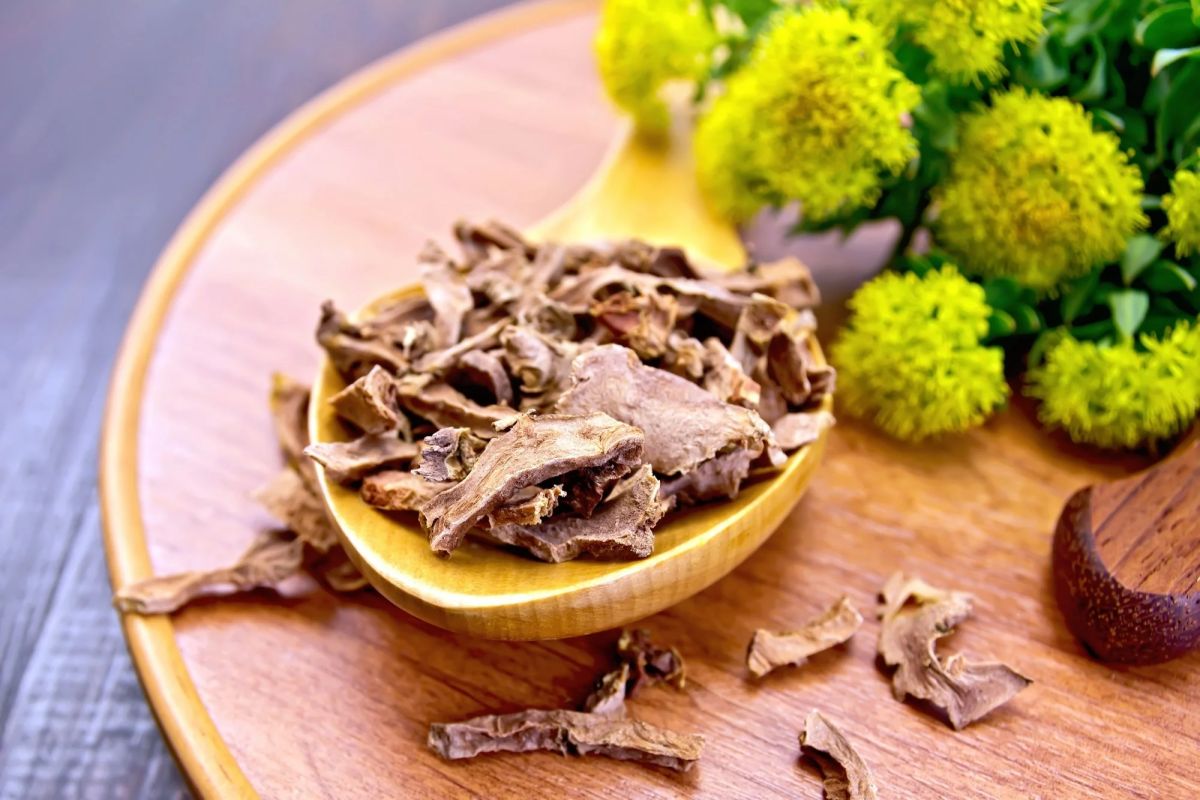
Rhodiola rosea, sometimes called golden root, Arctic root, or rose root, is a flowering plant that grows naturally in cold, mountainous regions of Europe, Asia, and North America.
Its underground parts, particularly the root and rhizome, have a history of traditional medicinal use in regions including Russia and Scandinavia.
Rhodiola is commonly described as an adaptogen. This term refers to plants believed to help the body respond to physical or psychological stress.
However, adaptogen is not a guarantee of clinical effectiveness. The term describes a proposed property of certain herbs rather than a proven medical benefit for every product sold under that label.
Rhodiola contains several naturally occurring compounds. Two of the most frequently studied groups are:
- Rosavins: A group of compounds, including rosavin, rosin, and rosarin, commonly used as markers in Rhodiola rosea extracts.
- Salidroside: A plant compound investigated for possible effects on cellular stress responses and nervous system signaling.
Laboratory and experimental research suggests that Rhodiola compounds may influence processes involved in the body's stress response, including certain neurotransmitter pathways and the hypothalamic-pituitary-adrenal (HPA) axis.
The HPA axis is the communication system connecting the brain with the adrenal glands, which produce hormones involved in responding to stress, including cortisol.
However, findings from laboratory experiments do not automatically translate into meaningful health benefits in humans. Researchers have not yet established exactly how Rhodiola affects these pathways in people or whether the proposed effects consistently improve symptoms.
What Are the Potential Benefits of Rhodiola Rosea?
Rhodiola has been studied for several possible uses, particularly stress-related fatigue, mental performance, exercise tolerance, and mood.
It is important to distinguish between preliminary clinical findings and benefits supported by sufficiently strong evidence.
Does Rhodiola Rosea Help Reduce Stress?
Stress-related symptoms are among the main reasons people consider Rhodiola supplements.
Some small clinical studies have investigated Rhodiola extracts in adults experiencing high workloads, examination stress, or stress-related exhaustion.
Several reported improvements in self-rated stress or fatigue. However, many had limitations, including small participant numbers, short treatment periods, inconsistent supplement preparations, or methodological weaknesses.
The European Medicines Agency (EMA) recognizes certain Rhodiola preparations as traditional herbal medicines for the temporary relief of stress-related symptoms such as fatigue and weakness.
Importantly, this classification is based on longstanding use and plausible benefit, not on clinical evidence strong enough to establish efficacy conclusively.
Similarly, the US National Center for Complementary and Integrative Health (NCCIH) states that there is currently insufficient reliable evidence to determine whether Rhodiola is effective for any health-related purpose.
For someone experiencing ongoing stress, it is more useful to view Rhodiola as an herb under investigation than as a proven solution.
Addressing the underlying causes of stress remains essential. Strategies such as consistent sleep, physical activity, and practical stress management habits that support mental wellbeing have a more established role in maintaining general health.
Can Rhodiola Improve Mental Fatigue and Concentration?
Another commonly promoted benefit is improved mental performance during stressful periods.
For example, a student preparing for exams or an employee working long hours may notice reduced concentration and increased mental fatigue.
Some early studies suggest that particular Rhodiola extracts may improve certain measures of fatigue, attention, or perceived mental performance under stressful conditions.
However, results are inconsistent. Different trials have used different extracts, doses, participant groups, and methods for measuring outcomes.
This makes it difficult to determine whether improvements are clinically meaningful or reproducible.
There is also no convincing evidence that taking Rhodiola improves memory or concentration in otherwise healthy, well-rested individuals.
The important distinction is between studying a possible effect and proving that an ingredient reliably produces it.
Does Rhodiola Rosea Increase Energy or Reduce Fatigue?
Rhodiola is frequently marketed as a natural energy booster, but this description can be misleading.
Fatigue is not a single medical condition. It can result from inadequate sleep, psychological stress, anemia, thyroid disorders, certain medications, nutritional deficiencies, or other health problems.
Rhodiola does not correct these underlying causes.
Some studies have investigated whether Rhodiola extracts reduce perceived fatigue in people under stress, but the overall results are not sufficiently reliable to recommend it as an established treatment.
If you experience persistent fatigue, especially when accompanied by dizziness, shortness of breath, unexplained weight changes, or significant sleep problems, medical evaluation is more appropriate than starting an energy supplement.
Can Rhodiola Improve Exercise Performance?
Rhodiola has also attracted interest among athletes and physically active adults.
Researchers have examined whether supplementation influences endurance, perceived exertion, recovery, or certain measures of physical performance.
Some small trials have reported positive findings, while others have found little or no meaningful difference.
Systematic reviews describe considerable variation in study quality, supplementation protocols, and measured outcomes.
For now, Rhodiola should not be considered an established sports-performance enhancer.
Consistent training, sufficient energy intake, hydration, and recovery remain more reliable foundations for exercise performance.
Can Rhodiola Help With Anxiety or Depression?
Because Rhodiola is marketed for emotional wellbeing, some researchers have explored its potential effects on low mood and depressive symptoms.
A small number of clinical trials have reported encouraging results, but the studies are not sufficient to establish Rhodiola as an effective treatment for depression or anxiety disorders.
These conditions involve complex biological, psychological, and social factors and may require professional assessment and evidence-based treatment.
Rhodiola should not replace prescribed antidepressants, psychological therapy, or other recommended medical care.
Does Rhodiola Rosea Lower Cortisol?
One popular claim is that Rhodiola reduces cortisol, often described as the body's main stress hormone.
Cortisol is a normal and essential hormone. It helps regulate metabolism, blood pressure, and the body's response to stressful situations.
The goal of healthy stress regulation is not to eliminate cortisol or keep its level permanently low.
Experimental research suggests that Rhodiola may influence some pathways involved in stress responses, but human evidence has not established a consistent or clinically meaningful cortisol-lowering effect.
Therefore, claims that Rhodiola directly "balances hormones" or "fixes high cortisol" go beyond what current research can support.
What Is the Recommended Rhodiola Rosea Dosage?
There is no universally established, evidence-based Rhodiola dose that has been proven effective for stress, fatigue, or cognitive performance.
Clinical studies have used different preparations and amounts, making direct comparisons difficult.
Some studies have examined standardized extracts in daily amounts of approximately 200–600 mg, but this range should not be interpreted as a recommended dose for everyone.
The European Medicines Agency provides product-specific guidance for certain traditional herbal preparations. These recommendations cannot automatically be applied to every supplement because extracts may differ substantially.
When assessing a product, it is important to distinguish the quantity of extract from the quantity of dried root and to review the extract's standardization.
What Do 3% Rosavins and 1% Salidroside Mean?
Many Rhodiola supplements are marketed as standardized extracts containing approximately 3% rosavins and 1% salidroside.
These percentages describe the measured concentration of specific plant compounds in the extract.
For example, a 200 mg extract standardized to 3% rosavins would contain approximately 6 mg of rosavins. This calculation describes composition, not proven clinical effectiveness.
A standardized extract may provide greater consistency between batches, but standardization alone does not establish that a product is safe or effective.
It also matters whether the product contains authentic Rhodiola rosea rather than a different Rhodiola species.
Understanding how to interpret supplement labels and ingredient quantities can help distinguish meaningful product information from marketing claims.
What Is the Best Time to Take Rhodiola?
Rhodiola is often taken in the morning or earlier in the day because some people report feeling more alert after using it.
However, there is limited scientific evidence identifying an optimal administration time.
Since insomnia is a possible side effect, taking it close to bedtime may be unsuitable for some individuals.
Follow the instructions for the specific product and consult a pharmacist or healthcare professional if you are unsure whether it is appropriate.
How Long Does Rhodiola Take to Work?
There is no established time frame within which Rhodiola should produce noticeable benefits.
Clinical studies have examined effects over periods ranging from days to several weeks, but their findings cannot guarantee that an individual will notice improvement within a particular number of days.
The EMA advises seeking medical guidance if symptoms persist for more than two weeks while using traditional Rhodiola herbal medicines.
This does not mean that two weeks is a proven time needed for Rhodiola to become effective.
Evidence about the safety of prolonged or indefinite use remains limited.
What Are the Side Effects of Rhodiola Rosea?
Rhodiola appears reasonably well tolerated in some short-term human studies, but this does not establish its safety for everyone.
Reported side effects include:
- Headache or dizziness.
- Difficulty sleeping or insomnia.
- Dry mouth or increased saliva production.
- Unpleasant feelings of restlessness in some individuals.
The NCCIH notes that Rhodiola may be safe for periods of up to approximately 12 weeks, but there is insufficient information about long-term use.
The safety of a finished supplement also depends on its composition, quality, other ingredients, and possible contamination.
Can Rhodiola Interact With Medications?
Herbal products can influence the way medicines act in the body, and Rhodiola is no exception.
The NCCIH reports interactions involving Rhodiola and losartan, a medicine used to manage high blood pressure.
Potential interactions with antidepressants and other medicines affecting neurotransmitter systems are also a reason for caution, although the clinical evidence is not sufficient to predict the risk of every combination.
People taking antidepressants, blood pressure medicines, or several prescription medications should consult their doctor or pharmacist before using Rhodiola.
Women and men with bipolar disorder should also seek specialist advice because of concerns about potentially activating effects and limited safety evidence in this population.
Do not stop, reduce, or change prescribed medication in order to take an herbal supplement.
Who Should Avoid Rhodiola Rosea?
Rhodiola is not suitable for everyone, even though it is a plant-derived ingredient.
- Pregnant or breastfeeding women: Safety data are insufficient, so use is not recommended.
- Children and adolescents: The EMA's traditional-use guidance is intended for adults; safety and appropriate use in younger people are not established.
- People taking regular medications: Possible interactions require professional assessment.
- People with bipolar disorder: Medical supervision is particularly important because safety data are limited.
- People with persistent or unexplained fatigue: An underlying condition should be investigated rather than masked with supplements.
Rhodiola vs. Ashwagandha: What Is the Difference?
Rhodiola rosea and ashwagandha are frequently grouped together as adaptogenic herbs, but they come from different plants and have different histories of traditional use.
Rhodiola is commonly promoted for stress-related fatigue and mental performance, while ashwagandha is more often studied in relation to stress, sleep, and anxiety symptoms.
However, these differences in research focus and marketing should not be interpreted as proof that Rhodiola is stimulating or that ashwagandha is always calming.
There is insufficient high-quality comparative evidence to conclude that one is consistently safer or more effective than the other.
Understanding the potential benefits and safety considerations of ashwagandha is useful when evaluating the differences between these two herbal ingredients.
Neither supplement should be used as a substitute for medical treatment of anxiety, depression, or persistent fatigue.
How Can You Choose a Rhodiola Supplement More Carefully?
If a healthcare professional considers Rhodiola appropriate for you, product selection deserves attention.
- Check the botanical name: The label should clearly identify Rhodiola rosea.
- Identify the plant part: Determine whether the product contains root, rhizome, powder, or extract.
- Review the extract amount: Check the milligrams provided per serving and the serving instructions.
- Look for standardization details: Rosavin and salidroside percentages can help describe the extract's composition.
- Review other ingredients: Some stress or energy products combine multiple herbs, caffeine, or other active substances.
- Consider quality verification: Independent testing may help assess identity, purity, and ingredient content when available.
- Check medication warnings: Discuss possible interactions with a healthcare professional.
Remember that a higher concentration of plant compounds does not necessarily mean a better clinical outcome.
When Is Fatigue a Reason to See a Doctor?
Occasional tiredness after stressful days is common. However, fatigue that lasts for weeks, interferes with normal activities, or occurs despite adequate rest deserves medical evaluation.
Possible causes include sleep disorders, anemia, thyroid conditions, depression, chronic illness, and medication effects.
A healthcare professional can determine whether your symptoms suggest a medical condition and whether investigations are needed.
Rhodiola should not delay diagnosis or appropriate treatment when fatigue is persistent or unexplained.
Frequently Asked Questions About Rhodiola Rosea
What is Rhodiola rosea used for?
Rhodiola has traditionally been used for stress-related fatigue, weakness, and physical or mental strain. Modern research has explored several possible benefits, but reliable evidence remains insufficient to establish clinical effectiveness.
Does Rhodiola rosea really help with stress?
Some small studies report improvements in stress-related symptoms, but results are limited by study design and inconsistent preparations. Rhodiola is not a proven treatment for chronic stress.
Is Rhodiola rosea a stimulant?
Rhodiola is not equivalent to caffeine or prescription stimulants. Some people report increased alertness, but its neurological effects in humans are not fully established.
What is the best Rhodiola dosage for adults?
No universally effective dose has been established. Studies have used different standardized extracts and amounts. Product-specific guidance and professional advice are more appropriate than assuming one dose suits everyone.
Can I take Rhodiola every day?
Daily use has been investigated in short-term studies, but long-term safety remains uncertain. Persistent symptoms or plans for prolonged use should be discussed with a healthcare professional.
Does Rhodiola lower cortisol?
Researchers have investigated its possible effects on stress-response pathways, but there is no convincing evidence that Rhodiola consistently lowers cortisol in a clinically meaningful way.
Can Rhodiola cause insomnia?
Yes. Insomnia is among its reported side effects. People who experience sleep disturbances should avoid assuming that the supplement will improve rest.
Can Rhodiola be taken with antidepressants?
Potential interactions are a concern, and clinical evidence is limited. Consult a doctor or pharmacist before combining Rhodiola with antidepressant medication.
Is Rhodiola better than ashwagandha?
There is insufficient reliable comparative evidence to identify one as consistently better. Their suitability depends on individual health circumstances, medications, and specific safety considerations.
Is Rhodiola safe during pregnancy?
There is insufficient evidence to establish safety during pregnancy or breastfeeding. Use is not recommended during these periods.
Conclusion
Rhodiola rosea is an interesting medicinal plant with a long history of traditional use and a growing, but still limited, body of clinical research.
Early findings suggest possible effects on stress-related fatigue and certain aspects of mental or physical performance, but the available evidence is not strong enough to establish reliable clinical benefits.
For people dealing with stress or exhaustion, the priority remains identifying contributing factors, maintaining healthy sleep and activity habits, and seeking medical evaluation when symptoms persist.
If Rhodiola is being considered, understanding the specific extract, checking its quality, and reviewing medication interactions are more important than relying on broad claims about energy or hormonal balance.
Scientific References
- National Center for Complementary and Integrative Health (NCCIH). Rhodiola: Usefulness and Safety.
- European Medicines Agency (EMA). Rhodiola rosea: European Union Herbal Monograph and Assessment.
- Clinical Evidence for the Adaptogenic Effects of Withania somnifera and Rhodiola rosea: A Systematic Review, 2026.
Medical Disclaimer: This article is for general educational purposes only and does not replace professional medical advice, diagnosis, or treatment. Consult a doctor or pharmacist before using herbal supplements, particularly if you are pregnant, breastfeeding, taking medication, or managing a chronic medical condition.
About Vitaminati
Vitaminati is a bilingual health education platform dedicated to making reliable information about vitamins, minerals, dietary supplements, herbal ingredients, and general wellbeing accessible and understandable. Its educational content emphasizes scientific evidence, responsible supplement use, and informed health decisions in consultation with qualified healthcare professionals.