Vitamin B5 Benefits for Energy and Skin, and Where to Find It in Food
Vitamin B5 Benefits for Energy and Skin, and Where to Find It in Food
You might see vitamin B5 on a bottle of B-complex tablets and again on a hand cream. On a supplement label, B5 usually appears as pantothenic acid, a nutrient your body needs to release energy from food. On a skincare label, “provitamin B5” usually refers to panthenol, an ingredient used in moisturizers. What you can expect depends on which product you have in your hand.
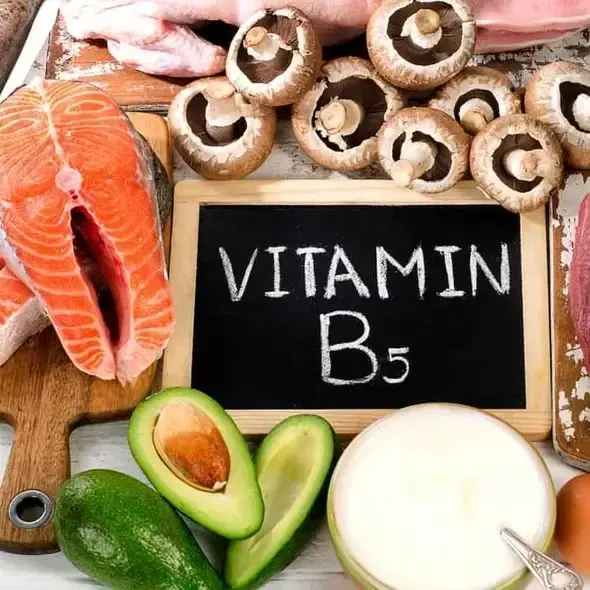
Eggs, chicken, mushrooms, and sunflower seeds all provide vitamin B5. A varied diet usually supplies enough, including when you leave meat off the menu. Here is how much familiar portions provide and what the research says about B5 for fatigue, dry skin, acne, and hair loss.
What is vitamin B5, and is it the same as pantothenic acid?
Vitamin B5 and pantothenic acid are two names for the same nutrient. B5 belongs to the water-soluble vitamins. Your body uses it to make coenzyme A, often shortened to CoA. This molecule helps cells build and break down fatty acids and use the energy available in food.
On a supplement label, “pantothenic acid (as calcium pantothenate)” means the product supplies B5 in the form of calcium pantothenate. On a face or hand cream, “panthenol” identifies a related compound that the skin can convert to pantothenic acid.
How does vitamin B5 help produce energy, and will it help if I feel tired?
Think of a breakfast of bread and eggs. The food supplies calories, while coenzyme A helps your cells carry out the chemical reactions that make that energy available. This is the basis for the “energy support” claim often printed on B-vitamin supplements.
If your diet already supplies enough B5, there is little reason to expect an immediate lift from taking a tablet. Fatigue on its own is also a poor clue to a B5 deficiency. If tiredness regularly interferes with your day, knowing when it started, how well you sleep, and whether it comes with other symptoms can help a clinician decide what to investigate.
Which foods contain vitamin B5, and how much is in a serving?
The variety of food matters as much as the portion. Half a cup of cooked shiitake mushrooms supplies about 2.6 mg of pantothenic acid. The same volume of sliced, stir-fried white mushrooms provides about 0.8 mg. Both contribute to your intake, but using one figure for all mushrooms can give you a misleading estimate.
| Food | Serving | Vitamin B5 (mg) |
|---|---|---|
| Cooked shiitake mushrooms | ½ cup | 2.6 |
| Sunflower seeds | ¼ cup | 2.4 |
| Roasted skinless chicken breast | 3 oz (about 85 g) | 1.3 |
| Avocado | ½ fruit | 1.0 |
| Milk, 2% fat | 1 cup | 0.9 |
| Sliced, stir-fried white mushrooms | ½ cup | 0.8 |
| Baked russet potato with skin | 1 medium potato | 0.7 |
| Hard-boiled egg | 1 large egg | 0.7 |
| Whole-wheat pita | 1 large pita | 0.5 |
| Canned chickpeas | ½ cup | 0.4 |
How can I get enough vitamin B5 if I don’t eat meat?
Plant foods can contribute across several meals. Half an avocado with a large whole-wheat pita provides roughly 1.5 mg. Half a cup of canned chickpeas and a medium baked russet potato add another 1.1 mg. A quarter cup of sunflower seeds, eaten as a snack or divided between a salad and another meal, contributes about 2.4 mg.
Those portions add up to approximately 5 mg, the daily adequate intake for most adults. You can use this example to picture the quantities involved and vary the foods from one day to the next.
What does vitamin B5 do for skin, and how is it related to panthenol cream?
If your hands feel dry after repeated washing or your face feels tight after cleansing, studies of topical panthenol are particularly relevant. Panthenol is a precursor of vitamin B5. One form, dexpanthenol, is used in creams and ointments. Studies of specific formulations have found improved hydration in the outer layer of the skin and support for the barrier that helps the skin retain water.
These studies tested products applied directly to the skin. For dry hands, a panthenol-containing moisturizer is a reasonable option to try. Dryness alone gives little indication of your dietary B5 intake, and research on a cream cannot tell us whether swallowing a B5 tablet will produce the same result.
Do vitamin B5 supplements help acne?
One small 12-week trial tested a pantothenic acid-based supplement in adults with mild to moderate facial acne. Among the 41 participants included in the analysis, the total number of facial acne lesions fell more in the supplement group than in the placebo group. The trial tested a particular formulation in a small group, which limits how confidently the finding can be applied to other products or used to recommend a treatment dose.
If breakouts follow a monthly pattern or leave scars, the timing and severity can help a dermatologist assess factors that contribute to acne and choose treatment. The findings from this trial are too limited to justify replacing prescribed acne treatment or starting high-dose B5 on your own.
Does vitamin B5 help hair grow or reduce shedding?
You may come across panthenol in a conditioner used to improve how your hair feels or how easily it combs through. Smoother strands after washing tell you little about how many hairs are shedding from the root. There is insufficient clinical evidence to recommend oral B5 alone for hair loss in people who already get enough through food.
If your hair is visibly thinning, pay attention to whether the change was sudden or gradual and whether it affects the whole scalp or distinct patches. Those details are useful when discussing the cause, especially before spending money on a hair supplement.
What are the symptoms of vitamin B5 deficiency, and who is most at risk?
Pantothenic acid deficiency is very rare because B5 occurs in so many foods. It can occur with severe malnutrition, when other nutrient deficiencies are also likely. Symptoms reported in severe deficiency include fatigue, headaches, disturbed sleep, and numbness or burning in the hands and feet.
Burning feet in particular can have several causes. If the sensation persists or gets worse, seek medical assessment. The symptom alone cannot identify a vitamin deficiency, and experimenting with a supplement can delay finding the cause.
How much vitamin B5 do adults need during adulthood, pregnancy, and breastfeeding?
U.S. reference values for B5 are expressed as an “adequate intake,” an amount expected to cover the needs of healthy people. When considering your daily vitamin B5 intake, count food as well as supplements. The adult figure of 5 mg does not mean you need a 5 mg tablet on top of your meals.
| Group | Daily amount |
|---|---|
| Adults who are neither pregnant nor breastfeeding | 5 mg |
| During pregnancy | 6 mg |
| During breastfeeding | 7 mg |
Do I need a separate B5 supplement if I already take a B-complex?
A B-complex often contains B5 already. When reading the Supplement Facts label, look at the serving size and find the line for pantothenic acid. If two identical tablets supply 10 mg per serving, one supplies 5 mg. A separate B5 product would add to what you already get from that supplement and your meals.
Another name you may encounter on products marketed for cholesterol is pantethine. Researchers have studied this specific derivative for its effects on blood lipids. Those findings cannot be assumed to apply to an ordinary pantothenic acid supplement.
What are the side effects of taking too much vitamin B5?
No daily upper intake level has been established for pantothenic acid. The available evidence does not identify a precise threshold at which harm begins. Very large amounts, such as 10 grams a day, have been associated with diarrhea and digestive discomfort. For scale, 10 grams equals 10,000 mg. That example should not be used as a cutoff for deciding whether a lower dose is safe.
Start with what you want B5 to do. Varied meals provide several ways to meet your nutritional needs. For dry skin, the formulation of a moisturizer and how your skin tolerates it matter. For ongoing fatigue, hair loss, or acne that leaves scars, identifying the cause is more useful than increasing the dose.
Scientific sources
- NIH Office of Dietary Supplements: pantothenic acid food sources, adequate intakes, deficiency, and safety
- Human study of topical dexpanthenol, skin hydration, and barrier function
- Randomized trial of a pantothenic acid-based dietary supplement for facial acne
- Systematic review of oral supplements for acne, including efficacy and safety