Reading a Supplement Label Like a Pharmacist: What the Numbers Actually Mean
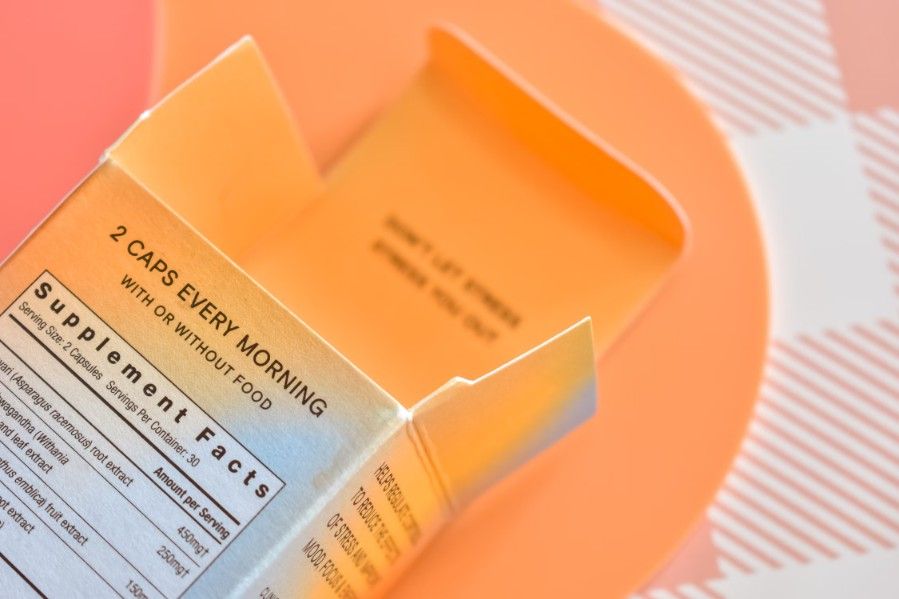
Most people look at a supplement label searching for one number: the dose printed in milligrams or micrograms. But that number alone does not tell you whether a product is appropriate, well formulated, or even how much of the ingredient you are actually getting. The amount may refer to an entire serving rather than one capsule, the weight of a mineral compound may differ from its elemental amount, and a high %Daily Value does not automatically mean a better supplement.
Learning how to read a supplement label properly can help you compare products more accurately, identify unnecessary high doses, avoid accidentally taking the same nutrient from several products, and ask better questions before buying a supplement. For a broader introduction, Vitaminati’s guide to reading vitamin and supplement labels safely explains the basic sections of a Supplement Facts panel.
Serving Size: The Number That Determines Everything Else
Before looking at the amount of any vitamin, mineral, or other ingredient, check the Serving Size and Servings Per Container. The quantities shown in the Supplement Facts panel are generally tied to the listed serving size, which may consist of more than one capsule, tablet, gummy, scoop, or teaspoon.
For example, if a product provides 1,000 mg per serving but one serving equals two tablets, each tablet provides only 500 mg. Looking only at the large number printed on the front of the bottle can therefore lead to incorrect comparisons between products or accidental dosing errors.
Amount Per Serving: Milligrams, Micrograms, or IU?
Once you know the serving size, look at the amount of each ingredient. Depending on the nutrient and labeling system, quantities may appear in milligrams (mg), micrograms (mcg), or, for certain nutrients and products, International Units (IU).
Do not directly compare two numbers when the units are different. Also, do not assume that the product displaying the largest number is automatically better. Nutrient requirements vary substantially, and some vitamins and minerals can cause adverse effects when taken in unnecessarily high amounts.
Before comparing supplement doses, it can be useful to understand the fundamental differences between these nutrients. Vitaminati’s guide to the differences between vitamins and minerals explains how the two groups differ in structure, function, and dietary sources.
%Daily Value: What Does It Actually Mean?
The %Daily Value (%DV) shows how much a serving of a product contributes to an established Daily Value for a nutrient.
As a general FDA guide:
- 5% DV or less per serving is considered low.
- 20% DV or more per serving is considered high.
This makes %DV particularly useful when comparing similar products. For example, if two multivitamins contain different amounts of zinc, vitamin D, or calcium, %DV provides a quick reference for seeing which product provides more relative to the labeling reference value.
However, %DV does not tell you whether you personally need that amount, and reaching 100% from a supplement is not necessarily a goal. Your food intake, age, health status, medications, pregnancy or breastfeeding status, and other factors may change what is appropriate for you.
Daily Value (DV) Is Not the Same as Recommended Dietary Allowance (RDA)
These terms are related but not interchangeable.
Daily Values (DVs) are standardized reference values used on food and supplement labels to help consumers understand and compare nutrient amounts. For many products intended for adults and children aged 4 years and older, one standard Daily Value is used, although separate labeling values exist for certain age and physiological groups.
Recommended Dietary Allowances (RDAs), in contrast, are nutrient intake recommendations established for specific age, sex, and life-stage groups. Pregnancy and breastfeeding, for example, may have different recommendations from those for non-pregnant adults.
An RDA is therefore not a precise personalized dose for every individual, but it is more specific to population groups than the general Daily Value shown on most labels.
It is also important to remember that dietary recommendations generally refer to total nutrient intake, not how much must come from a supplement. A balanced diet may already provide much or all of the required amount. Vitaminati explores this distinction in whether the body can obtain all necessary vitamins from food alone.
Elemental Amount vs. Compound Weight: A Critical Detail for Minerals
This is one of the most important pharmacist-level concepts when reading mineral supplements.
Minerals are often supplied as salts or other compounds rather than as isolated elements. As a result, there can be a substantial difference between the total weight of the compound and the amount of the elemental mineral it provides.
Calcium is a useful example. Calcium carbonate is approximately 40% elemental calcium by weight, while calcium citrate contains a lower proportion of elemental calcium. Therefore, 1,000 mg of a calcium compound does not necessarily provide 1,000 mg of calcium.
Vitaminati’s comprehensive guide to calcium and its different forms explains these differences in more detail.
The same principle applies to magnesium. Magnesium oxide, citrate, glycinate, and other forms differ in chemical composition, elemental magnesium content, gastrointestinal tolerance, and other practical characteristics. See the comparison of different types of magnesium supplements for a more detailed explanation.
Iron supplements provide another good example. Ferrous sulfate, ferrous fumarate, and iron bisglycinate do not contain identical proportions of elemental iron even if the compound weights printed on their labels appear similar. Vitaminati’s comparison of common iron supplement forms explains the practical differences.
Does the Amount on the Label Equal the Amount Your Body Absorbs?
No. The amount of a nutrient present in a supplement is not necessarily the amount your body ultimately absorbs and uses.
Absorption may be influenced by:
- The chemical form of the nutrient.
- Whether the supplement is taken with or without food.
- The presence of fat in the meal for fat-soluble vitamins.
- Other nutrients taken at the same time.
- Drug–nutrient interactions.
- Digestive health and certain medical conditions.
- Age and individual physiology.
- The size of the dose itself.
This is why comparing supplements solely by the number of milligrams on the package can be misleading. For more context, see Vitaminati’s guide to vitamin absorption and factors that influence nutrient availability.
What Does “Daily Value Not Established” Mean?
Some ingredients appear in the Supplement Facts panel with an amount but no %DV. An asterisk or other symbol may lead to a footnote stating “Daily Value Not Established.”
This means that an official Daily Value has not been established for that particular dietary ingredient under the applicable labeling system.
This is common with certain:
- Botanical ingredients.
- Herbal extracts.
- Amino acids.
- Specialty compounds.
- Other dietary ingredients without established Daily Values.
The absence of a %DV does not prove that an ingredient is effective or ineffective. It simply means there is no official Daily Value against which the quantity can be expressed as a percentage.
The Tolerable Upper Intake Level (UL): Why It Can Matter More Than %DV
The Tolerable Upper Intake Level (UL) is the highest average daily intake level expected to pose little or no risk of adverse health effects to almost all individuals in a defined population group. As intake rises above the UL, the risk of adverse effects may increase.
The UL is therefore very different from an RDA or Daily Value. It is a safety threshold, not a recommended target.
Another important detail is that ULs are not applied identically to every nutrient. Depending on the nutrient, a UL may apply to total intake from food, beverages, supplements, and medications, or specifically to supplemental or non-food sources. The nutrient-specific guidance therefore matters.
Vitamin B6 Is a Good Example
Vitamin B6 demonstrates why “water-soluble” does not mean “safe at any dose.” Long-term use of excessive supplemental vitamin B6 has been associated with peripheral neuropathy and other neurological symptoms.
Different authorities may also establish different upper limits based on their assessment of the evidence. This is another reason not to interpret a high-dose supplement simply by looking at its %DV.
For broader context about how water-soluble and fat-soluble vitamins behave differently in the body, see what vitamins are and why the body needs them.
Important: not every nutrient has an established UL. Vitamin B12, for example, does not currently have an established Tolerable Upper Intake Level because available evidence has not demonstrated toxicity at intakes sufficient to justify setting one. This does not mean that taking arbitrarily high doses provides additional benefits.
Does 500% or 1,000% DV Mean the Supplement Is Better?
No. A larger percentage does not automatically mean greater effectiveness.
Some supplements provide several hundred or even several thousand percent of the Daily Value for certain nutrients. There may be legitimate clinical reasons for using higher doses in specific circumstances, but that does not make high-dose products superior for everyone.
Instead of asking which bottle contains the largest number, ask:
- Do I actually need this nutrient?
- How much am I already getting from food?
- Is the same nutrient present in my other supplements?
- Does this nutrient have a UL?
- Is the dose appropriate for my age or life stage?
- Could it interact with a medication or medical condition?
Proprietary Blends: Why They Deserve a Closer Look
A supplement may list a proprietary blend containing several ingredients while providing only the total weight of the blend rather than the individual quantity of every ingredient.
This can make the product difficult to evaluate. You might know that the entire blend weighs 1,000 mg, for example, while being unable to determine whether one specific ingredient provides 500 mg, 50 mg, or only a few milligrams.
This becomes especially important when the evidence for a particular ingredient depends on a specific studied dose or when safety changes with dose.
A proprietary blend is not automatically unsafe or ineffective. However, when precise dosing matters, a product that discloses the amount of each individual ingredient generally gives the consumer and healthcare professional more useful information.
“This Statement Has Not Been Evaluated by the FDA”: What Does It Really Mean?
In the United States, this disclaimer is associated with certain dietary supplement claims, including many structure/function claims.
A structure/function claim may describe how a nutrient or dietary ingredient supports a normal structure or function of the body, such as a statement about supporting normal bone or immune function.
The important point is that these claims are not pre-approved by the FDA in the way that approved drug claims undergo regulatory review.
However, this does not mean a manufacturer can legally make any claim without support. Companies making applicable structure/function claims are required to have substantiation showing that the claim is truthful and not misleading. They must also notify the FDA about qualifying claims within the required period after marketing the product.
The required disclaimer also explains that the product is not intended to diagnose, treat, cure, or prevent disease.
In simple terms: “not evaluated by the FDA” does not mean “no evidence required.” It means the claim has not received FDA pre-approval as a drug claim.
Scientific-Sounding Words That Do Not Prove Quality
Supplement packages often use terms such as:
- “100% Natural”
- “Premium”
- “Pharmaceutical Grade”
- “Clinically Formulated”
- “Advanced Formula”
These phrases can sound reassuring, but the wording alone does not prove that one supplement is more effective, safer, or higher quality than another. Some marketing terms do not have a single standardized regulatory definition that guarantees a particular level of clinical performance.
Instead, pay more attention to:
- The actual ingredients.
- The amount per serving.
- The chemical forms used.
- Transparency of dosing.
- Relevant warnings.
- Manufacturing and quality information.
- Independent quality testing when available.
- The quality of scientific evidence for the intended use.
Third-Party Testing: What USP, NSF, and Other Programs Can — and Cannot — Tell You
Some dietary supplements participate in independent quality-testing or certification programs. Examples include programs associated with USP and NSF, while organizations such as ConsumerLab also independently test and evaluate products through their own programs.
Depending on the specific program, third-party testing may assess factors such as:
- Whether the identified ingredients are actually present.
- Whether ingredient quantities are reasonably consistent with the label.
- Whether certain contaminants remain within specified limits.
- Manufacturing or quality-control requirements.
But one distinction is essential:
Quality verification is not the same as proof of clinical effectiveness.
A supplement could accurately contain exactly what its label says and still have weak or insufficient evidence for the health benefit being advertised. Product quality and clinical efficacy are two separate questions.
Do Not Ignore the “Other Ingredients” Section
Below the Supplement Facts panel, you will usually find an Other Ingredients section. This part of the label can be particularly important for people with dietary restrictions, allergies, or ingredient preferences.
It may include:
- Capsule or tablet materials.
- Binders and fillers.
- Coating agents.
- Colors and flavors.
- Stabilizers or manufacturing aids.
- Gelatin or other animal-derived ingredients.
People with food allergies should also review the product’s allergen information carefully. Those following vegetarian, vegan, religious, or other dietary requirements may want to check the source of capsule shells and other non-active ingredients.
Warnings and Drug Interactions Matter Too
The Supplement Facts panel is only one part of the label. Read the directions, warnings, storage information, and any statements about interactions or special populations.
Some supplements can affect medications or interfere with the absorption of other nutrients. For example, certain minerals may need to be separated from particular medicines because they can reduce drug absorption.
Extra caution may be needed if you:
- Are pregnant or breastfeeding.
- Take prescription medicines regularly.
- Have kidney or liver disease.
- Have a chronic medical condition.
- Use several dietary supplements at the same time.
- Are preparing for surgery.
A Practical Example: Reading a Supplement Label Step by Step
Suppose a supplement label gives the following information:
- Serving size: one tablet.
- Calcium carbonate: 1,250 mg.
- Providing: 500 mg elemental calcium.
- Herbal extract: 200 mg.
- “Daily Value Not Established” for the herbal extract.
A pharmacist would not interpret this product as providing 1,250 mg of calcium. The relevant calcium amount is 500 mg of elemental calcium. The 1,250 mg figure describes the calcium carbonate compound as a whole.
For the 200 mg herbal extract, the absence of a %DV does not tell us whether 200 mg is an effective dose. To assess it properly, we would need to know factors such as:
- The exact botanical species.
- The plant part used.
- The type and concentration of the extract.
- Any standardization information.
- The doses evaluated in reliable research.
- Known safety concerns and drug interactions.
This demonstrates why one number on the front of a bottle rarely tells the entire story.
Pharmacist Checklist Before Buying a Supplement
- Check the serving size. Is the listed amount for one capsule or several?
- Read the amount per serving. Do not rely only on the large number printed on the front.
- Review the %DV. Use it as a reference rather than assuming it represents your personal requirement.
- Look for the elemental amount. This is particularly important with calcium, magnesium, iron, and other minerals.
- Check the chemical form. Different forms may differ in composition, tolerance, or absorption.
- Question very high doses. A 500% or 1,000% DV is not automatically an advantage.
- Check the UL when one exists. Consider your total intake, not just one supplement.
- Look closely at proprietary blends. Make sure you have enough information to evaluate the ingredients.
- Read the other ingredients and allergen information.
- Check warnings and interactions.
- Do not rely on marketing words alone. “Natural,” “premium,” or “advanced” does not establish effectiveness.
- Look for credible independent quality testing when available.
- Review your other supplements. Make sure you are not unintentionally doubling or tripling the same nutrient.
Finally, remember that a supplement is intended to supplement the diet, not automatically replace nutritious foods. Understanding when food may provide enough vitamins and when supplementation may be useful can help put the numbers on a label into the right context.
Frequently Asked Questions
What is the difference between compound weight and elemental mineral amount?
The compound weight includes both the mineral and the substance chemically bound to it. The elemental amount tells you how much of the mineral itself the compound provides. Therefore, 1,000 mg of a mineral compound does not necessarily equal 1,000 mg of the mineral.
Does 100% DV mean that this is the right dose for me?
Not necessarily. %DV is a standardized labeling reference that helps consumers understand and compare products. Your nutrient needs may differ depending on age, sex, dietary intake, pregnancy or breastfeeding, medical conditions, and other factors.
Is a supplement providing 1,000% DV better than one providing 100%?
No. Higher doses do not automatically provide greater benefit. Some nutrients can cause adverse effects at excessive doses, while additional amounts may simply be unnecessary for someone who already has adequate intake.
What does it mean if an ingredient has no %DV?
It generally means that an official Daily Value has not been established for that dietary ingredient. It does not by itself indicate whether the ingredient is effective, ineffective, safe, or unsafe.
Do all vitamins and minerals have a Tolerable Upper Intake Level?
No. ULs have been established for some nutrients but not others. Vitamin B6 has an upper limit because excessive intake can cause adverse effects, including nerve damage. Vitamin B12, by contrast, does not currently have an established UL.
What does “This statement has not been evaluated by the FDA” mean?
For applicable dietary supplement structure/function claims, it means that FDA has not pre-approved the claim in the same manner as an approved drug claim. The manufacturer must still have substantiation that the claim is truthful and not misleading and must comply with applicable FDA notification and labeling requirements.
Does a USP or NSF mark mean the supplement works?
No. Independent certification may provide useful information about product identity, content, contaminants, or manufacturing quality depending on the program. It does not establish that the supplement has been clinically proven to achieve a particular health outcome.
How can I avoid accidentally taking the same nutrient twice?
Compare the Supplement Facts panels of every product you use and add up repeated nutrients. Multivitamins, immune-support formulas, energy supplements, bone-health products, and single-nutrient products can sometimes contain overlapping vitamins or minerals.
References
- FDA — Dietary Supplement Labeling Guide: Nutrition Labeling
- FDA — How to Understand and Use the Nutrition Facts Label
- FDA — Structure/Function Claims
- NIH Office of Dietary Supplements — Frequently Asked Questions
- NIH Office of Dietary Supplements — Vitamin B6 Fact Sheet for Health Professionals
- NIH Office of Dietary Supplements — Vitamin B12 Fact Sheet for Health Professionals
- U.S. Pharmacist — Determining the Quality of Dietary Supplements
- Harvard Health Publishing — Choosing a Calcium Supplement
Disclaimer: This article is for general educational purposes and is not a substitute for advice from a qualified healthcare professional. If you are pregnant or breastfeeding, have a medical condition, take medications, or use several dietary supplements, consult a doctor or pharmacist before starting a new supplement or changing your dose.