9 Signs of Iron Deficiency in the Body and Its Main Causes
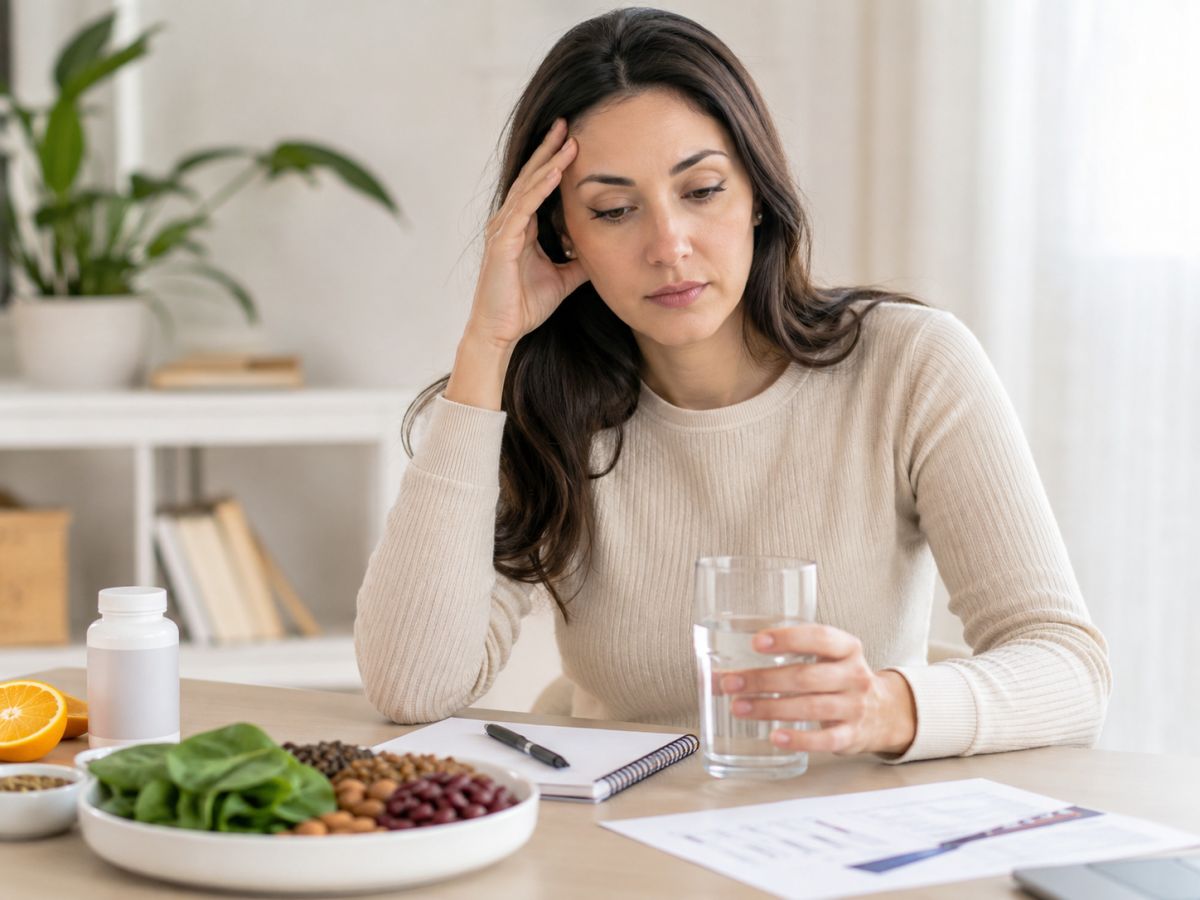
Iron deficiency is a common issue that may affect the body’s energy, concentration, hair and nail health, and the ability to carry out daily activities. Signs of iron deficiency can appear gradually, so some people may assume they are just dealing with ordinary tiredness or lack of sleep. Still, having one or more of these signs does not automatically mean iron deficiency is present, because proper diagnosis requires blood tests and medical evaluation.
What Is Iron Deficiency in the Body?
Iron deficiency happens when the body does not get enough iron, when it loses iron faster than normal, or when it cannot absorb iron efficiently from food.
Iron is an essential mineral the body needs to produce hemoglobin, a protein inside red blood cells that helps carry oxygen from the lungs to the rest of the body. To better understand the wider benefits of iron for the body and how it supports energy, immunity, and the nervous system, you can read the dedicated article on that topic.
Why Does the Body Need Iron?
The body needs iron because it contributes to oxygen transport, muscle support, energy production, growth, development, and several key biological functions. If you want a broader overview, you can also explore iron in the minerals section.
When iron levels drop, a person may feel tired, less able to concentrate, dizzy, or less capable of handling physical effort. These symptoms alone do not mean that iron deficiency is definitely the cause, since they may also appear with other medical or nutritional problems. Blood tests help clarify the reason more accurately.
9 Signs of Iron Deficiency in the Body
Symptoms of iron deficiency can differ from one person to another depending on how severe the deficiency is, along with age, sex, diet, and general health status.
1. Ongoing fatigue and low energy
Fatigue is one of the most common signs of iron deficiency. When iron levels are low, the body may become less efficient at delivering oxygen to muscles and tissues, which can lead to tiredness even after sleep or after a small effort. Still, fatigue alone is not enough to diagnose iron deficiency, because it can also be related to lack of sleep, stress, deficiency in other nutrients, or different health conditions.
2. Pale skin or a dull-looking face
Pale skin or a dull facial appearance may be one of the signs of iron deficiency, especially if the paleness is noticeable in the face, lips, eyelids, or nails. Sometimes it may be seen in the inner lower eyelid, but it should not be relied on as a diagnosis by itself.
3. Dizziness, headaches, and poor concentration
Some people may experience dizziness, repeated headaches, or trouble concentrating when iron levels are low. This may happen because the body is not delivering oxygen efficiently enough to the brain and tissues, especially when the deficiency is more noticeable or persistent.
4. Hair loss and weak nails
Iron deficiency or low iron stores may be associated with hair loss and weak nails in some people. A person may notice more shedding, reduced hair density, slower growth, or nails that break more easily.
5. Cold hands and feet
Some people may feel persistent coldness in their hands or feet, even in moderate weather. This may be linked to reduced oxygen delivery and circulation when iron deficiency is more pronounced.
6. Shortness of breath or heart palpitations during effort
Iron deficiency may lead to shortness of breath during activities such as climbing stairs, brisk walking, or exercise. Some people may also notice palpitations or a fast heartbeat.
7. Cracked corners of the mouth or tongue changes
Less widely known signs of iron deficiency may include cracks at the corners of the mouth, tongue pain, tongue inflammation, or changes in its appearance. These signs can also occur with deficiencies in other nutrients, so they should not be treated as direct proof of iron deficiency on their own.
8. Craving ice or non-food items
Iron deficiency may sometimes be linked to a condition known as pica, which is an unusual urge to consume non-food items such as ice or soil. If this happens in children, pregnant women, or together with symptoms such as fatigue and paleness, it is best to speak with a doctor.
9. Reduced daily performance or prolonged difficulty concentrating
Iron deficiency may affect daily performance, especially if it continues without treatment or follow-up. A person may feel less able to study, work, exercise, or complete usual tasks.
Main Causes of Iron Deficiency in the Body
The causes of iron deficiency vary depending on age, sex, diet, and health condition. Common causes include:
- Not eating enough iron-rich foods.
- Blood loss, such as heavy menstrual bleeding or repeated bleeding. In many cases, iron deficiency symptoms in women may appear more clearly because of menstruation and pregnancy.
- Pregnancy and breastfeeding, because the body’s need for iron increases.
- Frequent blood donation without checking iron levels.
- Digestive problems that affect iron absorption.
- A poorly balanced vegetarian diet that does not provide enough iron sources.
- Rapid growth in children and adolescents.
Why the Body May Fail to Absorb Iron Properly
In some cases, the issue is not only how much iron a person eats, but how well the body absorbs it. Common reasons for poor absorption include:
- Drinking tea or coffee close to meals.
- Taking calcium or dairy products with iron-rich meals.
- Digestive issues that affect absorption.
- Relying on plant-based iron without including foods that help improve absorption.
Vitamin C can help improve absorption of iron from plant sources. That is why it helps to pair plant-based iron foods with lemon, oranges, strawberries, sweet peppers, tomatoes, or broccoli.
What Is the Relationship Between Ferritin and Iron Deficiency?
Ferritin is a protein that stores iron in the body. When iron stores are low, ferritin levels in blood tests may also be low.
Symptoms linked to low ferritin may include fatigue, hair loss, dizziness, reduced concentration, or weak nails. Still, ferritin deficiency cannot be confirmed through symptoms alone. Ferritin can also be influenced by inflammation and certain medical conditions, so it should always be interpreted within the full clinical picture.
What Tests May Help Detect Iron Deficiency?
| Test | What Does It Show? | Why Is It Important? |
|---|---|---|
| Ferritin | Iron stores in the body | May help detect low iron stores |
| CBC | Complete blood count | Evaluates hemoglobin and blood cells |
| Serum Iron | The amount of iron in the blood at the time of testing | Can vary with different factors and should not be read alone |
| TIBC / Transferrin | The blood’s ability to transport iron | Helps provide a broader view of iron status |
Treating Iron Deficiency, When Are Supplements Needed?
Treatment depends on the cause, the severity of the deficiency, the test results, and the person’s general health. That is why taking iron supplements randomly is not recommended without medical advice, because excess iron can also cause side effects.
Iron deficiency treatment may include:
- Improving the diet.
- Taking iron supplements when needed and under medical supervision.
- Treating the root cause, such as bleeding or poor absorption.
- Repeating blood tests later, depending on medical advice.
Foods That Help Support Iron Levels
Iron levels can be supported through food by eating iron-rich foods as part of a balanced diet. Iron in food appears in two main forms. You can also learn more about iron-rich food sources and ways to improve absorption in the dedicated guide.
| Type | Examples | Note |
|---|---|---|
| Animal-based iron | Meat, chicken, fish, liver | The body usually absorbs it more easily |
| Plant-based iron | Lentils, chickpeas, beans, spinach, seeds, nuts | Its absorption improves with vitamin C |
Absorption of plant-based iron can be improved by adding lemon to lentils or chickpeas, eating sweet peppers with the meal, or adding a vitamin C source such as oranges or strawberries.
What Can Happen If Iron Deficiency Is Ignored?
- Persistent fatigue and low activity.
- Difficulty concentrating.
- Reduced school or work performance.
- Lower ability to exercise.
- Hair loss or weak nails.
- More dizziness or shortness of breath during effort.
When Should You See a Doctor?
You should speak with a doctor if symptoms continue or worsen over time, or if signs such as the following appear:
- Clear shortness of breath or repeated heart palpitations.
- Chest pain, severe dizziness, or fainting.
- Marked paleness or fatigue affecting study or work.
- Unusually heavy menstrual bleeding.
- Sudden or severe hair loss.
- Symptoms appearing in children or during pregnancy.
Frequently Asked Questions
What are the signs of iron deficiency in the body?
Signs of iron deficiency may include ongoing fatigue, low energy, pale skin, dizziness, headaches, heart palpitations, shortness of breath, poor concentration, cold hands and feet, hair loss, brittle nails, tongue inflammation, or cravings for ice. These signs alone are not enough for diagnosis and need medical tests to confirm the cause.
How can I treat iron deficiency quickly?
It is not recommended to try treating iron deficiency without knowing the cause or doing blood tests. Treatment may include improving the diet, taking iron supplements if prescribed, treating the cause of blood loss or poor absorption, and then repeating tests to check improvement.
When does iron deficiency become serious?
Iron deficiency may become concerning if it causes obvious shortness of breath, repeated palpitations, chest pain, severe dizziness, fainting, marked paleness, or fatigue that affects everyday life. It also needs closer attention in children and pregnant women.
What drinks help raise iron stores?
There is no single drink that raises iron stores quickly on its own, but drinks rich in vitamin C, such as orange juice and lemon juice, may help the body absorb iron from food better.
What should be avoided with iron deficiency?
It is better to avoid drinking tea or coffee directly with iron-rich meals or iron supplements, and to avoid taking large amounts of calcium at the same time as an iron-rich meal. These foods do not need to be banned completely, but their timing should be managed.
How long does it take to raise iron levels in the body?
The time needed depends on the severity of deficiency, the cause of the problem, the type of treatment, and how well the body absorbs iron. A doctor usually decides when blood tests should be repeated, and iron stores may take longer to recover than symptoms.
What fruits help raise iron levels?
Dried fruits such as raisins, prunes, and dried apricots contain iron, while fruits rich in vitamin C such as oranges and strawberries help improve iron absorption. The best approach is to combine an iron source with a vitamin C source.
What tests help detect iron deficiency?
A doctor may request Ferritin to assess iron stores, CBC for the complete blood count, Serum Iron to measure circulating iron, and TIBC to understand how well the blood carries iron. These tests should be interpreted by a doctor or qualified professional.
Conclusion
Recognizing the 9 signs of iron deficiency in the body may help you notice warning signs such as fatigue, pale skin, dizziness, hair loss, weak nails, cold hands and feet, shortness of breath, heart palpitations, mouth changes, or cravings for unusual items.
Still, these signs alone are not enough for diagnosis. The better approach is to understand the causes, do the right tests, improve iron absorption from food, and see a doctor if symptoms are ongoing or severe. To explore more about essential minerals and how to get them through a balanced lifestyle, visit the dedicated section on Vitaminati.
Medical References
- NIH Office of Dietary Supplements, Iron Fact Sheet for Health Professionals
- NIH Office of Dietary Supplements, Iron Fact Sheet for Consumers
- MedlinePlus, Iron Deficiency Anemia
- NHS, Iron Deficiency Anaemia
- WHO, Guideline on Use of Ferritin Concentrations to Assess Iron Status
- NHLBI, NIH, Iron-Deficiency Anemia
- NCBI Bookshelf, Dietary Iron