Matcha and Its Health Benefits: What the Research Really Supports
Introduction1,2
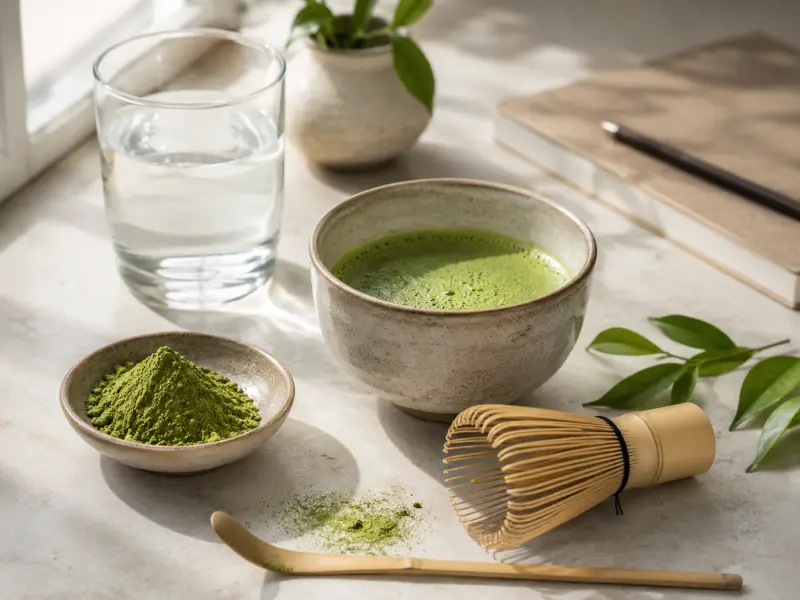
Matcha is a powdered form of green tea traditionally consumed in Japan for centuries. Unlike regular green tea, where the leaves are steeped and discarded, matcha is made from finely ground whole tea leaves, meaning the entire leaf is consumed. This gives matcha its vibrant green color and concentrated content of compounds such as catechins (especially EGCG), caffeine, and L-theanine.
Because of its unique composition, matcha has become popular as a wellness beverage and is often associated with benefits related to focus, calm energy, antioxidant activity, and overall health support. However, while research findings are promising, many health claims still require stronger human evidence.
Grades of Matcha6
Not all matcha is the same. Matcha is commonly sold in different “grades,” which mainly reflect its quality, flavor, color, and intended use.
-
Ceremonial Grade
Ceremonial-grade matcha is considered the highest-quality type. It is usually made from younger, first-harvest tea leaves and is known for its vibrant green color, smooth texture, natural sweetness, and minimal bitterness. It is traditionally prepared with water and consumed on its own.
-
Premium Grade
Premium-grade matcha falls between ceremonial and culinary grades. It still has a relatively smooth taste but may be slightly more bitter or earthy. It is commonly used for everyday drinking and matcha lattes.
-
Culinary Grade
Culinary-grade matcha is made from more mature tea leaves and has a stronger, more robust flavor. It is usually more bitter and less vibrant in color, but it works well in recipes because its flavor can stand out when mixed with milk, sugar, or other ingredients. This grade is commonly used in smoothies, desserts, baking, and flavored drinks.
In general, brighter green matcha with a smoother and less bitter taste is considered higher quality. The best grade depends on how the matcha will be used: ceremonial grade is usually preferred for drinking plain, while culinary grade is often better suited for baking matcha sweets.
Health Benefits of Matcha1-5
-
Attention and mental performance
- Matcha improves attention after mild acute stress, with better cognitive performance.
- Matcha significantly improves basic attention and psychomotor speed.
- In older adults with cognitive decline, Matcha improves social acuity.
-
Stress and sleep
- Matcha has a plausible calming-without-sedation profile, driven largely by the interaction of caffeine and L-theanine.
- Regular consumption of Matcha could improve emotional perception and sleep quality in older adults with mild cognitive decline.
-
Antioxidant and anti-inflammatory effects
- This is one of matcha’s most consistent effects. It is proven to have antioxidant, anti-inflammatory, and neuroprotective activity tied to catechins, especially EGCG.
-
Metabolic and cardiovascular health
- Matcha may support lipid profiles, glycemic control, and cardiovascular health.
- Matcha is suggested to have weight-related and anti-inflammatory effects.
While Matcha may be a useful part of a healthy diet, solely relying on it for weight loss will not get you the results you want.
-
Conclusion
Matcha is a reasonable health-oriented beverage choice, especially if you want a plant-based source of caffeine with some support for attention and stress-related performance. It also delivers compounds with plausible antioxidant and anti-inflammatory effects. But the research base is still small, often short-term, and often preclinical, so it is better described as promising than proven.
FAQ
Is matcha healthier than regular green tea?
Matcha may provide higher amounts of certain beneficial compounds because you consume the entire tea leaf rather than just drinking an infusion. This means it can contain more antioxidants such as EGCG. However, there are still not enough direct human studies comparing matcha with regular green tea to say that one is clearly healthier than the other.
Does matcha improve focus?
Research suggests it may help support focus and attention, especially during mentally demanding or stressful situations. This is likely related to the combination of caffeine and L-theanine. However, the effects seen in studies were generally mild to moderate, not severe stress.
Can matcha help with weight loss?
Possibly, but the current evidence is limited. Some small studies suggest matcha may support metabolism or help reduce inflammation, but there is not enough strong clinical evidence to recommend it as a weight-loss solution on its own. A healthy diet and regular physical activity remain much more important.
Is matcha a good replacement for coffee?
Many people describe matcha as providing a smoother and more balanced energy boost. This may be because matcha contains both caffeine and L-theanine, which may help promote alertness without the same “crash” or jittery feeling some people experience with coffee.
Can I drink matcha every day?
For most healthy adults, consuming 1–2 teaspoons (roughly 2–4 grams) of matcha is considered safe and beneficial, best consumed in the morning or early afternoon to avoid disrupting sleep. However, because matcha contains caffeine, excessive intake may cause side effects such as nervousness, rapid heartbeat, or sleep disruption in sensitive individuals.
Is ceremonial matcha healthier than regular matcha?
Not necessarily. Ceremonial-grade matcha is usually smoother, less bitter, and made from younger tea leaves, but there is limited evidence showing major health differences between ceremonial and culinary grades.
Does matcha affect iron absorption?
Yes. Matcha is rich in catechins, which can inhibit the absorption of iron from plant-based foods. To avoid this effect, it’s best to consume matcha at least 1–2 hours before or after iron-rich meals or iron supplements.
References:
- Kochman et al., 2020. Health Benefits and Chemical Composition of Matcha Green Tea: A Review. Molecules.
- Wróbel et al., 2026. The Impact of Matcha Green Tea on Human Health – Mechanisms of Action, Clinical Evidence, and Health Effects. Quality in Sport.
- Baba et al., 2021. Matcha consumption maintains attentional function following a mild acute psychological stress without affecting a feeling of fatigue: A randomized placebo-controlled study in young adults. Nutrition Research.
- Dietz et al., 2017. An intervention study on the effect of matcha tea, in drink and snack bar formats, on mood and cognitive performance. Food Research International.
- El-Elimat et al., 2022. A Prospective Non-Randomized Open-Label Comparative Study of The Effects of Matcha Tea on Overweight and Obese Individuals: A Pilot Observational Study. Plant Foods for Human Nutrition.
- Quality & Different Grades of Matcha Green Tea Powder, Available at: https://matcha.com/blogs/news/a-guide-to-different-matcha-grades-and-categories