Sage and Hormones: Common Benefits and Important Safety Notes
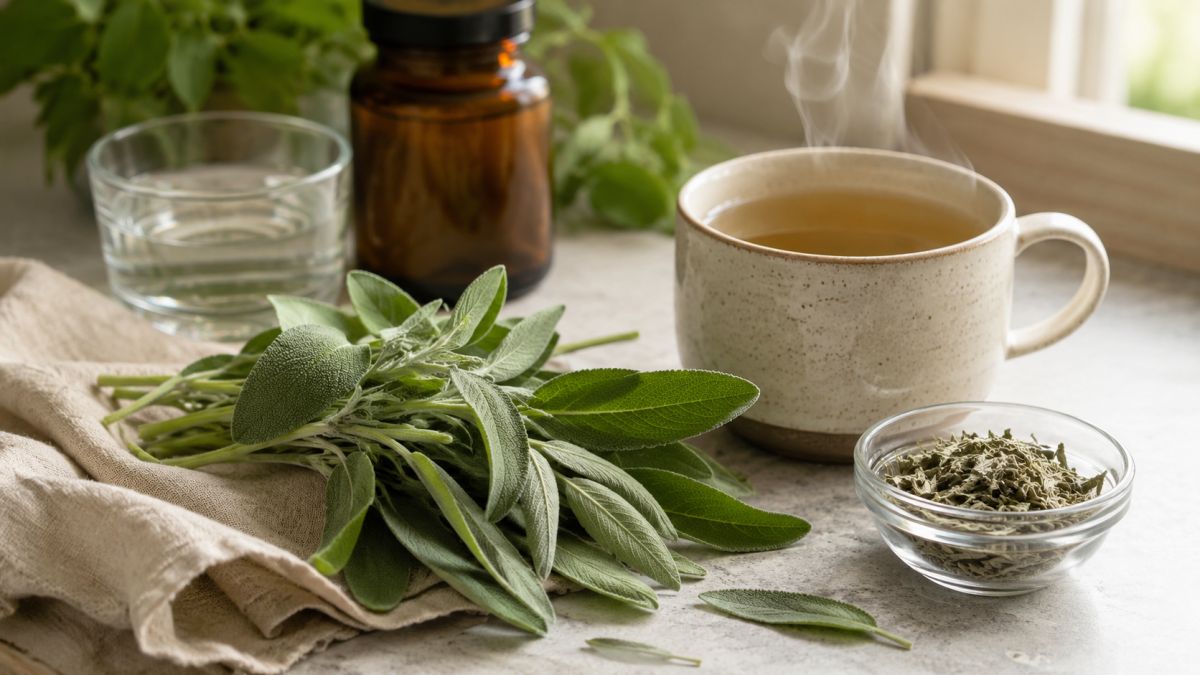
Sage is one of the most commonly used herbs in Jordan, Palestine, and the Gulf region. Many women search for it because of its popular association with the menstrual cycle, hormones, menopause, breastfeeding, and abdominal cramps. However, despite its popularity, sage should not be treated as a hormone therapy or a guaranteed solution for menstrual problems or PCOS.
Sage may be part of traditional herbal use, but it is not suitable for everyone. The most important cautions are related to pregnancy, breastfeeding, epilepsy, concentrated oils, and high doses. It is important to distinguish between drinking a cup of sage tea occasionally and using concentrated extracts or essential oils regularly.
What Is Sage?
Sage, scientifically known as Salvia officinalis, is an aromatic plant from the mint family. Its fresh or dried leaves are used in food, herbal tea, and some herbal products.
Sage contains plant compounds and volatile oils, including compounds such as thujone and camphor. This is why its safety depends on the form used. Tea is usually less concentrated than oils and extracts, while concentrated products may carry greater precautions.
Sage Benefits: Why Do Women Search for It?
Most questions about sage are related to hormones, women’s health, and mild digestion. Common traditional uses include:
- Menstrual cycle: Sage is traditionally used to ease some symptoms or support cycle regularity, but evidence is not strong enough.
- Hormones: It is sometimes mentioned in the context of hormone balance, but it is not a hormone treatment.
- Menopause: Sage appears in some herbal products related to hot flashes and sweating.
- Breastfeeding and weaning: It is sometimes used traditionally to reduce milk supply, but evidence and safety need caution.
- Abdominal cramps: It is traditionally used for some mild digestive symptoms, but it does not treat severe or repeated abdominal pain.
- Mild digestion support: It is traditionally used for mild indigestion or stomach heaviness.
The key point is not to turn traditional use into treatment promises. Sage may be part of an herbal routine for some people, but it does not treat PCOS, menstrual disorders, thyroid disorders, H. pylori, or breastfeeding problems.
Sage and Hormones: What Is the Truth?
Phrases like “sage for hormone balance” or “sage for PCOS” are common online, but they need careful wording. Hormones are complex, and one herb cannot correct a hormonal disorder without knowing the cause.
Hormonal symptoms may be linked to insulin resistance and polycystic ovary syndrome, thyroid disorders, chronic stress, weight changes, or certain medications. If symptoms persist, medical evaluation is safer than relying on herbal tea alone.
Because many women search for herbs related to hormonal balance, it is important to clarify that sage does not replace diagnosis or medical follow-up, and it should not be used as a substitute for a treatment plan when symptoms are clear.
Does Sage Regulate the Menstrual Cycle?
Some women use sage before or during their period, believing that it may help regulate the cycle or relieve symptoms. However, there is not enough evidence to say that sage reliably regulates the menstrual cycle.
Irregular periods can happen for many reasons, including PCOS, thyroid disorders, weight changes, stress, intense exercise, high prolactin, or certain medications. When irregularity happens repeatedly with fatigue, cold intolerance, palpitations, or weight changes, thyroid blood tests may be an important part of the evaluation.
If periods are heavy or prolonged, sage is not enough to explain or manage the symptoms. Heavy periods and iron deficiency may be linked to fatigue, dizziness, palpitations, and hair shedding. See a doctor if there are repeated missed periods, heavy bleeding, unusual pain, bleeding between periods, or a new change in your cycle pattern.
Sage and PCOS: Can It Help?
PCOS is a condition that needs medical and nutritional follow-up. It may involve irregular periods, acne, excess hair growth, insulin resistance, or difficulty getting pregnant. There is not enough evidence to consider sage a treatment for PCOS.
Some women may be interested in herbs as part of a healthy lifestyle, but the foundation of PCOS care usually includes nutrition, physical activity, weight management when needed, insulin resistance follow-up, and management of cycle or symptom concerns based on medical assessment. Options discussed in inositol for hormones, fertility, and PCOS are more directly connected to metabolic pathways than relying on sage alone.
Sage can be mentioned within the culture of herbal use, but it should not be presented as an alternative to an appropriate medical or nutrition plan.
Sage for Abdominal Cramps: Can It Help?
Some women search for sage for abdominal cramps, whether the cramps are related to menstruation or digestion. Traditionally, sage is used for some mild digestive symptoms such as discomfort, gas, or simple cramps, but it should not be considered a treatment for abdominal pain.
If cramps are mild and temporary, a warm drink such as sage tea may help some people feel more comfortable. However, if the pain is severe, repeated, or accompanied by vomiting, fever, persistent diarrhea, blood in the stool, abnormal bleeding, or sharp one-sided abdominal pain, medical evaluation is needed instead of relying on herbs.
If cramps are related to the menstrual cycle and repeatedly affect daily life, the cause may be related to hormones or conditions such as endometriosis or PCOS. In cases of recurring digestive bloating and cramps, a low FODMAP diet may help some people understand the relationship between food, gas, and abdominal pain instead of reducing the solution to herbs.
Does Sage Disinfect the Stomach?
A common question is whether sage disinfects the stomach. Medically, this phrase is not accurate. The stomach and digestive tract do not need to be “disinfected” with herbs, and there is not enough evidence that sage tea kills stomach bacteria or treats digestive infections.
Sage contains plant compounds that have been studied in laboratory settings for different properties, but laboratory findings do not mean it works inside the human body as a treatment or stomach disinfectant. Sage should not be used instead of treatment for H. pylori, gastritis, infectious diarrhea, or any diagnosed infection.
If “disinfecting the stomach” means easing discomfort, gas, or heaviness, sage may feel soothing for some people. It can be compared with mint for digestion and refreshment or caraway for gas and bloating, but persistent heartburn, stomach pain, severe nausea, vomiting, blood, or weight loss needs medical evaluation.
Sage and Menopause: Can It Help Hot Flashes?
Sage is used in some herbal products related to menopause symptoms, especially hot flashes and sweating. This is one of the common reasons women search for it before or after menopause.
When discussing hot flashes and menopause symptoms, it is important to remember that herbal products may support some women, but they are not guaranteed treatments for every case.
Hot flashes and night sweats do not always mean menopause alone. They may also be related to the thyroid, certain medications, anxiety, infection, low blood sugar, or other causes. If symptoms are severe, sudden, or unusual, medical evaluation is recommended.
Can Sage Reduce Breast Milk Supply?
Sage is traditionally used by some people to reduce milk supply or during weaning. This use needs caution because scientific data are not enough to confirm its effectiveness or safety for breastfeeding mothers and infants.
LactMed notes that sage and related species are claimed to reduce lactation and have been used for weaning or oversupply, but it also states that there are no good scientific studies evaluating sage’s effect on milk supply and there are not enough data about safety for breastfeeding mothers or infants.
If a mother wants to reduce milk supply, or is dealing with oversupply, engorgement, pain, or weaning challenges, it is better to consult a doctor or lactation consultant instead of using sage regularly without follow-up.
Is Sage Safe During Pregnancy?
Using small amounts of sage in food is different from drinking it daily or using extracts and oils. During pregnancy, it is better to avoid regular or concentrated herbal use unless advised by a doctor.
The reason is that some sage compounds may be more concentrated in oils and extracts, and safety data during pregnancy are not enough to support routine use. Pregnant women should not use sage for “hormone regulation,” “uterus cleansing,” or any treatment-like purpose without professional guidance.
Sage Tea vs. Sage Oil: What Is the Difference?
One of the most common mistakes is treating sage tea and sage oil as if they are the same. Tea is prepared from the leaves in water, while essential oil is much more concentrated and may contain higher levels of compounds such as thujone and camphor.
| Form | Common Use | Safety Note |
|---|---|---|
| Sage as a culinary herb | Used in food amounts | Usually lower exposure than supplements or oils |
| Sage tea | Traditionally used for digestion or women’s symptoms | Should not be overused or used instead of diagnosis |
| Sage extracts | Found in some menopause or sweating products | May be more concentrated and require label reading |
| Sage oil | Used in aromatic or specific products | Highly concentrated and should not be taken internally without professional supervision |
Because of its high concentration, sage oil should not be taken internally without professional supervision, especially by pregnant women, breastfeeding mothers, children, people with epilepsy, or anyone with a history of seizures.
Who Should Use Sage With Caution?
Although sage is common, some groups need clear caution, especially with regular or concentrated use.
- Pregnant women: Regular herbal use, extracts, and oils should be avoided unless advised by a doctor.
- Breastfeeding mothers: Safety data are insufficient, and sage is traditionally used to reduce milk supply.
- Children: Concentrated products are not recommended without medical supervision.
- People with epilepsy or a history of seizures: Extra caution is needed, especially with oils and concentrated extracts.
- People taking multiple medications: A doctor or pharmacist should be consulted before concentrated products are used.
- Hormone-sensitive conditions: Sage should not be relied on to manage hormonal symptoms without evaluation.
Sage Side Effects and Possible Risks
Sage may be suitable for some adults when used moderately, but side effects are possible, especially with excessive intake or concentrated products.
- Nausea or vomiting.
- Abdominal pain or discomfort.
- Dizziness or irritation.
- Allergy or wheezing in some people.
- Higher neurological risks with oils or high doses.
- Possible effect on milk supply in some breastfeeding mothers, although evidence is weak.
Does Sage Have Other Uses?
Some herbal references mention that sage has also been used traditionally for mild digestion, mouth and throat irritation, and excessive sweating. These uses are not the main focus of this article, and they do not mean that sage treats throat infections or the causes of persistent sweating.
Readers may compare sage with other herbal teas for stress, digestion, and immunity, but different herbs have different benefits and precautions. Other herbs used in the context of comfort and digestion include chamomile for relaxation and digestive health and lemon balm for calm sleep and stress relief.
Common Mistakes When Using Sage
Mistake 1: Sage Regulates Hormones
There is not enough evidence to describe sage as a treatment for hormone regulation, menstrual cycle regulation, or PCOS. Any hormonal disorder needs proper evaluation.
Mistake 2: Sage Is Safe Because It Is Common
Popularity does not mean safety for everyone. Pregnancy, breastfeeding, epilepsy, childhood, and multiple medications all require caution.
Mistake 3: Sage Oil Is Like Sage Tea
Sage oil is concentrated and may carry higher risks. It should not be taken internally without professional supervision.
Mistake 4: Using Sage to Reduce Milk Supply Without Follow-Up
Breastfeeding and weaning need a safe plan, especially if the baby is young or fully dependent on breastfeeding.
Mistake 5: Sage Disinfects the Stomach
There is no medical concept of disinfecting the stomach with herbs. If there is gastritis, H. pylori, or infection, diagnosis and appropriate treatment are needed.
When Is Sage Not Enough?
Do not rely on sage alone if symptoms are severe, persistent, or unusual. Seek medical advice if you have:
- Repeated or new menstrual irregularity.
- Heavy bleeding or bleeding between periods.
- Pelvic pain or unusual period pain.
- Severe or repeated abdominal cramps.
- Repeated heartburn or persistent stomach pain.
- Vomiting, fever, blood in the stool, or unexplained weight loss.
- Severe hot flashes or unexplained night sweats.
- PCOS-like symptoms such as excess hair growth or acne with irregular periods.
- A desire to use sage during pregnancy or breastfeeding.
- Epilepsy or a history of seizures.
- New symptoms after using an herbal extract or oil.
Conclusion
Sage is a popular herb traditionally used in the context of hormones, menstrual symptoms, abdominal cramps, menopause, and breastfeeding. However, it is not a hormone treatment and it is not a guaranteed solution for PCOS, menstrual disorders, or low milk supply.
The phrase “sage to disinfect the stomach” is not medically accurate. Sage may feel soothing for some mild digestive discomfort, but it does not treat H. pylori, infections, or persistent abdominal pain.
Safety is the most important point. Sage tea is different from concentrated oils and extracts. Extra caution is needed during pregnancy, breastfeeding, childhood, epilepsy, hormone-sensitive conditions, and medication use. When symptoms persist or become severe, medical evaluation is safer than relying on herbs.
Frequently Asked Questions
Is sage good for hormones?
Sage is traditionally used in the context of hormones, but it is not a hormone treatment or a substitute for medical evaluation.
Does sage regulate the menstrual cycle?
There is not enough evidence to prove that it reliably regulates the menstrual cycle. Repeated irregular periods need evaluation.
Is sage helpful for PCOS?
Sage is not a treatment for PCOS. PCOS needs an appropriate medical and nutritional plan.
Is sage helpful for abdominal cramps?
It may help some people with mild cramps related to digestion or simple discomfort, but it does not treat severe or repeated abdominal pain.
Does sage disinfect the stomach?
No. The phrase “disinfecting the stomach” is not medically accurate. Sage may support mild digestive comfort in some people, but it does not treat H. pylori or infections.
Can sage help hot flashes?
Sage appears in some products related to menopause, but it is not a guaranteed treatment for hot flashes or night sweats.
Does sage reduce milk supply?
It is traditionally used for this purpose, but there are not enough studies confirming its effectiveness or safety for breastfeeding mothers and infants.
Is sage safe during pregnancy?
Regular or concentrated use should be avoided during pregnancy unless advised by a doctor.
Is sage oil safe?
Sage oil is concentrated and should not be taken internally or used in high doses without professional supervision.
Who should use sage with caution?
Pregnant women, breastfeeding mothers, children, people with epilepsy, and people taking multiple medications or concentrated herbal extracts should use caution.
What are the side effects of sage?
Sage may cause nausea, vomiting, abdominal pain, dizziness, allergy, or neurological symptoms with high doses or oils.
When should I see a doctor?
Seek medical advice for menstrual irregularity, abnormal bleeding, severe hormonal symptoms, pregnancy, breastfeeding, epilepsy, severe abdominal pain, or new symptoms after using an herbal extract.