Valerian Root for Sleep: What the Evidence Really Shows
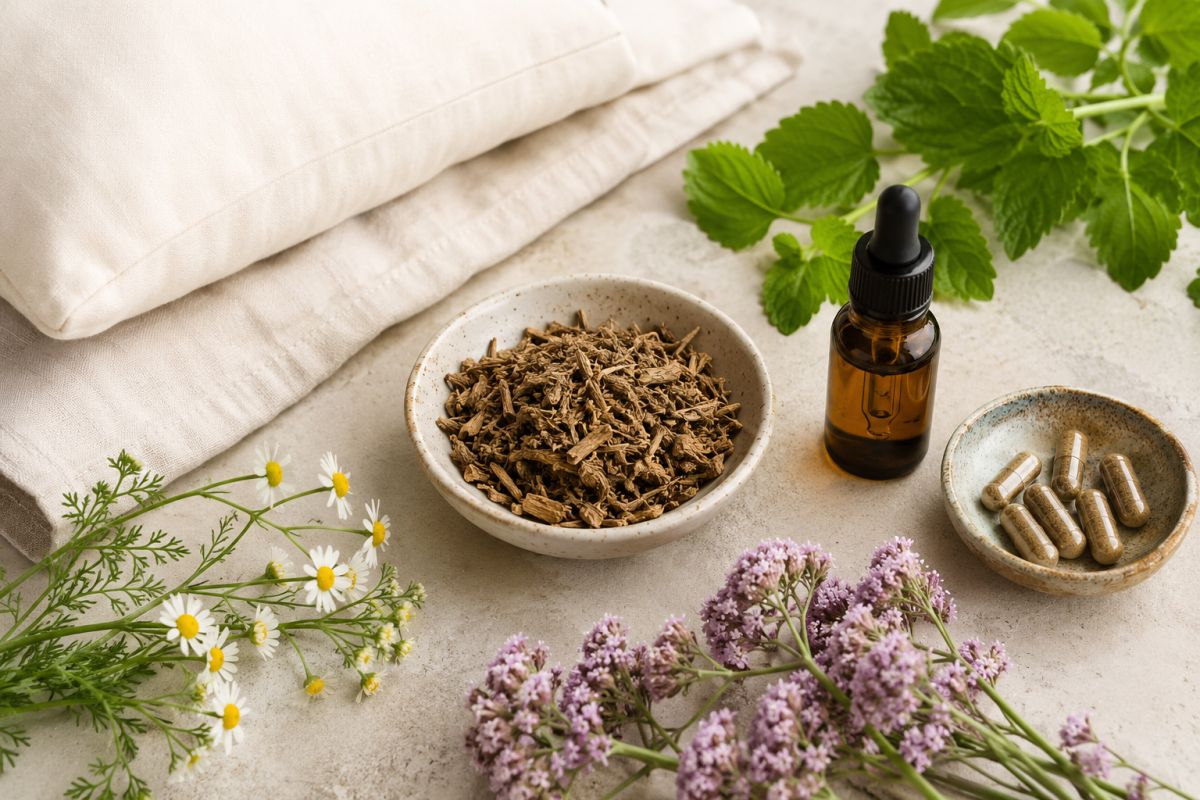
Valerian root shows up in more sleep supplements than almost any other herb, often paired with lemon balm, magnesium, or melatonin on pharmacy shelves. But the herb's reputation as a reliable natural sleep aid runs ahead of the evidence — and one major sleep medicine guideline actually advises against using it. Here's what valerian root can and can't be expected to do.
What is valerian root?
Valeriana officinalis, commonly called valerian, is a flowering plant from Europe and Asia that people have used as medicine since ancient Greece and Rome — historically for insomnia, migraines, fatigue, and stomach cramps. Today it's mostly sold for sleep, and also for anxiety, stress, and depression, made from the plant's root and rhizome (underground stem). You'll typically find it as capsules, tablets, tinctures, or teas, often mixed with other calming herbs.
Does valerian actually help you sleep?
This is the most researched use of valerian, and the results are genuinely mixed:
- Some trials and pooled analyses report modest improvements in perceived sleep quality.
- A 2015 systematic review and meta-analysis of herbal medicines for insomnia found the overall evidence for valerian to be weak and inconsistent.
- A 2024 umbrella review reached a similarly cautious conclusion.
- Notably, the American Academy of Sleep Medicine's 2017 clinical practice guideline for chronic insomnia specifically recommends against using valerian, based on the balance of low-quality and conflicting evidence.
That's a very different message from what most supplement labels imply.
If better-established options for winding down at night interest you, our guides to sleep hygiene and natural sleep aids and natural ways to fall asleep faster cover evening routines and supplements with more consistent support.
What about anxiety, stress, or other uses?
Beyond sleep, valerian is often marketed for several other uses, though the evidence varies:
- Anxiety, stress, and PMS: there just isn't enough good evidence to draw conclusions here.
- Menopause-related hot flashes: a small amount of research has looked at this, with a few small studies suggesting a possible benefit — though it's still early.
Valerian is frequently combined with other calming herbs rather than used alone; our guide to lemon balm for sleep and stress covers one of its most common pairings, while ashwagandha has considerably more research behind it specifically for stress and cortisol.
How is valerian typically used?
Most studies have used 300 to 600 milligrams of valerian root extract, usually taken 30 minutes to two hours before bed for sleep, or split into smaller doses through the day for other uses. There's no official standard dose or preparation, so the amount of active compounds can vary quite a bit between brands.
Is valerian safe? Side effects and precautions
Here's what the safety data shows:
- Research suggests valerian is generally safe for short-term use in most adults — studies commonly cover doses up to about 600 milligrams daily for up to roughly six weeks. Its safety for long-term, nightly use hasn't been well studied.
- Reported side effects include headache, stomach upset, mental dullness, excitability, uneasiness, and vivid dreams.
- Because it may have a sedating effect, valerian shouldn't be combined with alcohol or other sedative medications.
- Very rare cases of liver injury have been reported, usually when valerian was combined with other herbal ingredients, though its effect on the liver on its own remains unclear.
- Stopping valerian suddenly after using it regularly for a long time has been linked to withdrawal-like symptoms — anxiety, irritability, heart disturbances, insomnia, and rarely, hallucinations. Tapering off slowly is the safer approach.
- Anyone taking prescription medication, especially sedatives or medications processed by the liver, should check with a doctor or pharmacist first.
- There isn't enough safety data on valerian during pregnancy or breastfeeding, so it's best avoided in those situations unless a doctor advises otherwise.
Given how mixed the evidence is, it's often more productive to address the basics first. Our practical guide on what to do when you're struggling to fall asleep walks through relaxation techniques and safer, better-studied options before reaching for a supplement.
Frequently asked questions about valerian root
Does valerian root actually help you sleep?
The evidence is inconsistent, and the American Academy of Sleep Medicine specifically recommends against using it for chronic insomnia.
Is valerian safe to take every night?
Short-term use up to about six weeks appears generally safe in studies; long-term nightly safety hasn't been well studied.
Can valerian help with anxiety or stress?
There isn't enough evidence to draw conclusions; it's studied mainly as a sleep aid, not a stress treatment.
What is the right dose of valerian root?
Most studies use 300 to 600 milligrams, generally taken 30 minutes to two hours before bed.
Can I stop taking valerian suddenly?
Stopping abruptly after longer-term use has been linked to withdrawal-like symptoms; tapering is safer.
Does valerian interact with medications?
It shouldn't be combined with alcohol or sedatives, and anyone on prescription medication should check with a doctor first.
Is valerian safe during pregnancy?
There isn't enough safety data, so it's generally best avoided during pregnancy or breastfeeding.
The bottom line
Valerian root is one of the most widely used herbal sleep aids, but the evidence behind it is genuinely mixed, and the American Academy of Sleep Medicine actually recommends against relying on it for chronic insomnia. Short-term use seems reasonably safe for most healthy adults at studied doses, but don't combine it with alcohol or sedatives, stop it suddenly after long-term use, or use it during pregnancy without medical advice. If sleep problems keep coming back, it's worth looking at the basics of sleep hygiene and talking to a doctor, rather than relying on valerian alone.
Scientific references
- NCCIH – Valerian: Usefulness and Safety
- Sateia et al. – Clinical Practice Guideline for the Pharmacological Treatment of Chronic Insomnia in Adults (AASM), Journal of Clinical Sleep Medicine, 2017
- Valente et al. – Does Valerian Work for Insomnia? An Umbrella Review of the Evidence, European Neuropsychopharmacology, 2024
- Leach & Page – Herbal Medicine for Insomnia: A Systematic Review and Meta-Analysis, Sleep Medicine Reviews, 2015
- Mirabi & Mojab – The Effects of Valerian Root on Hot Flashes in Menopausal Women, Iranian Journal of Pharmaceutical Research, 2013