Vitamin B12 Test: Normal Range and How to Read Your Results
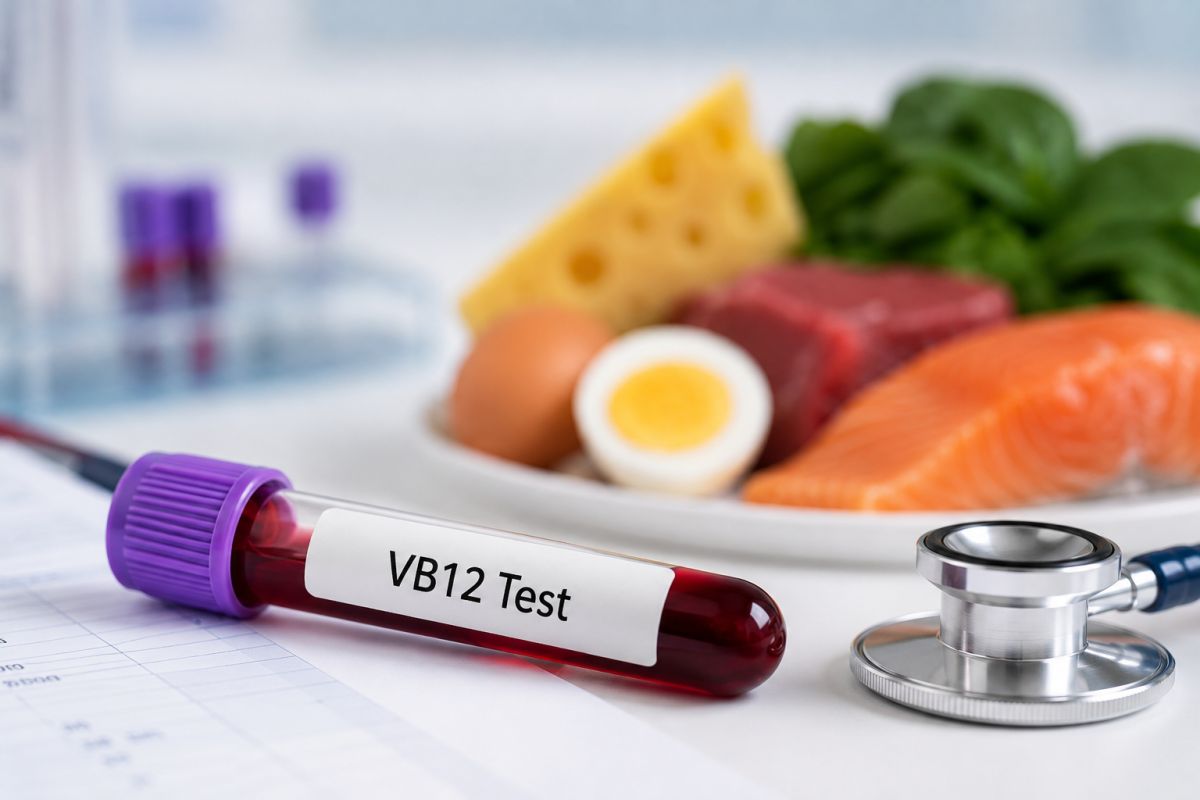
A Vitamin B12 test is used to measure the level of vitamin B12 in the blood, and a doctor may request it when symptoms such as ongoing fatigue, tingling, dizziness, poor concentration, or changes in blood work appear, especially anemia or enlarged red blood cells. But reading a Vitamin B12 result does not depend on the number alone, because the normal range may differ from one lab to another, and additional tests may sometimes be needed to understand the full picture.
In this guide, you will find clear answers about this test, its name on lab reports, whether fasting is needed, how to understand the normal range, and how to connect the result with your symptoms and other blood tests. If you want a broader look at this vitamin family, you can also explore vitamin B complex.
What Is a Vitamin B12 Test?
A Vitamin B12 test is a blood test that measures the level of vitamin B12 in the blood. Vitamin B12 is essential for red blood cell formation, nervous system support, and energy production. Any imbalance in its level may affect these functions.
On a lab report, the test may appear under names such as Vitamin B12, Serum Vitamin B12, or Cobalamin. All of them refer to the same test.
What Is the Lab Name of the B12 Test?
The most common names used on lab reports are:
- Vitamin B12
- Serum Vitamin B12
- Cobalamin
Doctors may also request it together with Folate or CBC when they want to evaluate the cause of anemia, fatigue, or tingling.
When Does a Doctor Order a Vitamin B12 Test?
A doctor may order a Vitamin B12 test when checking for low or high B12 levels, or when symptoms or other test results need explanation:
- Ongoing fatigue without a clear reason.
- Dizziness or general weakness.
- Tingling or numbness in the hands or feet.
- Poor concentration or memory problems.
- Anemia or changes in CBC.
- Suspicion of poor vitamin absorption.
- A strict vegan diet.
- Long-term use of certain medicines such as metformin or proton pump inhibitors.
- Stomach or intestinal problems.
- Monitoring B12 after supplements or injections.
A B12 test is not always used alone for diagnosis, but it helps the doctor connect symptoms with blood results and other investigations.
Does a B12 Test Require Fasting?
In most cases, a B12 test does not require fasting if it is ordered on its own, and it can often be done at any time of the day.
| Situation | Is fasting needed? |
|---|---|
| B12 test alone | Usually no |
| With fasting blood glucose | Yes, depending on lab instructions |
| With a lipid profile | Often yes |
| As part of a larger test panel | Follow the lab or doctor’s instructions |
The safest step is to follow the instructions given by the lab or your doctor. If fasting was not requested, then a B12 test alone usually does not need it.
What Is the Normal Vitamin B12 Range?
The result can differ from one lab to another depending on the method used and the unit of measurement, so you should always compare your number with the reference range printed on the same report.
| Unit | How it appears |
|---|---|
| pg/mL | Picograms per milliliter, the most common unit in many labs |
| pmol/L | Picomoles per liter, used in some labs |
In general, results may be grouped like this:
| B12 result | What it may suggest |
|---|---|
| Low, below the normal range | May suggest vitamin B12 deficiency |
| Near the lower limit | May need further evaluation depending on symptoms |
| Within the normal range | Often reassuring, but still interpreted with symptoms |
| High, above the normal range | May happen because of supplements or other reasons that need explanation |
Do not judge your result using one number taken from the internet. Always compare it with the reference range on your own lab report.
What Is Considered a Normal B12 Level?
The most accurate answer is that the normal B12 level is the reference range written on your specific lab report, because values differ between labs and testing methods.
In general, many labs consider a normal range to start somewhere around 200 to 300 pg/mL and go up to around 900 or 1000 pg/mL, but these are only general guide numbers and should not replace your report’s own range.
How Do You Read a Vitamin B12 Test Result?
To read a Vitamin B12 result correctly, follow these steps:
- Read the result number.
- Check the unit of measurement, whether it is pg/mL or pmol/L.
- Compare it with the normal range printed on the same report, not with numbers from the internet.
- Do not depend on the number alone if you have clear symptoms.
- Check whether you were taking B12 supplements or injections before the test, because that can raise the result.
- Connect the result with CBC or other tests if they were requested.
For example, if your result is within the lab’s normal range, it may be reassuring. But if it is close to the lower limit and you also have neurological symptoms or marked fatigue, the doctor may still want a broader evaluation.
What Does a Low Vitamin B12 Result Mean?
A low B12 level may suggest that the body is not getting enough vitamin B12 or is not absorbing it well. This may happen for different reasons, including diet, intestinal problems, some medicines, or health conditions affecting the digestive system.
Low B12 may be linked to symptoms such as:
- Fatigue and general weakness.
- Dizziness.
- Tingling or numbness in the hands or feet.
- Poor concentration or memory issues.
- Mood changes or depression in some cases.
- Anemia in some cases.
If your result is low, it may also help to read more about vitamin B12 deficiency, its symptoms, causes, diagnosis, and treatment.
What Does a High Vitamin B12 Result Mean?
A high B12 level does not always mean there is a serious problem. The most common reason is taking supplements or injections close to the time of the test.
Possible reasons for a high B12 result include:
- Taking vitamin B12 supplements.
- Using B12 injections shortly before the test.
- Some health conditions that need medical evaluation.
- Differences related to the testing method or timing.
To understand this better, you can also read the harms and side effects of too much vitamin B12.
Is the B12 Test Alone Enough to Diagnose Deficiency?
The test is important, but it is not always enough on its own to diagnose deficiency in every case. Sometimes the result is close to the lower limit or technically normal, but the symptoms or other blood results lead the doctor to request additional tests.
| Additional test | Why it may be requested |
|---|---|
| CBC | To check for anemia or changes in blood cell size |
| Folate | Because folate deficiency can resemble B12 deficiency |
| Methylmalonic Acid (MMA) | May help assess B12 deficiency more accurately |
| Homocysteine | May rise with low B12 or folate |
| Ferritin | To help distinguish iron deficiency from B12 deficiency |
| Intrinsic Factor Antibodies | When pernicious anemia is suspected |
A Vitamin B12 result should be understood as part of the full picture, not as a separate number on its own.
What Is the Difference Between B12, CBC, and Ferritin Tests?
Each test measures something different, even though the symptoms may overlap.
| Test | What it measures |
|---|---|
| Vitamin B12 test | The level of vitamin B12 in the blood |
| CBC | The complete blood count, including hemoglobin, cell numbers, and cell size |
| Ferritin | Iron stores in the body |
| Folate | Folic acid level |
| MMA | A more specific marker of functional B12 deficiency |
If you want to understand how anemia causes can differ, you can review the difference between anemia and iron deficiency, and it also helps to read about the ferritin blood test.
What Is the Relationship Between a B12 Test and Anemia?
A doctor may request a B12 test when anemia is present, especially if CBC shows that red blood cells are larger than normal. B12 deficiency can cause a different type of anemia that needs a different treatment than iron deficiency.
If a person has anemia, the doctor may request these tests together:
- CBC to assess the overall blood picture.
- Ferritin to assess iron stores.
- Serum Iron to measure iron in the blood.
- Vitamin B12 to rule out B12 deficiency.
- Folate to rule out folate deficiency.
What Is the Relationship Between a B12 Test and Tingling or Nerve Symptoms?
Vitamin B12 is important for nerve health, so a doctor may request it when tingling, numbness, pins and needles, or reduced sensation are present, especially if the symptoms are ongoing or repeated.
But tingling does not always mean B12 deficiency, because other causes include:
- Peripheral nerve problems.
- Diabetes or poor circulation.
- Low levels of other nutrients such as magnesium or calcium.
- Neck or back problems affecting nerves.
- Hypothyroidism.
A B12 test can help assess one possible cause, but it is not the only explanation for all tingling symptoms.
Can the B12 Result Be Normal Even If Symptoms Are Present?
Yes. In some cases, the B12 result may be within the normal range or close to it, while the doctor still requests further testing if the symptoms are strong or persistent.
This does not mean the test is useless. It means the result must be interpreted together with symptoms and the rest of the blood work. Sometimes MMA or Homocysteine is requested when there is suspicion of functional deficiency or when the result is unclear.
Can CBC Be Normal While B12 Is Low?
Yes, this can happen in early stages or when the deficiency has not yet clearly affected the blood count. That is why CBC alone is not enough if symptoms suggest possible B12 deficiency.
If you have tingling, ongoing fatigue, or a diet low in animal sources, your doctor may still find a B12 test useful even if CBC is normal.
What Should You Do After a Low B12 Result?
If your Vitamin B12 result is low, appropriate next steps usually include:
- Reviewing the result with your doctor.
- Checking CBC if it was not already done.
- Assessing folate and iron when needed.
- Finding the cause, whether dietary or absorption-related.
- Choosing the right type of supplement for the case.
- Deciding whether you need B12 tablets or B12 injections.
- Following up based on the treatment plan.
If the deficiency is confirmed and treatment begins, you can also read about vitamin B12 for energy and focus to better understand how raising B12 levels may support body functions.
When Do You Need Vitamin B12 Supplements?
You may need a B12 supplement if tests show a deficiency, or if your doctor believes you are at risk because of your diet or an absorption problem.
| Situation | Possible option |
|---|---|
| Mild deficiency caused by diet | An oral supplement is often enough |
| Malabsorption or pernicious anemia | B12 injections under medical supervision |
| Strict vegan diet | Regular oral supplement for prevention |
| After digestive surgery | Medical evaluation to choose the right form and dose |
For more detail, you can also review vitamin B12 supplements and their uses, along with the complete vitamin B12 guide.
Can You Take a B12 Supplement Before the Test?
If you take a B12 supplement or receive B12 injections before the test, this may affect the result and make it higher. That is why it is important to tell the doctor or the lab about any supplements or injections you used before testing.
Do not stop a prescribed supplement without asking your doctor first, but do make sure they know about it so the result can be interpreted correctly.
Who Needs More Regular B12 Monitoring?
Some people are more likely to develop low vitamin B12 levels and may need more regular follow-up:
- Vegans or people with low intake of animal foods.
- Older adults, because B12 absorption may decline with age.
- People with stomach or intestinal disorders.
- People who have had stomach or bowel surgery.
- People using metformin or PPI medicines for long periods.
- People with unexplained anemia.
- People with ongoing tingling or neurological symptoms.
- Pregnant or breastfeeding women if dietary intake is not adequate.
Frequently Asked Questions
What is a Vitamin B12 test?
A Vitamin B12 test is a blood test that measures the level of vitamin B12 in the blood. It is used to help assess deficiency, follow treatment, or explain symptoms such as fatigue, tingling, and anemia.
What is the lab name of the B12 test?
It may appear as Vitamin B12, Serum Vitamin B12, Cobalamin, or B12 Vit. All of these refer to the same test.
Does a B12 test require fasting?
A B12 test usually does not require fasting if it is ordered alone. But if it is combined with tests such as fasting glucose or lipids, the lab may ask for fasting. Follow the lab or doctor’s instructions.
What is the normal vitamin B12 level?
The normal level differs from one lab to another depending on the method and unit used. Your result should always be compared with the reference range printed on your own report, not with numbers taken from the internet.
How do you read a Vitamin B12 result?
Read the number and the unit, compare them with the normal range on the same report, then connect the result with symptoms and other tests such as CBC or Folate. Do not depend on the number alone when symptoms are clear.
What does a low B12 result mean?
It may suggest vitamin B12 deficiency, but the cause, symptoms, and other blood tests should be reviewed before deciding on treatment. Do not start supplements or injections without medical advice.
What does a high B12 result mean?
It may happen because of supplements or injections, and it may need evaluation if it stays high without supplement use. A clearly high and repeated result should be reviewed by a doctor.
Does a normal B12 result always mean there is no deficiency?
A normal result is often reassuring, but if symptoms are clear or the result is close to the lower limit, the doctor may request additional tests such as MMA or Homocysteine.
Is a B12 test important for tingling?
Yes, vitamin B12 is important for nerve health and may be checked when tingling or numbness is present. But tingling has several possible causes, so diagnosis does not depend on B12 alone.
Can a B12 test diagnose anemia by itself?
A B12 test does not diagnose anemia by itself, but it can help show whether B12 deficiency may be one possible cause. CBC remains the main test for evaluating the blood picture.
Conclusion
A Vitamin B12 test is an important blood test for assessing vitamin B12 levels, especially when there is fatigue, tingling, anemia, or changes in CBC. But the result should be read with attention to the lab’s reference range, the unit of measurement, symptoms, and the rest of the blood work.
A B12 test usually does not require fasting if it is ordered alone, but lab instructions should still be followed when it is part of a larger panel. If the result is low, high, or close to the lower limit, the best next step is to review it with a doctor who can interpret it properly and decide what to do next.
This article is for health education only and does not replace medical advice or professional interpretation of lab results.