Sidr for Hair: Traditional Cleanser or Genuine Scalp Support?
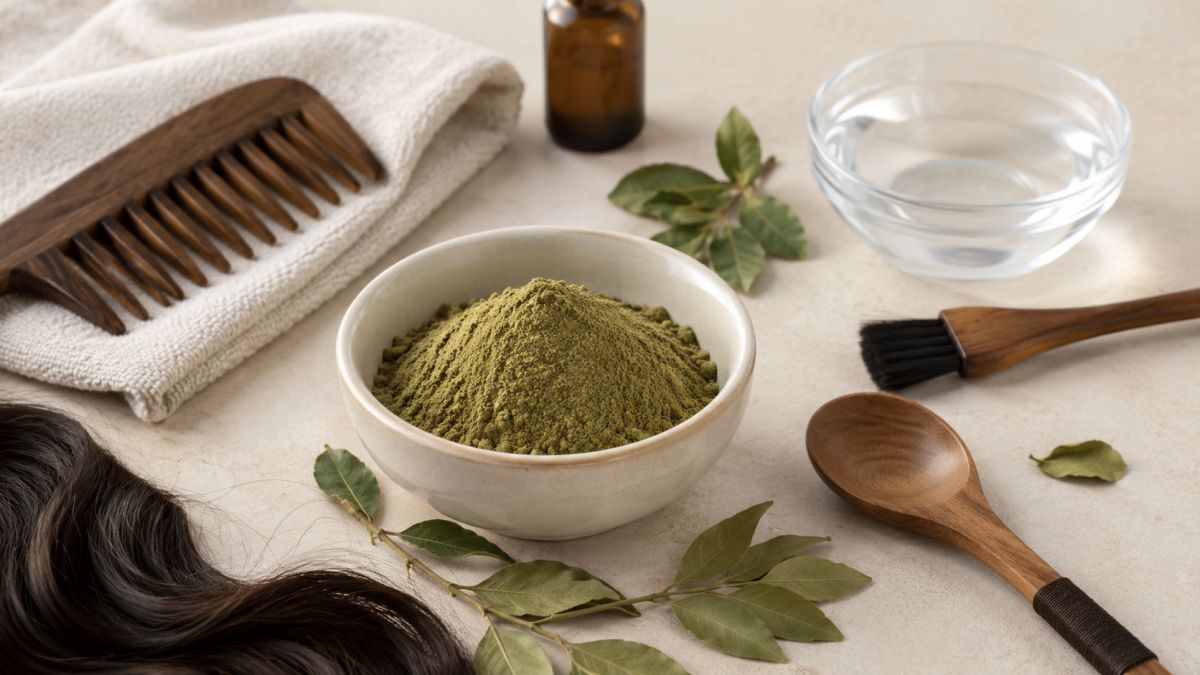
Sidr benefits for hair are mainly related to cleansing. Sidr powder may help remove some oil and light buildup from the scalp, and it may make the roots feel fresher or look fuller. However, it has not been proven to grow new hair, stop medical hair loss, or permanently thicken the strands.
The best way to think about Sidr is as a traditional herbal cleanser. It may suit some people, especially those with oily roots, but it can leave dry, curly, bleached, or dyed hair feeling rough.
What is Sidr?
Sidr usually refers to the powdered leaves of Ziziphus spina-christi. The leaves have traditionally been mixed with water and used to wash the hair and skin.
Sidr leaves contain plant compounds called saponins. These compounds can interact with water and oil, which helps explain why Sidr can work as a light cleanser.[1]
Homemade Sidr powder is not the same as a regular shampoo. A shampoo is formulated for pH, texture, rinsing, preservation, and consistent cleansing. Sidr powder can vary in quality and may leave particles behind if it is coarse or difficult to rinse.
What are the benefits of Sidr for hair?
It may cleanse oily roots
Sidr may help remove some scalp oil, dust, and light product buildup. This can make oily or flat roots feel cleaner and lighter.
It may not remove heavy oils, silicone buildup, or strong styling products. Repeating the wash several times can increase dryness and friction.
It may make fine hair look fuller
When oil is removed from the roots, fine hair may sit higher and look more voluminous. This is a temporary styling effect, not new hair growth.
Many products and supplements are promoted for thicker hair, but visible volume is not the same as follicle growth. Understanding common hair-growth myths and facts can make these claims easier to judge.
It may help some dandruff symptoms
One small study tested a shampoo made with Sidr leaf extract in 80 people with dandruff. After four weeks, the researchers reported improvement in many participants.[2]
This does not prove that plain Sidr powder treats dandruff. The study tested a prepared shampoo formula, not a homemade paste. Persistent itching, redness, thick scales, or painful areas may need an established dandruff treatment or a dermatologist’s assessment.[3]
What are the benefits of Sidr for the scalp?
The main possible scalp benefit is cleansing. Removing excess oil and light residue may help the scalp feel fresher.
Sidr is not a treatment for eczema, psoriasis, scalp infection, or severe seborrheic dermatitis. It may also irritate an already sensitive or inflamed scalp.
Other herbs are also used in scalp products, but evidence differs from one plant to another. The traditional uses of nettle leaf and neem should also be considered separately rather than assumed to have the same effects as Sidr.
Does Sidr moisturize hair?
No. Sidr is not a moisturizer or conditioner. It mainly works as a cleanser.
Some people find that their hair feels soft after using it. Others notice stiffness, tangling, or a dry “squeaky” feeling. The result depends on the hair type, the amount used, and how long it stays on the hair.
Can Sidr make hair dry?
Yes. Sidr is more likely to cause dryness when:
- too much powder is used;
- the paste is very thick;
- it is left on until it becomes dry and hard;
- it is used several times per week;
- the lengths and ends are rubbed strongly;
- the hair is already dry, curly, coarse, bleached, or dyed;
- no conditioner is used afterward.
For dry hair, apply Sidr mainly to the scalp, keep the mixture thin, rinse it before it dries, and use conditioner on the lengths and ends.
Does Sidr help hair growth?
There is no strong human evidence that Sidr stimulates follicles or causes new hair growth. It has not been proven to treat genetic hair loss, alopecia areata, or stress-related shedding.
Sidr may make the roots look fuller after cleansing, but this does not increase the number of hairs growing from the scalp.
Ongoing shedding may be related to many factors, including low iron, thyroid problems, hormonal changes, stress, illness, medications, or genetics. Iron deficiency and hair loss are sometimes linked, but testing may be needed before taking supplements.
Nutrients such as zinc and biotin support normal body functions, but taking extra amounts does not automatically improve hair when no deficiency is present.
How do you use Sidr for hair?
There is no medically established household dose. The following is a simple, cautious method:
- Place one to two tablespoons of finely ground Sidr powder in a bowl.
- Add lukewarm water gradually until the mixture becomes thin and easy to spread.
- Wet the hair and scalp.
- Apply most of the mixture to the scalp rather than the ends.
- Massage gently with the fingertips for one to two minutes.
- Rinse very well until no particles remain.
- Use conditioner on the lengths and ends if the hair feels dry.
How long should Sidr stay on the hair?
A few minutes is usually enough when Sidr is used as a cleanser. Leaving it on for 30 minutes or longer has not been shown to improve hair growth and may make dryness or residue more likely.
How often can Sidr be used?
Start once every one or two weeks. Daily use is usually unnecessary and may increase dryness, irritation, tangling, and buildup.
Is Sidr suitable for different hair types?
Sidr for oily hair
It may help remove some oil and make the roots feel lighter. Stop or reduce use if the scalp becomes tight, itchy, or flaky.
Sidr for dry or curly hair
It may increase roughness and tangling. Use a thin mixture, focus on the scalp, and apply conditioner afterward.
Sidr for thin or fine hair
It may create temporary root volume, but it does not increase the number of hair follicles.
Sidr for hair loss
It may clean the scalp, but it does not address the underlying cause of shedding. Strong rubbing may also increase breakage.
Sidr for dyed or bleached hair
It may worsen dryness or contribute to fading. Test a hidden strand before applying it to the full head.
Sidr for gray or white hair
Sidr does not restore natural pigment or reverse gray hair. Mixing it with henna may change the color.
Sidr for children’s hair
There is no clear advantage over a gentle, age-appropriate shampoo. Powder can irritate the eyes, skin, or airways, so extra caution is needed.
Can Sidr be mixed with henna?
Sidr and henna are used together in some traditional hair mixtures. However, the combination has not been proven to improve hair growth or stop shedding.
Henna can change hair color and texture, while both powders may increase dryness or tangling. Test the mixture on a hidden strand and wait at least 48 hours before applying it widely, especially on gray, bleached, or dyed hair.
What are the possible side effects of Sidr?
- dryness or roughness;
- tangling and breakage;
- itching, redness, or burning;
- allergic skin reactions;
- powder residue on the scalp;
- eye or airway irritation;
- unexpected color changes when mixed with henna.
Patch-test the mixture on a small area of skin before wider use. Stop using it if you develop strong itching, swelling, burning, blisters, or worsening scalp inflammation.
When should you see a dermatologist?
Seek professional advice when hair loss is sudden, severe, patchy, or painful. You should also get help if the scalp is very red, swollen, crusted, bleeding, or intensely itchy.
A cleanser cannot correct an iron deficiency, thyroid disorder, hormonal problem, inflammatory scalp condition, medication effect, or genetic type of hair loss.
Is Sidr genuinely helpful for hair?
Sidr can be a useful traditional cleanser for some people. It may remove light oil and buildup, freshen the scalp, and make fine roots look temporarily fuller.
It is not a proven hair-growth treatment, and it may dry or irritate certain hair types. Use a small amount, keep the contact time short, rinse thoroughly, and stop if your hair or scalp feels worse.
Frequently asked questions
1. What are the main benefits of Sidr for hair?
Sidr may help cleanse oil and light buildup from the scalp and make the roots feel fresher. It may also give fine or oily hair temporary volume, but it has not been proven to regrow hair or treat hair loss.
2. How do you use Sidr powder for hair?
Mix a small amount of finely ground Sidr powder with lukewarm water until it forms a thin mixture. Apply it mainly to the wet scalp, massage gently for one to two minutes, rinse thoroughly, and condition the lengths if needed.
3. Does Sidr moisturize hair?
No. Sidr is mainly a cleanser, not a moisturizer or conditioner. Some hair may feel soft after washing, but dry or damaged hair may feel rough unless conditioner is used afterward.
4. Can Sidr make hair dry?
Yes. Sidr may make dry, curly, bleached, or color-treated hair feel rough or tangled, especially when used too often, applied as a thick paste, or left on until it dries.
5. Does Sidr help hair grow?
There is no strong human evidence that Sidr stimulates hair follicles or causes new hair growth. Cleaner roots may look fuller, but this is not the same as increasing hair density.
6. Is Sidr good for the scalp and dandruff?
Sidr contains cleansing plant compounds called saponins. One small study found that a specially formulated Sidr-extract shampoo improved dandruff, but homemade Sidr powder is not a proven dandruff treatment.
7. Can Sidr be used on hair every day?
Daily use is usually unnecessary and may increase dryness, irritation, residue, and tangling. Starting once every one or two weeks is a more cautious approach.
8. When do Sidr results appear on hair?
A cleaner scalp or temporary root volume may be noticeable after the first wash. There is no proven timeline for hair growth because Sidr has not been shown to stimulate new growth.
9. Can Sidr be used on dry or dyed hair?
It can be used cautiously, but it may increase dryness or contribute to color fading. Test a hidden strand first, keep the mixture thin, shorten the contact time, and use conditioner afterward.
10. Can Sidr be mixed with henna?
Sidr and henna are traditionally mixed, but the combination has not been proven to improve hair growth. It may change hair color or texture and may increase dryness, so a hidden-strand test is important.
Scientific references
- Abdulrahman MD, et al. Ethnopharmacology, Biological Evaluation, and Chemical Composition of Ziziphus spina-christi (L.) Desf.: A Review. Advances in Pharmacological and Pharmaceutical Sciences. 2022.
- Alzomor AKY, et al. Subacute Toxicity Study and Clinical Trials for Ziziphus spina-christi Leaves Extract as an Anti-dandruff Shampoo. Thai Journal of Pharmaceutical Sciences. 2021.
- American Academy of Dermatology Association. How to Treat Dandruff.
Medical disclaimer: This article is for general educational purposes and does not provide a diagnosis or personalized treatment. Consult a dermatologist or another qualified healthcare professional for persistent scalp inflammation, severe dandruff, significant hair shedding, or suspected allergy.