The Inside-Out Turn in Melasma
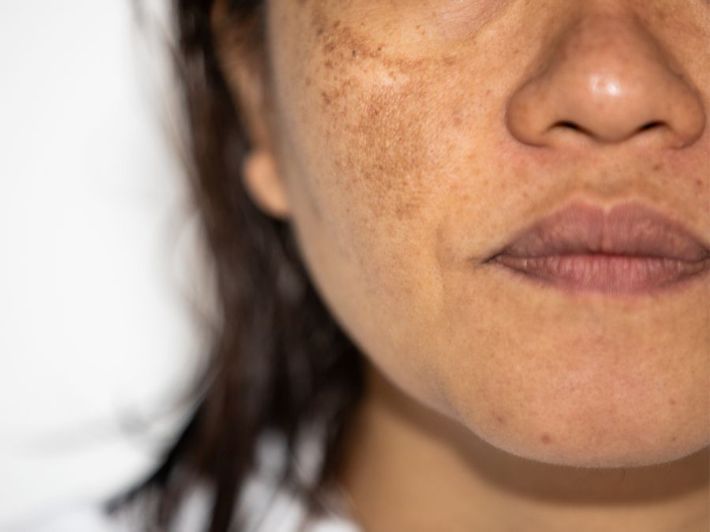
Why two unlikely actives—an estrogen-recycling blocker and a repurposed diabetes drug—are reshaping the supplement conversation around pigmentation, and which oral compounds actually have the data to back them up
For decades, the story of melasma was written almost entirely on the surface of the skin. Hydroquinone, the Kligman triple-combination cream, sunscreen, peels, lasers—the playbook was topical, and it was incomplete. Melasma kept coming back. What is finally changing is not a single miracle ingredient but a shift in where we intervene. A growing share of the research, and the supplement industry's attention, is moving inward: to oxidative stress, hormonal signaling, and the gut. Two actives sit at the center of that shift right now. Neither is a vitamin. Both are forcing a more sophisticated conversation.
The estrogen angle: calcium D-glucarate
Melasma has always carried a hormonal fingerprint. It flares in pregnancy, with combined oral contraceptives, and with hormone therapy; it skews overwhelmingly female. Estrogen and progesterone signaling are widely understood to prime melanocytes toward overproduction. That biology is exactly why a once-obscure supplement, calcium D-glucarate (CDG), has migrated from the "hormone balance" aisle into the pigmentation discussion.
The mechanism is genuinely elegant. After the liver neutralizes estrogen through glucuronidation—tagging it for excretion in bile—an enzyme called beta-glucuronidase, produced largely by gut bacteria (the so-called estrobolome), can snip that tag back off in the intestine. The freed estrogen is then reabsorbed into circulation rather than eliminated. Calcium D-glucarate is metabolized into D-glucaro-1,4-lactone, one of the more potent natural inhibitors of beta-glucuronidase. Block the enzyme, and more conjugated estrogen leaves the body instead of recirculating. The framing that has caught on—an oral compound that quietly lowers the hormonal "load" arriving at the skin—maps cleanly onto melasma's known triggers. Typical doses discussed range from 500 mg to 1 g daily, with some hormone-focused protocols going higher.
Here is the honest caveat, and it matters for anyone reporting this responsibly: the beta-glucuronidase mechanism is well characterized in biochemistry and animal models, but there are no controlled human trials showing calcium D-glucarate improves melasma, and even its effect on circulating estradiol in humans rests on extrapolation rather than robust pharmacodynamic data. CDG is a mechanistically compelling, biologically plausible hypothesis—not a proven melasma therapy. That distinction is the whole story. It is the most interesting idea in the oral-pigmentation space precisely because the science is upstream of the clinical proof.
The repurposing story: topical metformin
The second active is a different kind of surprise. Metformin—the world's most prescribed diabetes drug—turns out to interfere with pigment production. By activating AMPK and lowering intracellular cyclic AMP, it dampens the signaling cascade that drives melanin synthesis in melanocytes, alongside anti-inflammatory and antioxidant effects.
What pushed it back into headlines was a split-face study published in the Journal of Drugs in Dermatology comparing topical metformin head-to-head with the gold-standard Kligman formula. Across 57 patients over 12 weeks, each applying one treatment to each side of the face, the classic triple-combination cream won on raw efficacy—roughly a 60.5% reduction in hemi-MASI versus about 53.3% for metformin. No "new substitute" hype is warranted on potency alone.
The headline, though, is in the safety column. Adverse events were reported on about 31.6% of the Kligman-treated sides versus just 3.5% of the metformin-treated sides. In a chronic, relapsing condition where patients have to keep treating a barrier that is already sensitized—and where irritation can itself trigger post-inflammatory pigmentation—tolerability is not a footnote. It is often the difference between a regimen a patient sustains and one they abandon. Topical metformin doesn't close the melasma debate; it widens it, reframing "best treatment" as a balance of clearance, comfort, and adherence rather than clearance alone. (One technical note for purists: metformin here is a repurposed compounded topical, not an oral supplement—part of why this trend is really about rethinking actives, not chasing another pill.)
The field around them: what actually has evidence
Zoom out, and these two sit inside a much larger movement toward oral and antioxidant adjuncts. Melasma's pathogenesis is increasingly framed around oxidative stress, so antioxidants are the connective tissue running through nearly every candidate below. Ranked, roughly, by strength of evidence:
Oral tranexamic acid has the strongest data of any systemic agent for melasma, reducing both pigment and the vascular component the condition often carries. The catch is real: it is a prescription antifibrinolytic with thrombotic risk, appropriate only for screened, selected patients—not a casual supplement-shelf purchase.
Pycnogenol (French maritime pine bark extract) is the standout among true supplements. A study in Brazilian women reported roughly a 58% MASI reduction over 90 days at 50 mg three times daily, and a randomized trial found that adding oral pycnogenol to sunscreen plus topical therapy improved modified-MASI more than the regimen alone (about 49% versus 34% at 60 days). Accumulating evidence supports it as a systemic adjuvant.
Polypodium leucotomos (the fern extract marketed as Heliocare) earned a randomized, placebo-controlled trial in JAMA Dermatology as an adjunct to sunscreen, working through photoprotection and antioxidant activity, including blunting blue-light–driven melanogenesis. Doses studied generally fall in the 240–480 mg range. Strong as a supporting player, not a standalone fix.
Glutathione is the most hyped and the most oversold—popular for "skin brightening," with some signal in small studies but inconsistent, generally modest, and poorly standardized data, especially for the oral route.
Carotenoids and related antioxidants—beta-carotene, astaxanthin, lycopene/tomato extract—plus procyanidin combined with vitamins A, C, and E (tested in a randomized trial in Filipino women), melatonin, and vitamins C and E and niacinamide all carry plausible antioxidant rationale and scattered positive trials of varying quality.
The emerging tier—coenzyme Q10, collagen hydrolysate, pomegranate and red-orange extracts, and probiotics aimed at the gut–skin axis—is where the next wave of supplement marketing is heading, with mechanism running well ahead of clinical proof, much like calcium D-glucarate.
The throughline
What ties calcium D-glucarate, topical metformin, and this whole oral cohort together is a maturing premise: melasma is systemic, multifactorial, and stubborn, so the most durable results are likely to come from layering—addressing oxidative stress and hormonal signaling from the inside while protecting and gently treating the skin from the outside. None of these replaces the non-negotiable foundation of rigorous daily photoprotection, and the most exciting actives are frequently the least proven. For the supplement world, that is the opportunity and the obligation in equal measure: the science is finally pointing inward, and the responsibility is to follow the evidence at the same pace as the enthusiasm.
This article is for editorial and educational purposes and does not constitute medical advice. Oral agents such as tranexamic acid and compounded topical metformin are prescription-grade interventions and should be initiated only under qualified medical supervision; supplement use should be individualized and discussed with a clinician.
Selected references
- AboAlsoud E, Elsaie ML, et al. Topical metformin vs Kligman's formula in melasma: a split-face study. Journal of Drugs in Dermatology / J Cosmet Dermatol, 2022–2026.
- Lehraiki A, et al. Inhibition of melanogenesis by the antidiabetic metformin. J Invest Dermatol. 2014;134:2589–2597.
- Zhou LL, Baibergenova A. Melasma: systematic review of the systemic treatments. Int J Dermatol. 2017.
- Oral Supplementation in the Treatment of Melasma: A Systematic Review. J Dermatol Dermatol Surg. 2025.
- Update on Melasma—Part II: Treatment. Dermatol Ther (Heidelb). (pycnogenol and Polypodium data.)
- Ahmed AM, et al. Oral Polypodium leucotomos extract as an adjunct to sunscreen in melasma: a randomized trial. JAMA Dermatol. 2013;149:981–983.
- Handog EB, et al. Oral procyanidin with vitamins A, C, E for melasma: a randomized, placebo-controlled trial. Int J Dermatol. 2009;48:896–901.
- Heber D, et al. Calcium D-glucarate and beta-glucuronidase inhibition (mechanistic and review literature; human clinical melasma data lacking).